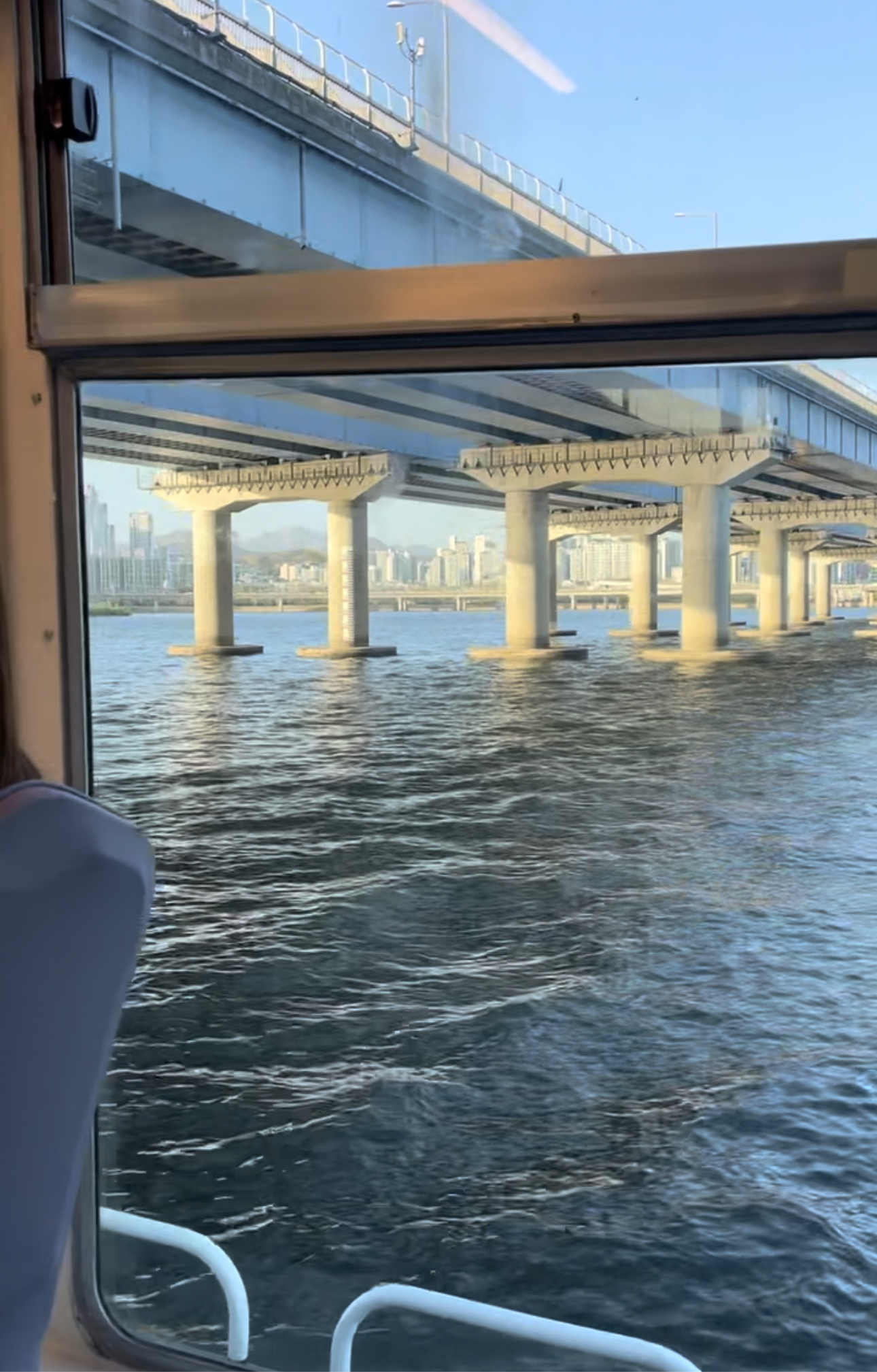
Our next adventure, thanks to Liz’s planning, involved a river cruise along the Han River. Not something I would have considered, given my tendency for seasickness and the stereotypical touristy connotations. However, it turned out to be quite interesting.
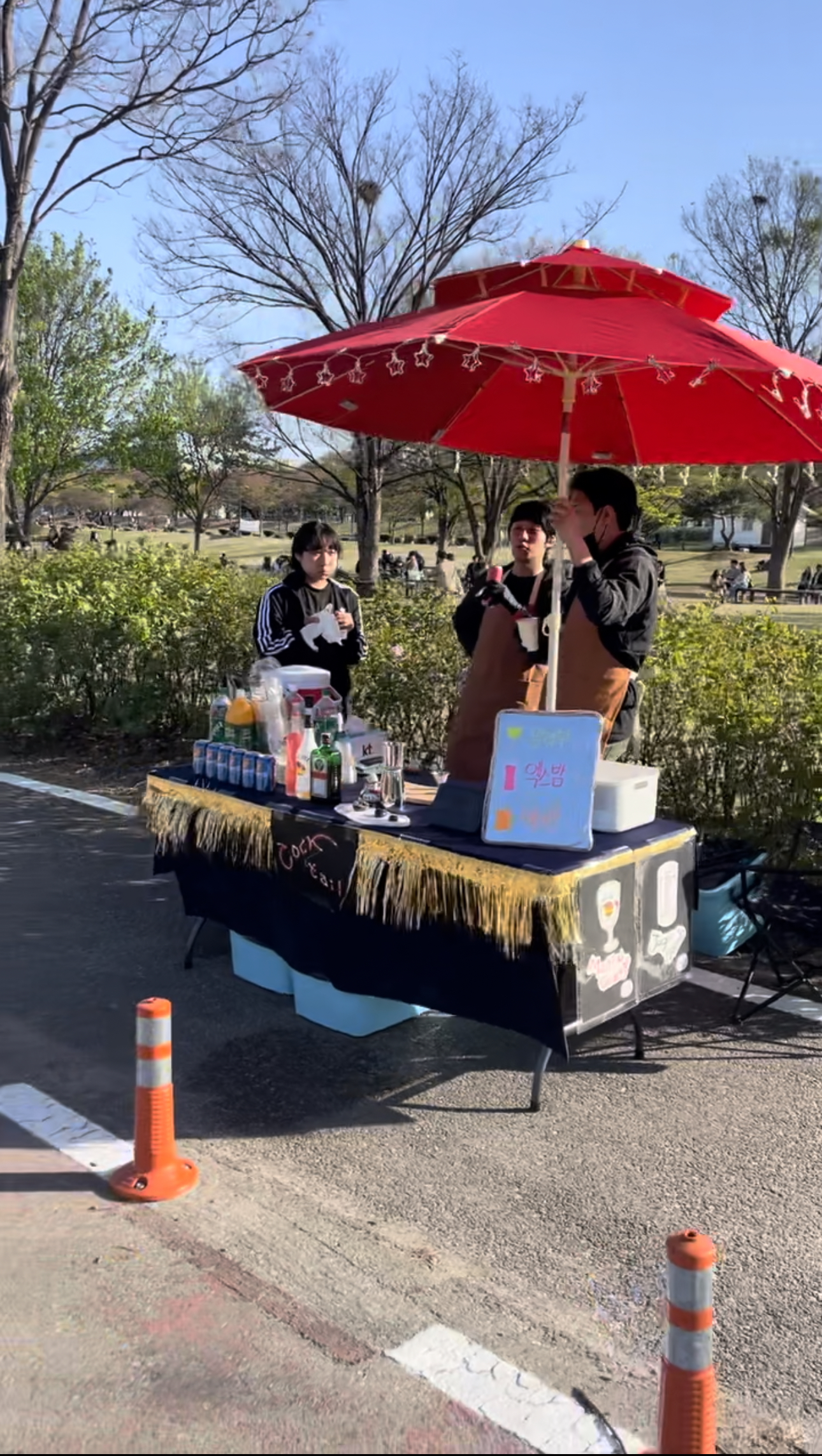
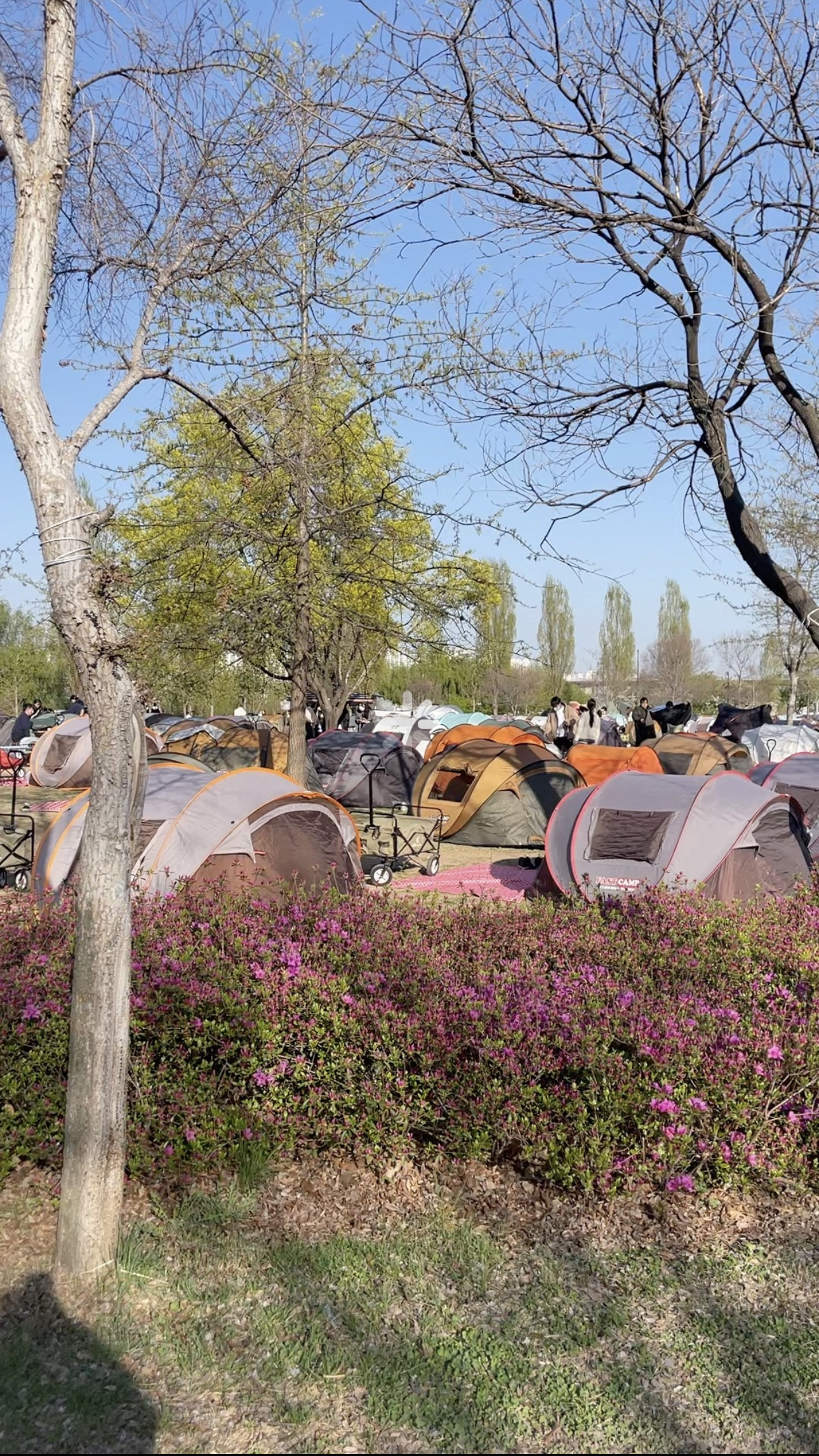
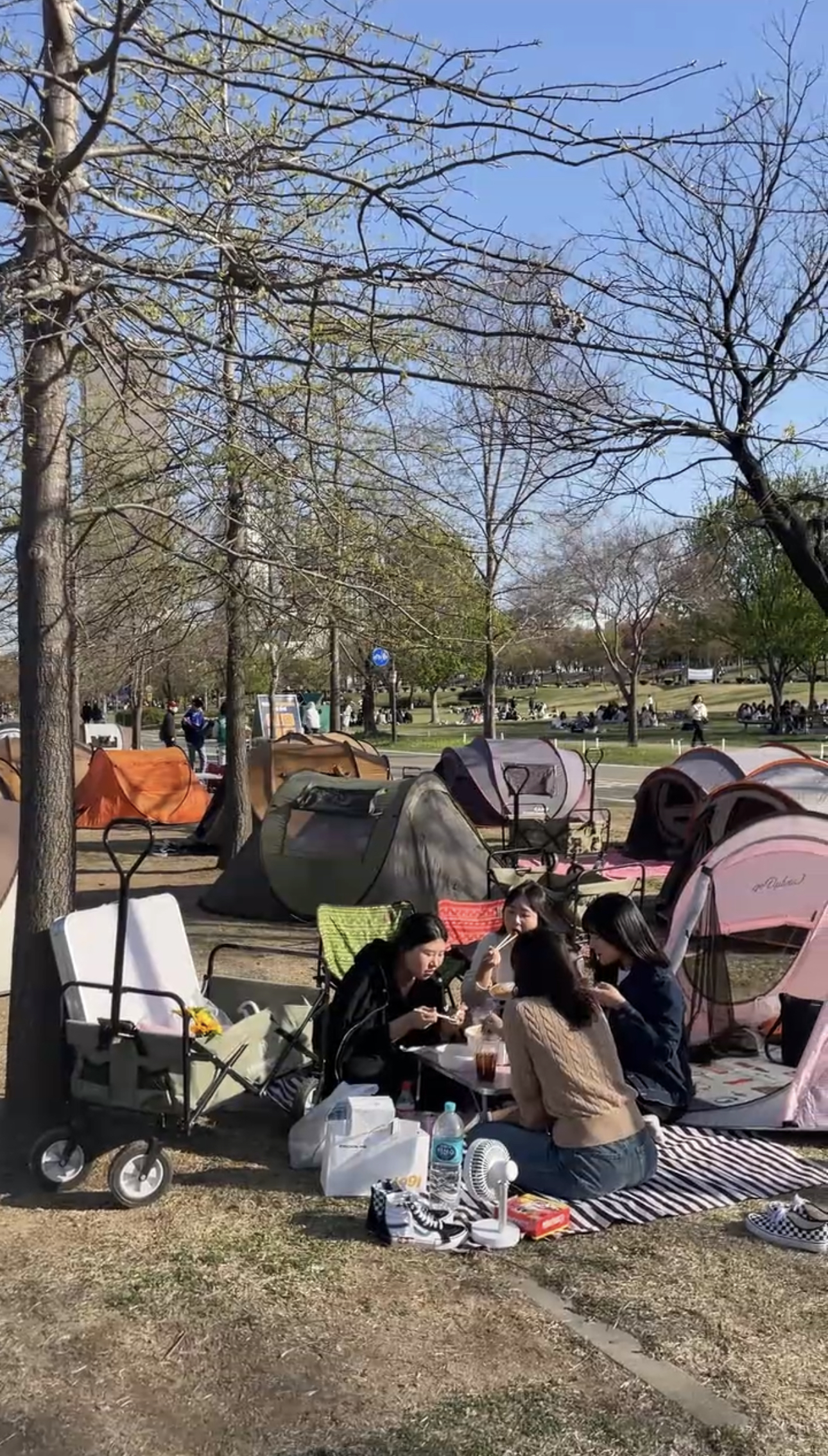
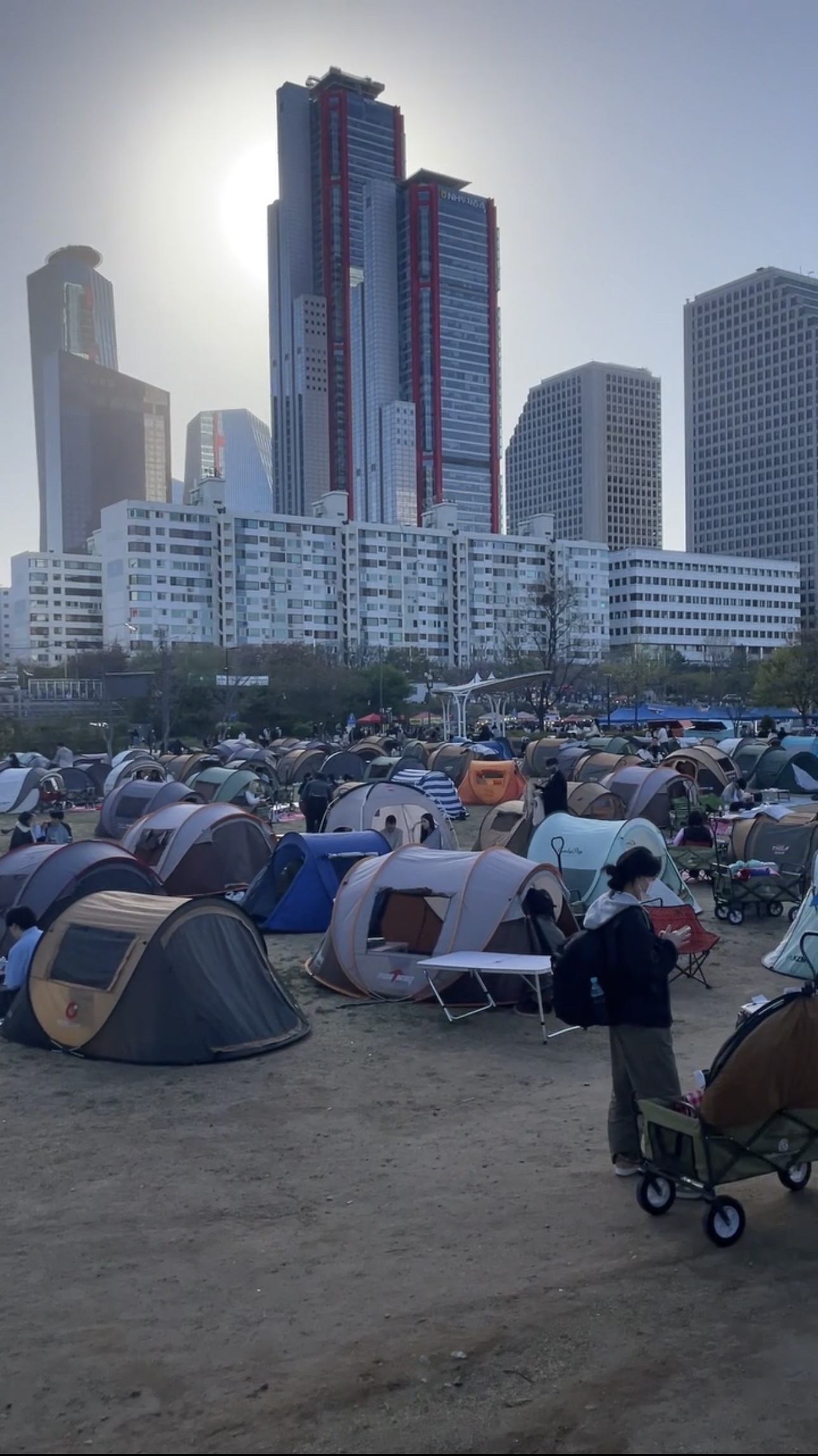
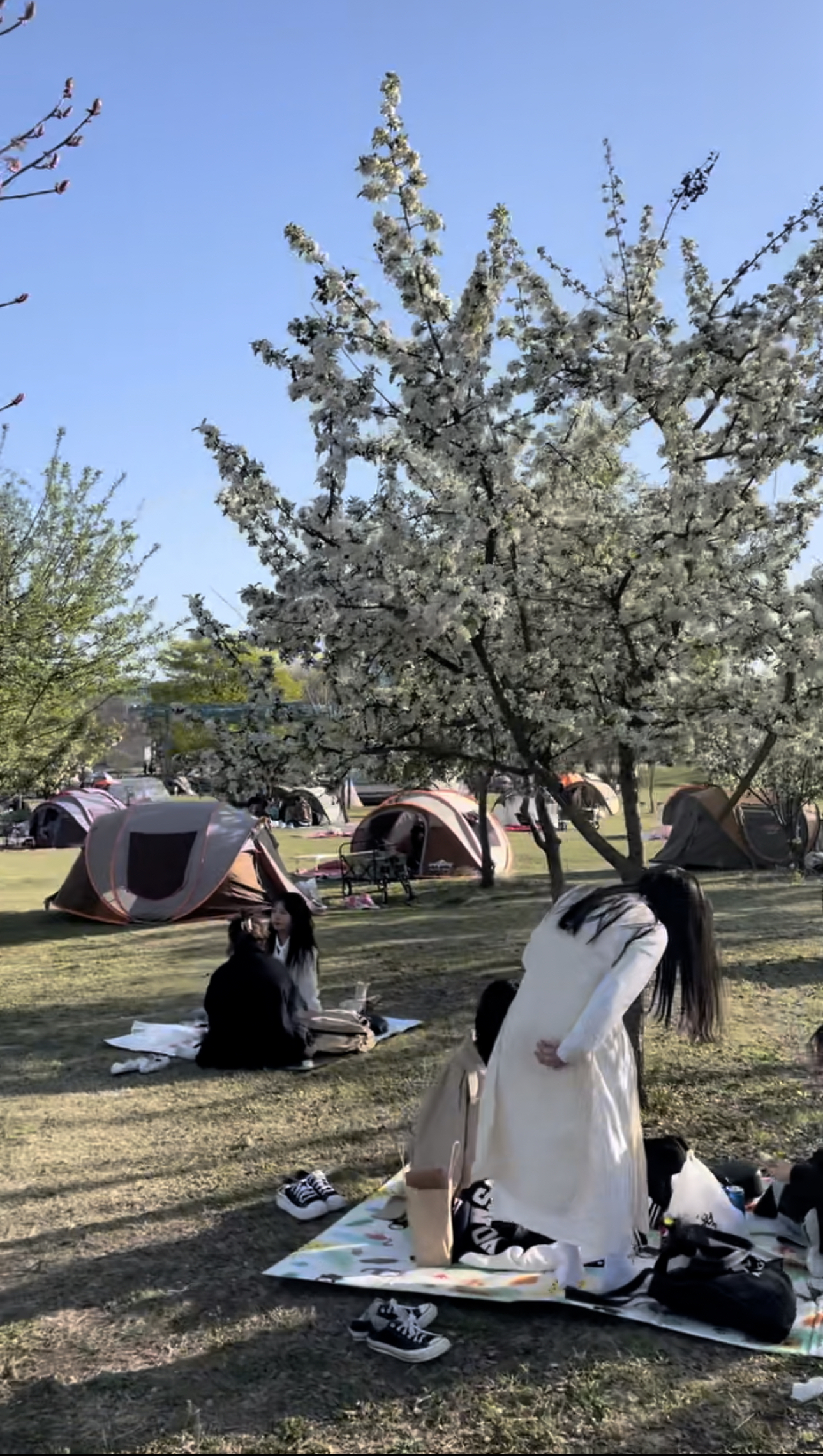
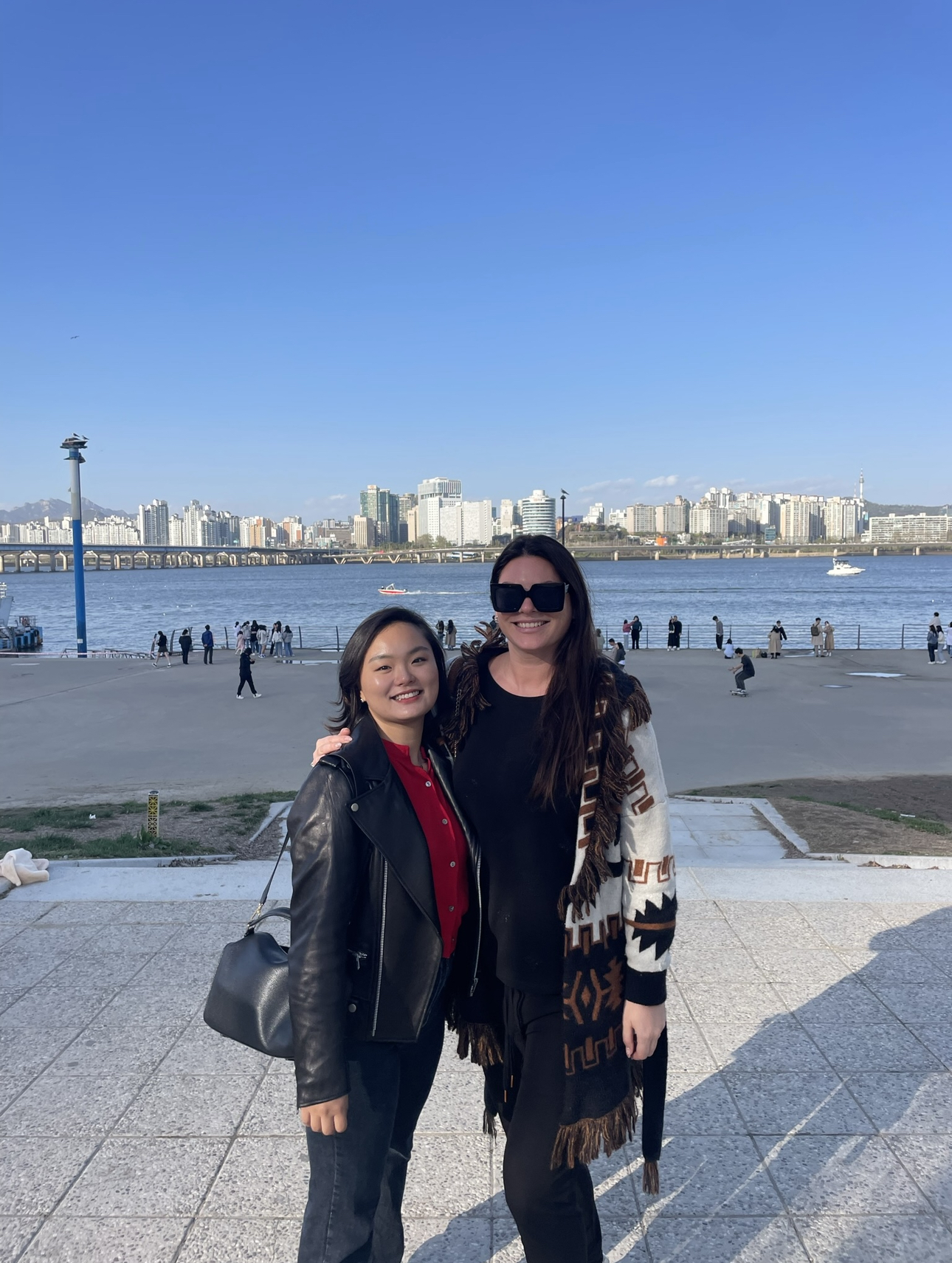
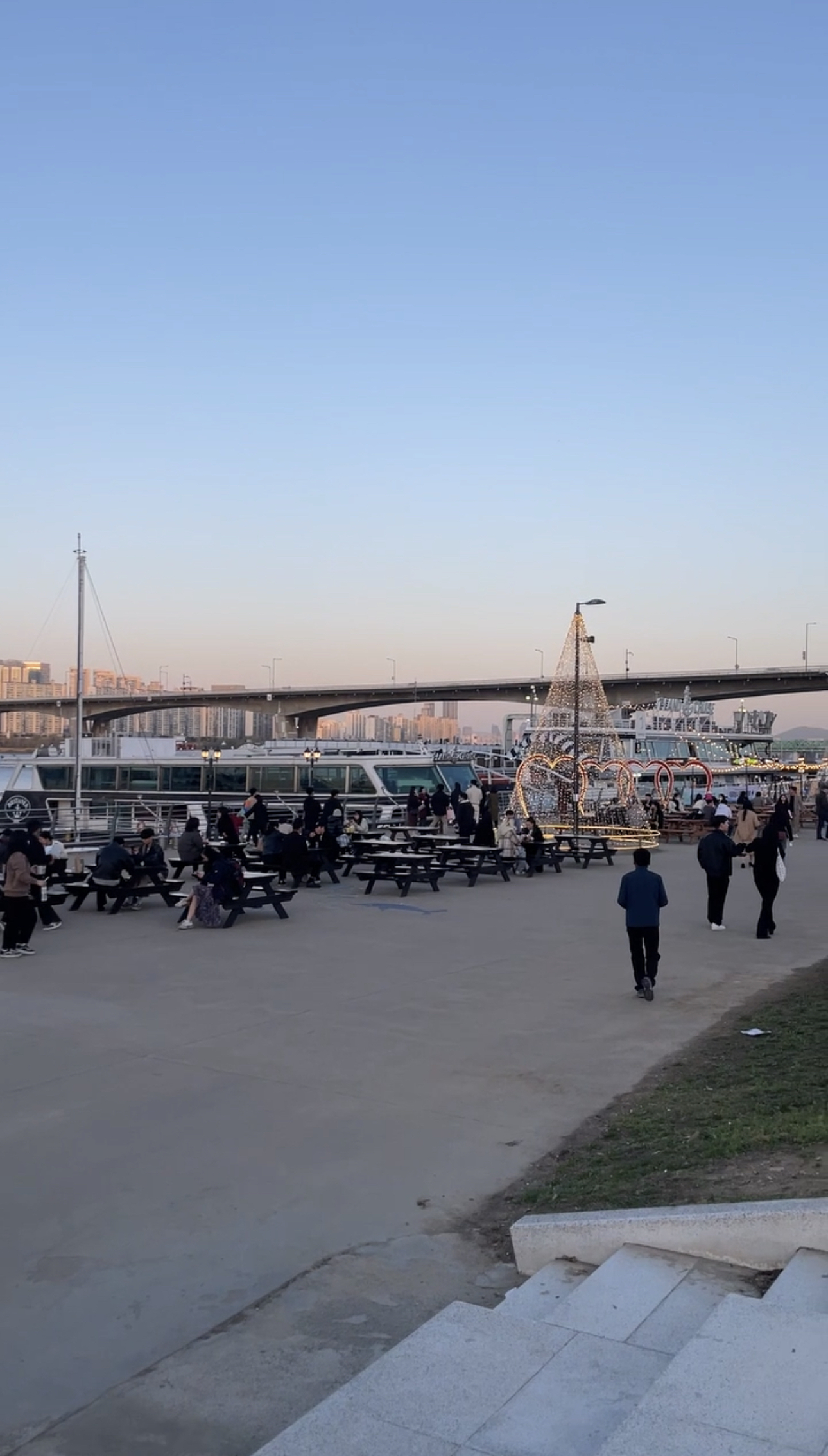
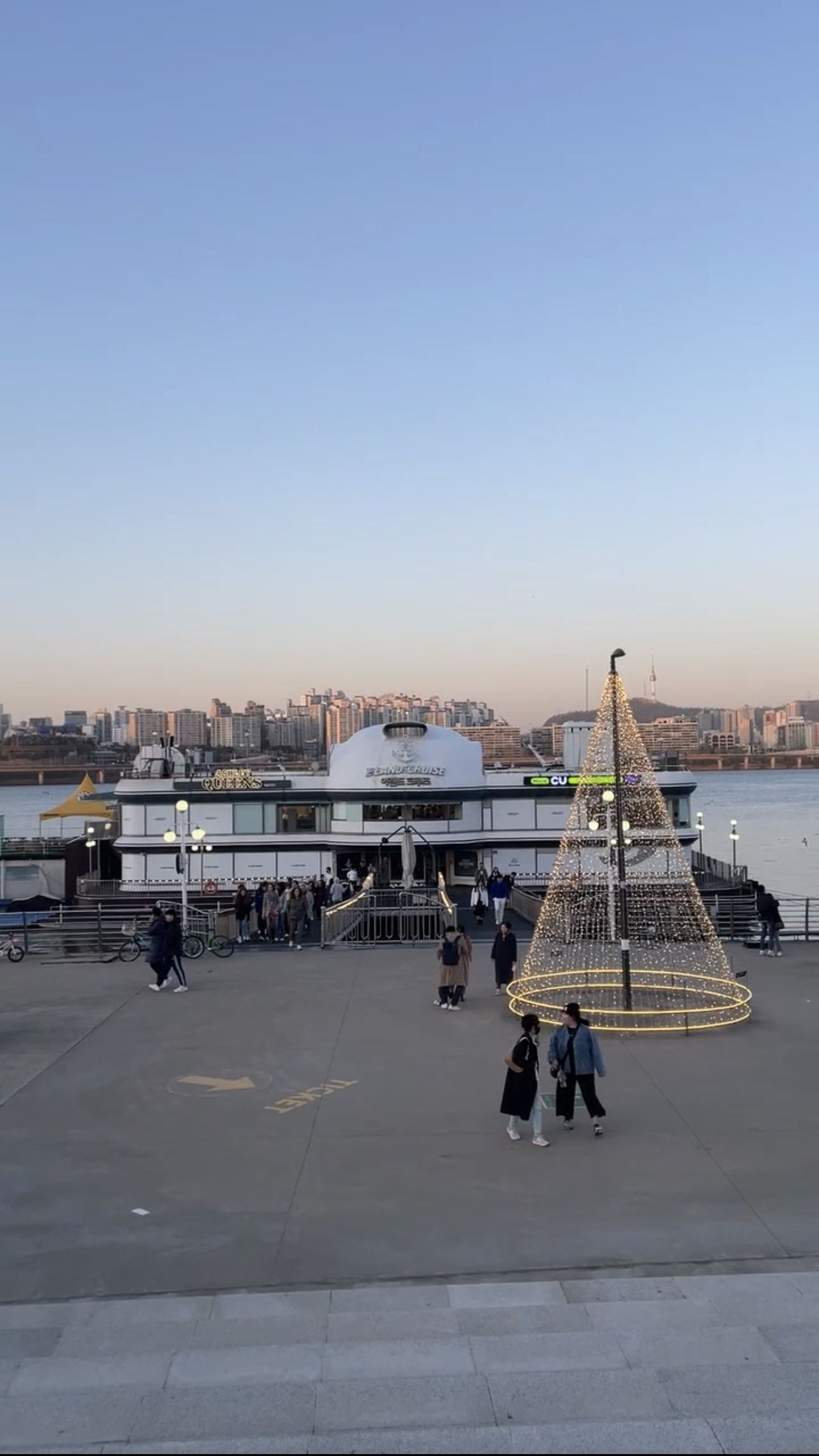
Upon reaching the area where the cruises depart, we were greeted by a multitude of tents. The entire area was bustling with people, leisurely lounging in tents, having picnics, and engaging in activities—an experience quite unfamiliar to me. Evidently, these tents were a daytime phenomenon; overnight sleep was not permitted. It seemed to be a social tradition, likely enhanced by the ongoing festival, originally the cherry blossom festival, although the blossoms had bloomed prematurely. Nonetheless, the festival vibes lingered. Amongst the vibrant atmosphere, numerous stalls offering snacks and drinks added to the intriguing scene. The majority of individuals enjoying the ambiance in these tents were young people, creating a lively atmosphere. All of this occurred right next to the river, providing a beaautiful river view.
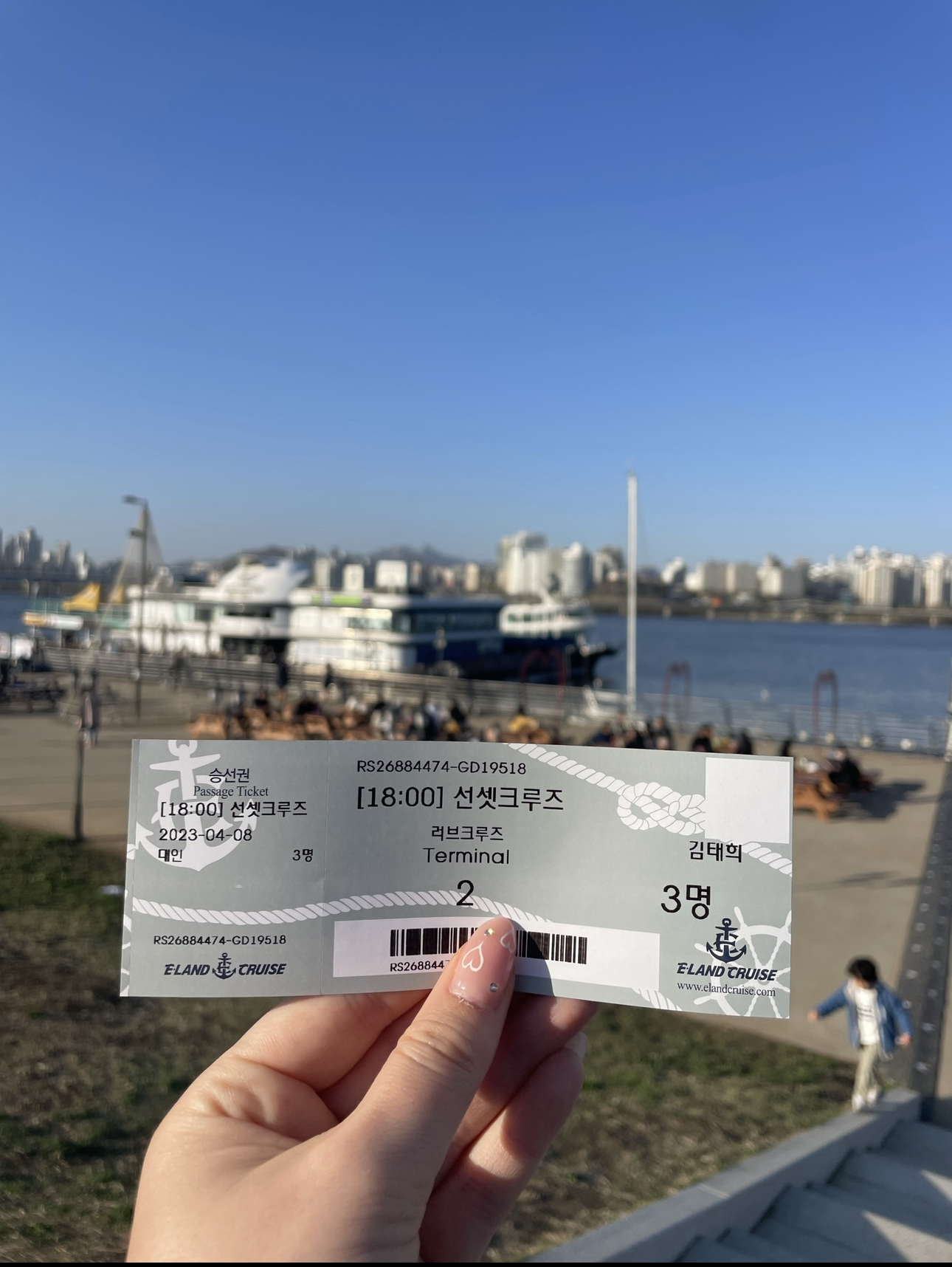
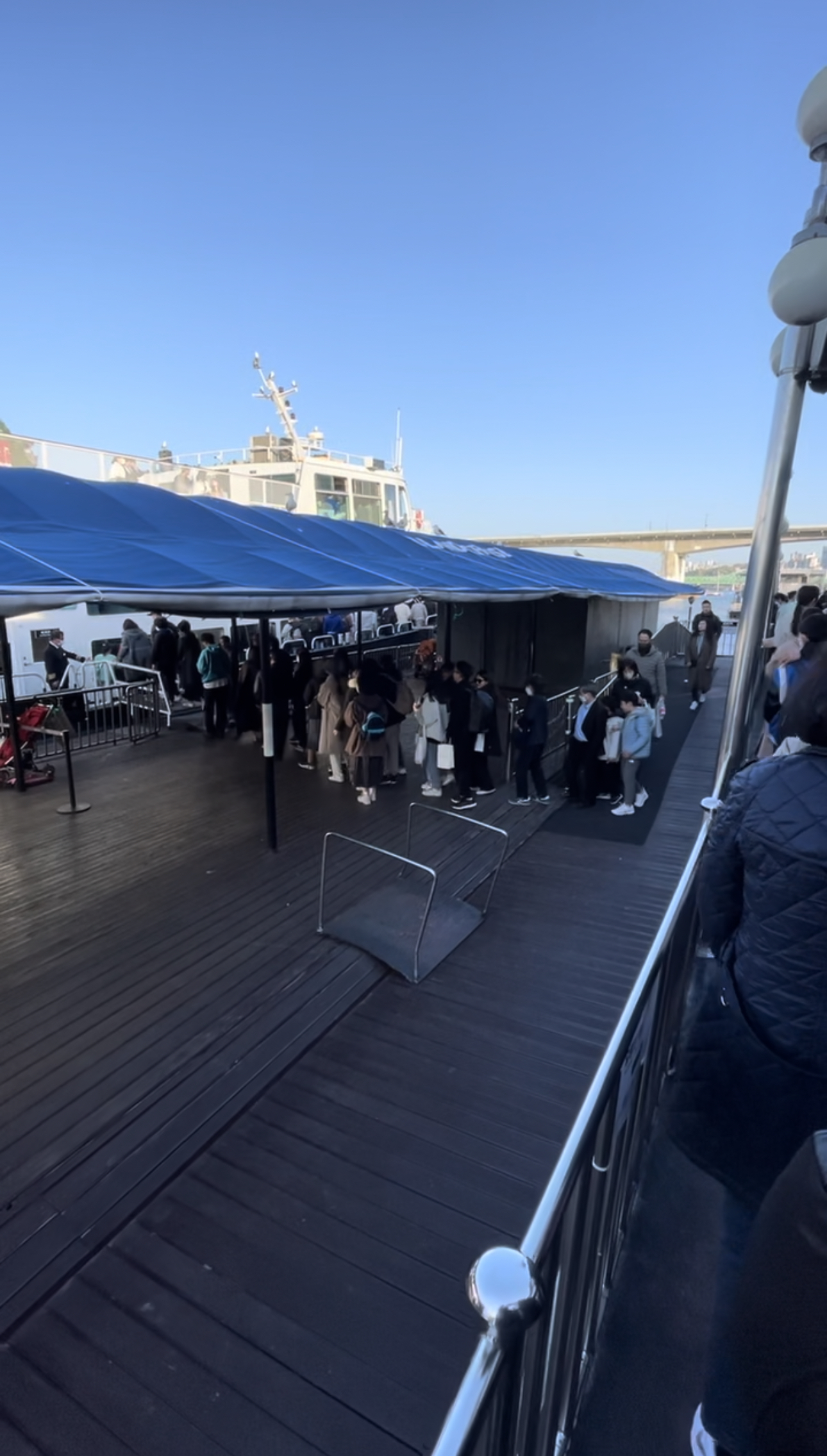
We proceeded to the terminal, obtained our tickets, and, contrary to my expectation of a touristy crowd, once again found ourselves as the only non-Koreans, or at least the only non-Asians.
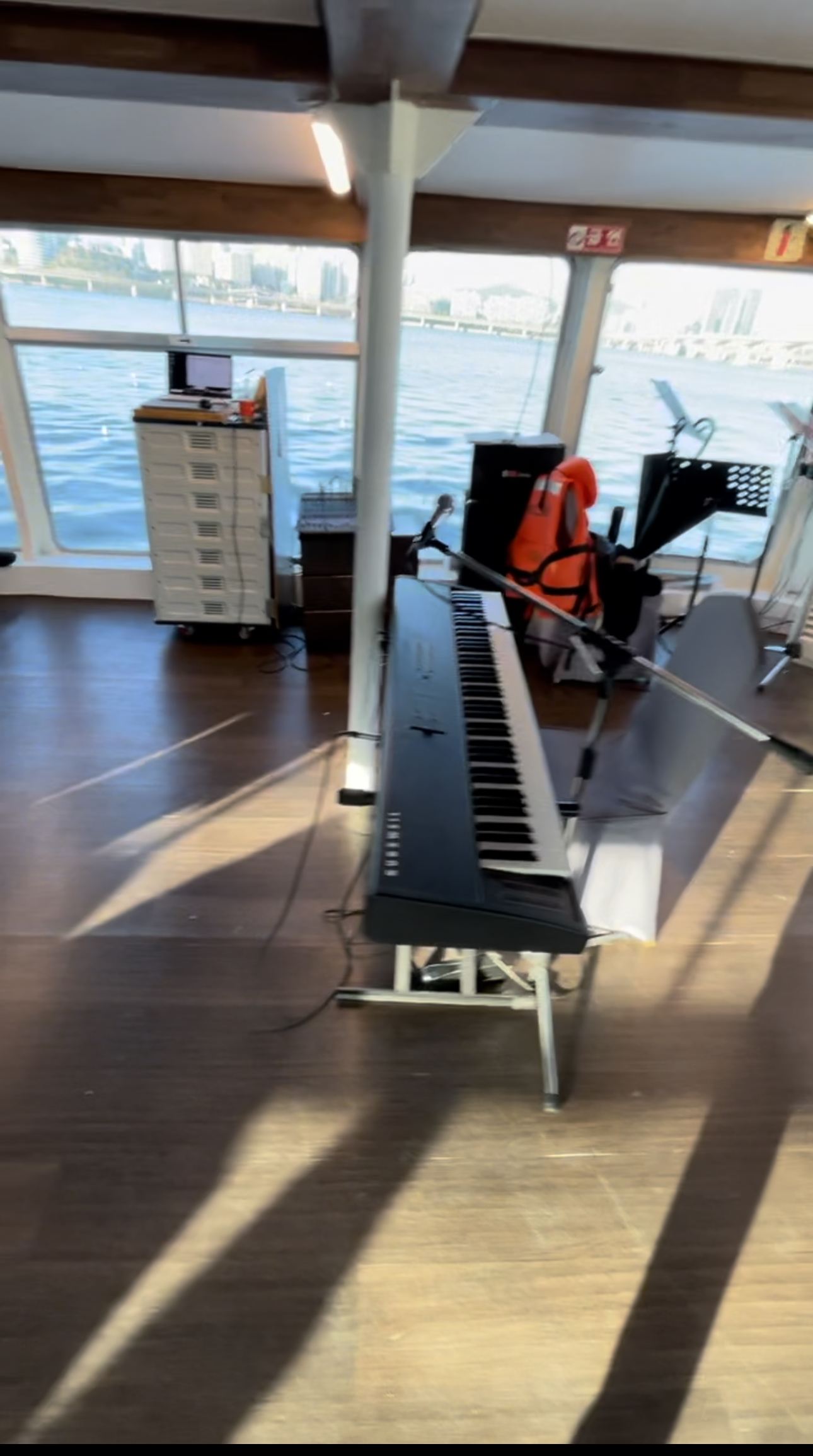
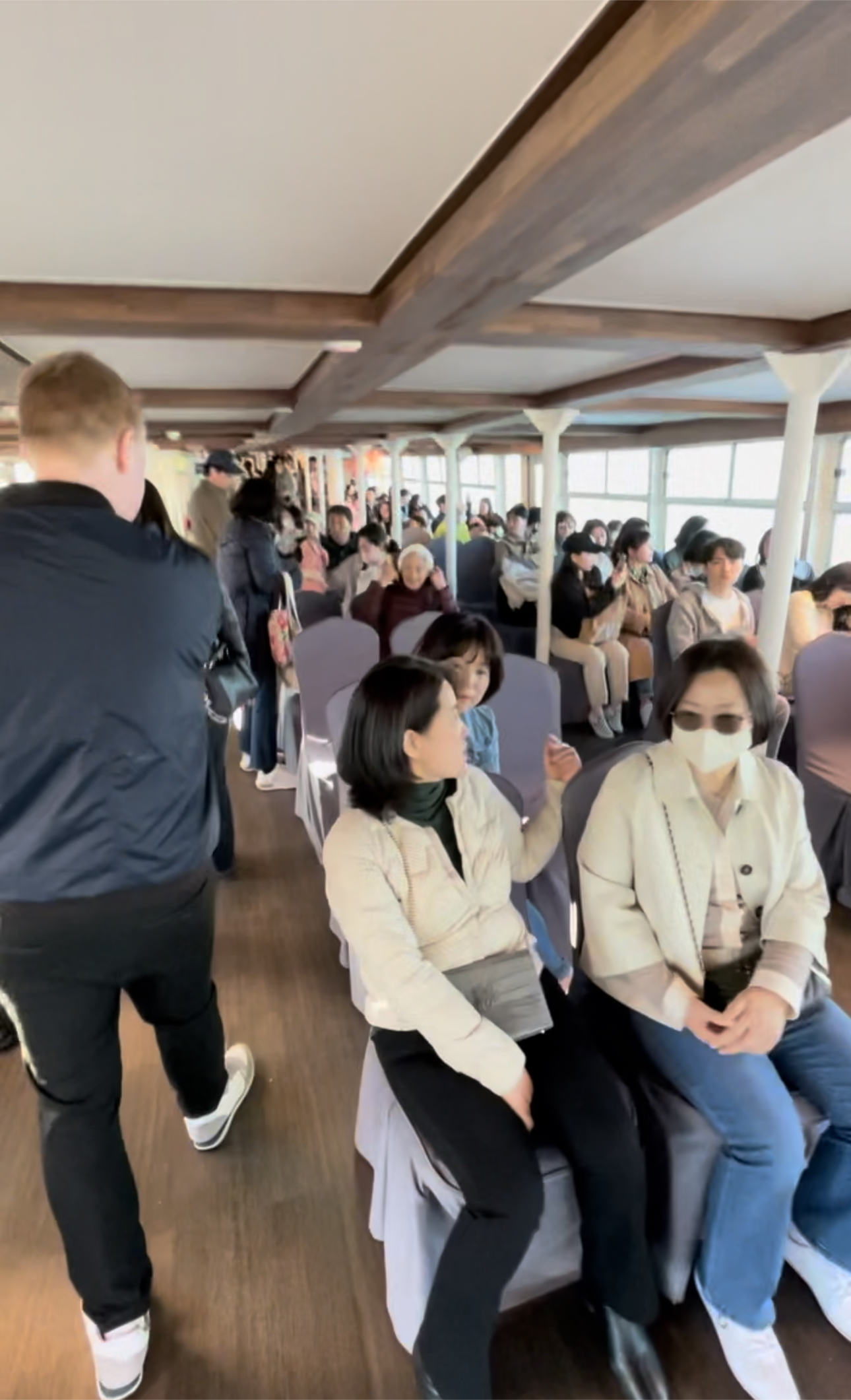
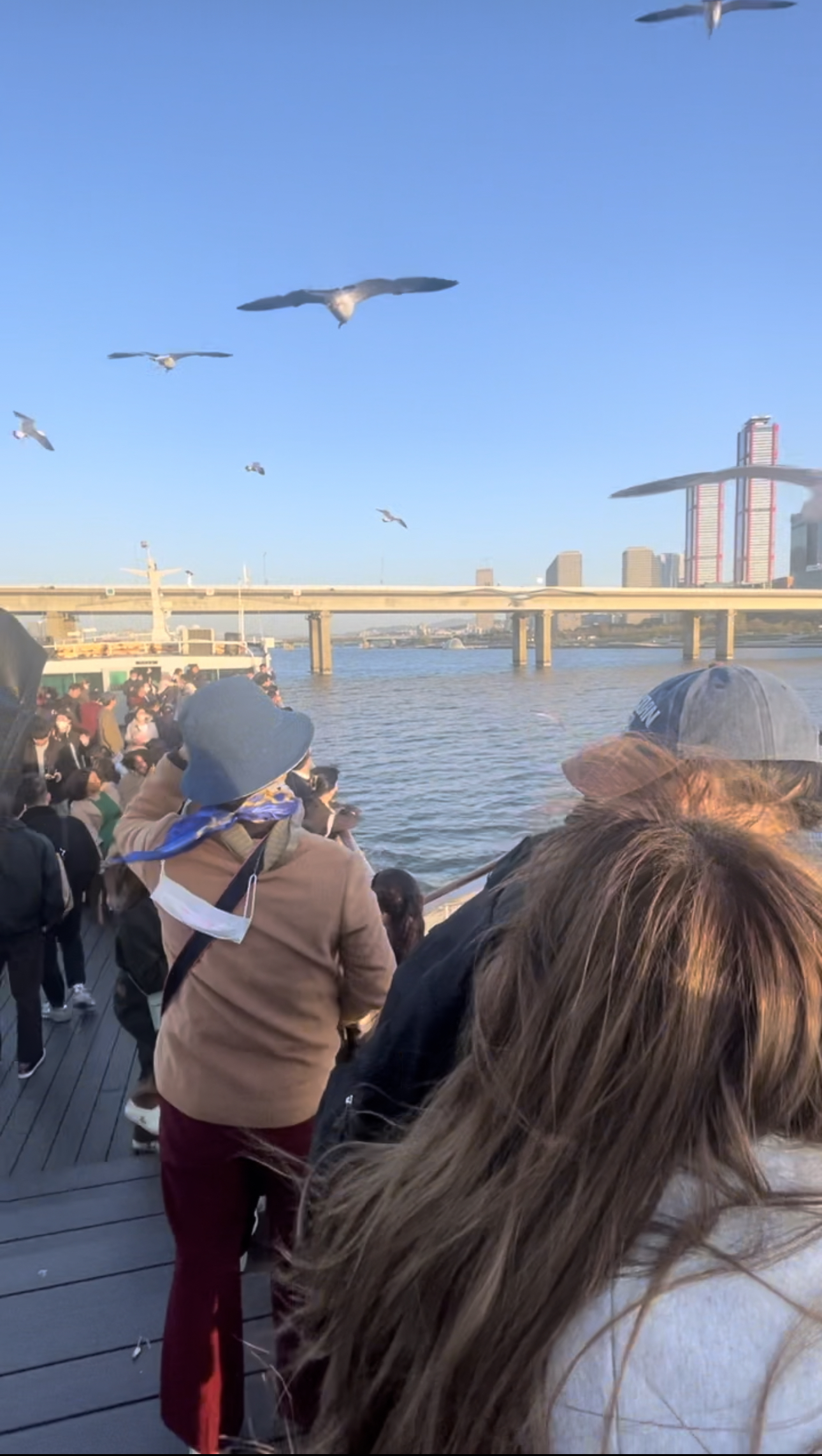
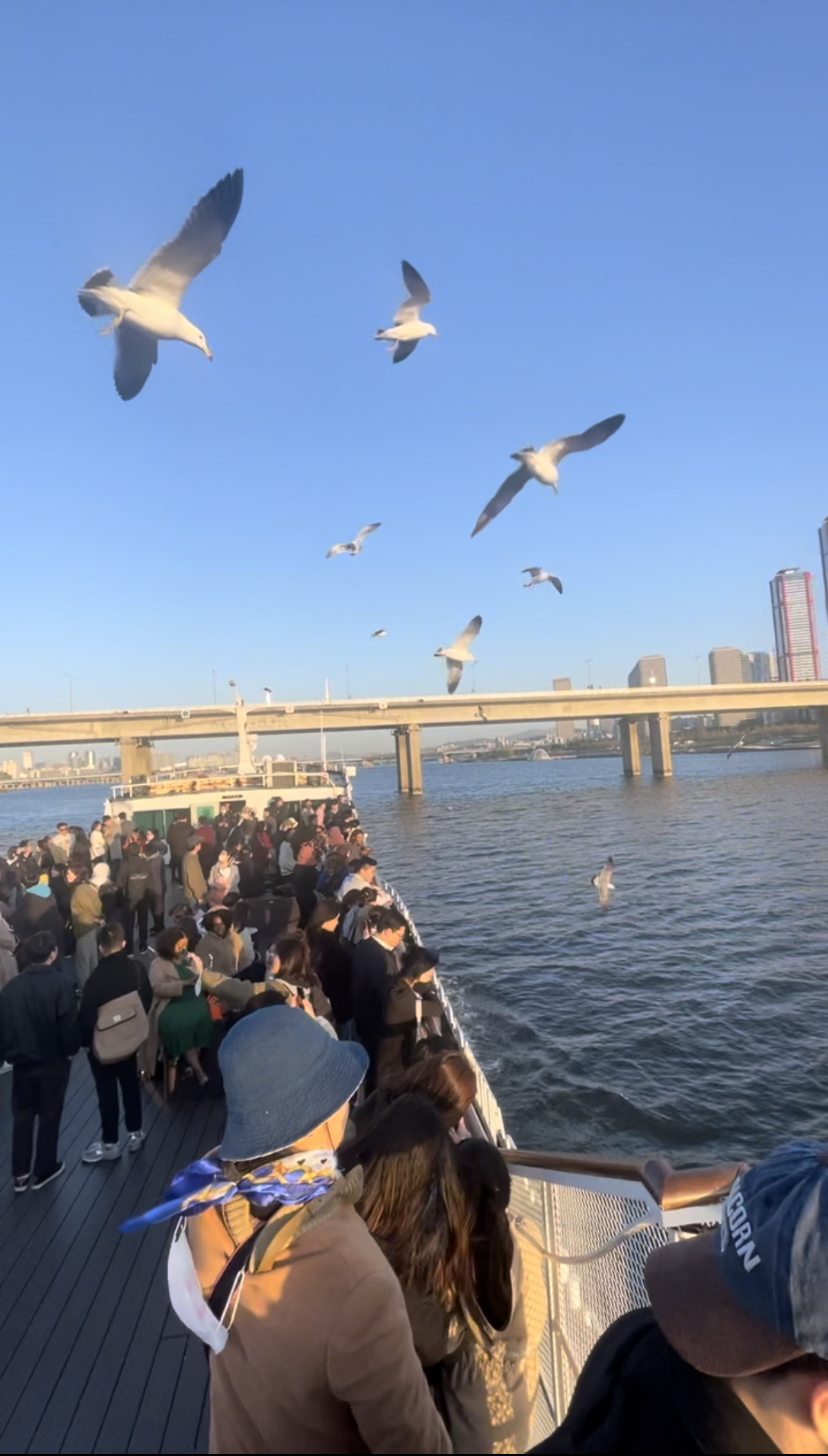
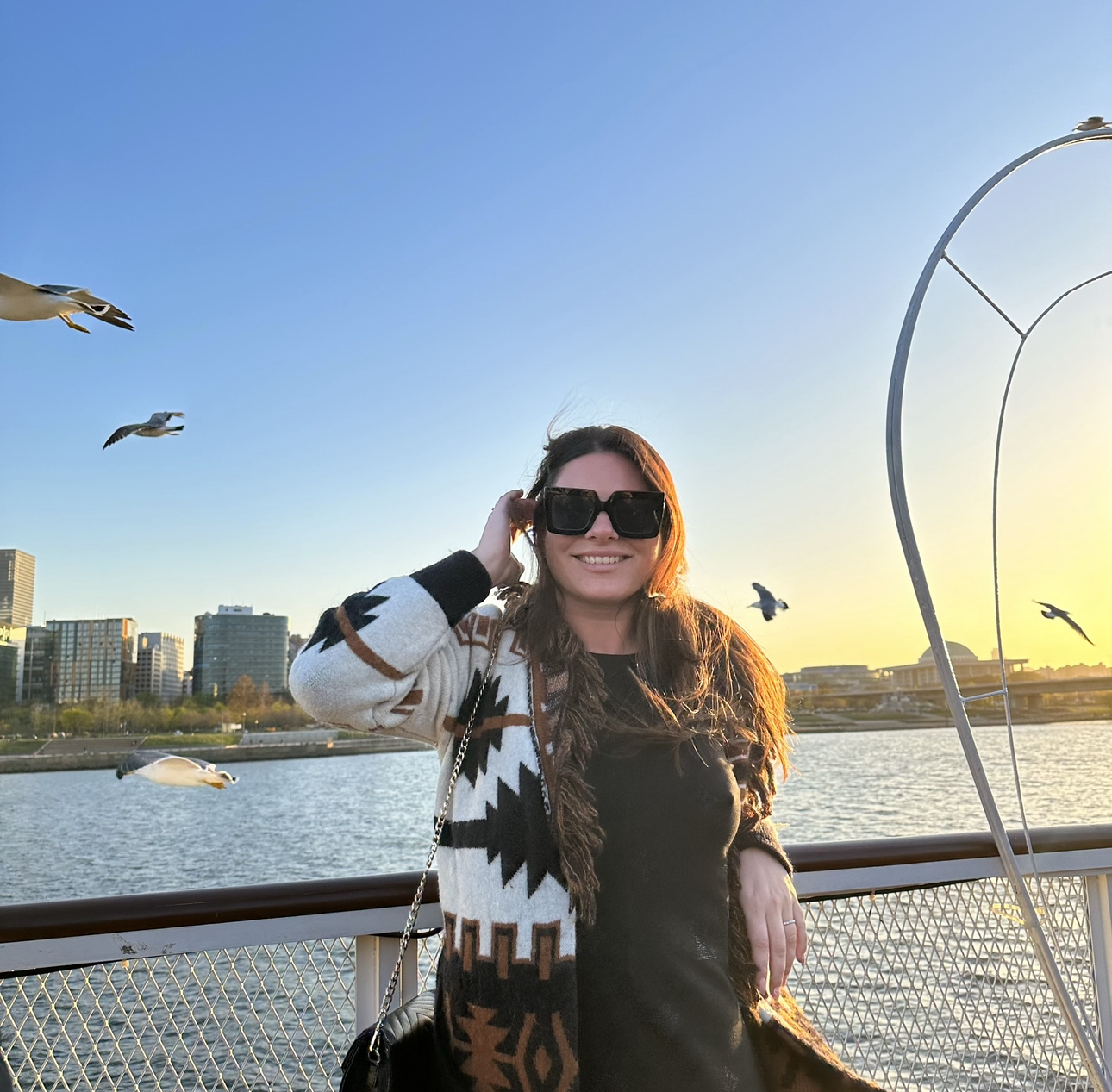
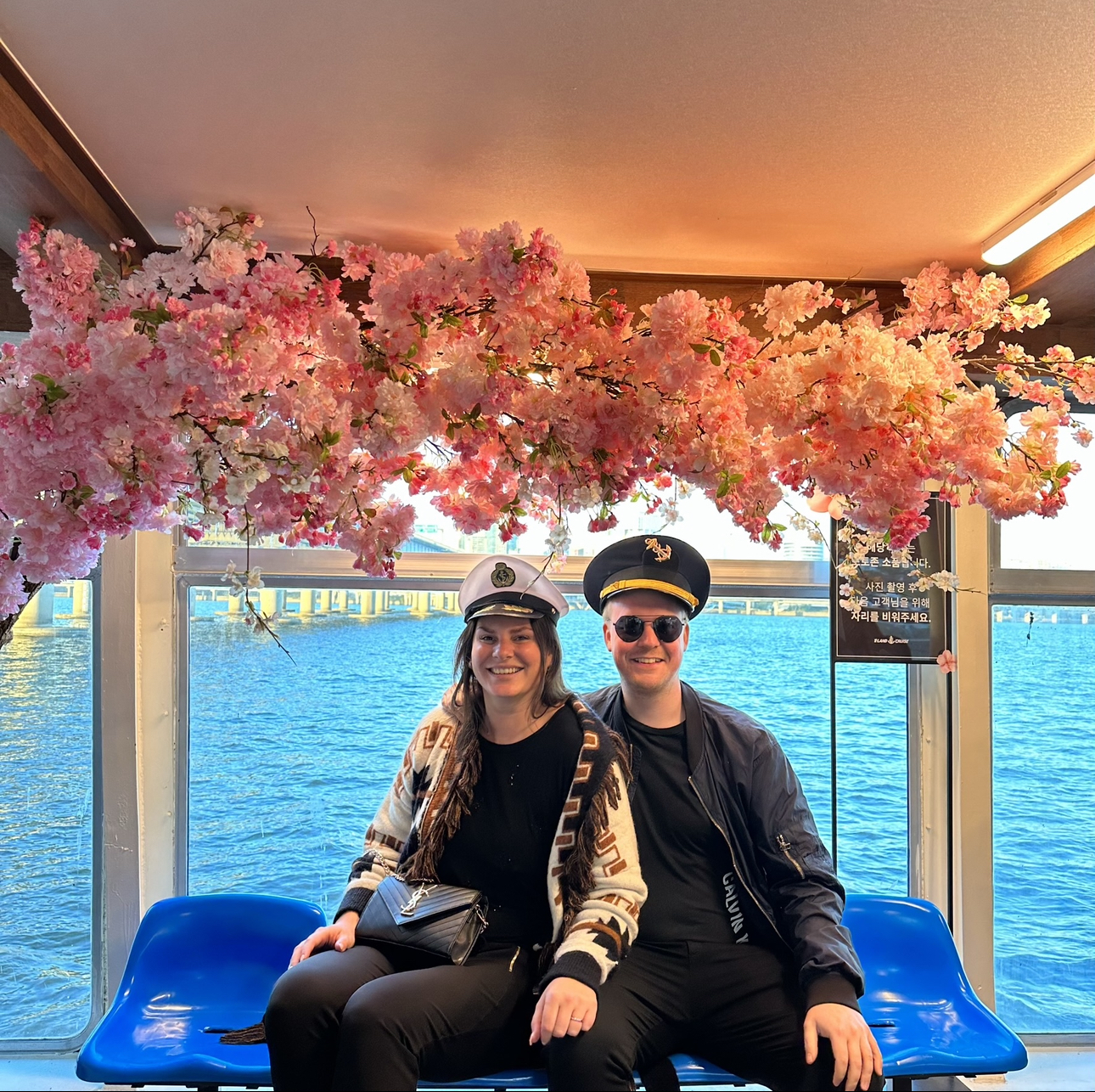
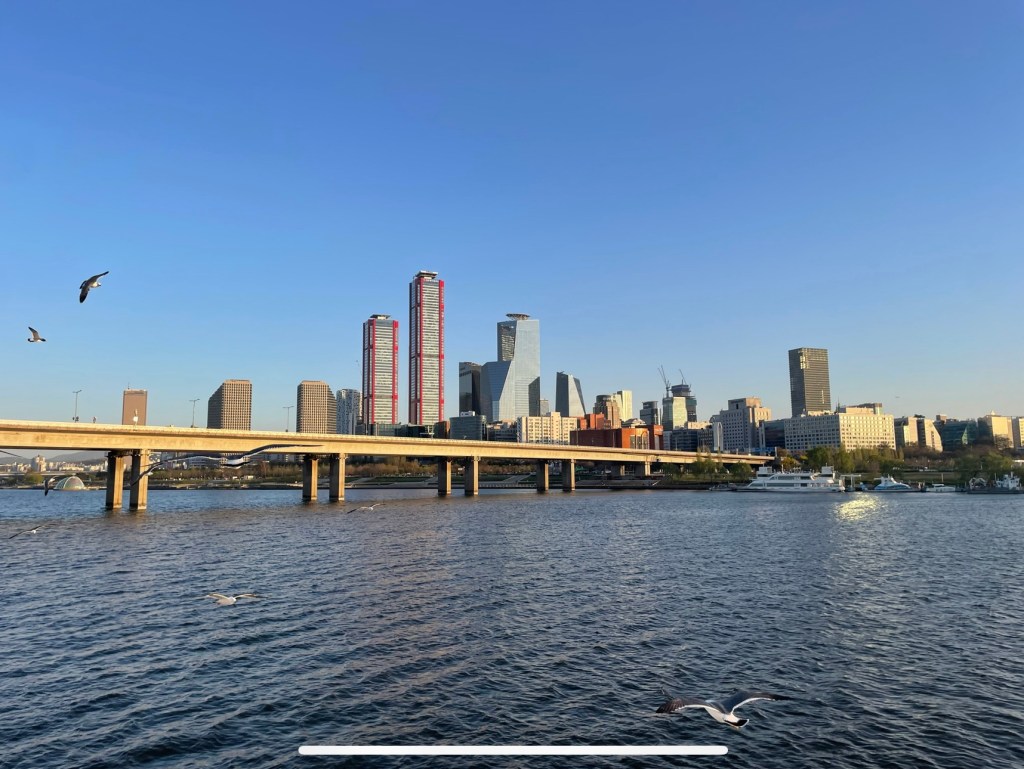
The cruise, though not overly large, featured two floors and was completely occupied. Consequently, we couldn’t secure seats together for the three of us. Undeterred, we opted to go upstairs to capture some photos during the sunset. Inside, numerous chairs were neatly arranged, creating an appearance that hinted at a potential live band performance, although no one took the stage, and the instruments remained untouched. Interestingly, despite being a sunset cruise, the boat returned before the actual sunset. Although we managed to capture some outdoor photos, the chilly weather prompted us to retreat indoors before long. The presence of numerous seagulls added an element of unpredictability, and I couldn’t help but envision scenarios where one of them might decide to leave an unexpected surprise.
The cruise journey was rather straightforward, navigating a bit to the left on the river before making a turn. While it may not have been an exceptionally unique experience, witnessing the vibrant cityscape from the water was undeniably captivating. The vastness of the city and the distinctive charm of its buildings took on a new perspective when viewed from the river.
Post-cruise, we delved into exploring Gangnam. My checklist included purchasing cosmetics, taking a photo in a photobooth (inspired by the trend among my Korean friends), and indulging in Korean barbecue on charcoal. This became the highlight of our evening, and I’ll delve into more details about our Gangnam escapades, encounters, and experiences in the upcoming post.
Subsequently, we delved into the vibrant district of Gangnam, where I had a couple of items on my agenda. My checklist included a few must-dos: purchasing cosmetics, experience taking photos in a photobooth (inspired by the countless images on my Korean friends’ Facebook profiles), relish Korean barbecue cooked over charcoal, and most importantly, experience the nightlife of Gangnam. True to our plans, we dedicated the rest of the evening to these activities.
Stay tuned for the next post, where I’ll share our adventure in Gangnam, detailing the encounters and experiences we stumbled upon.
Before my journey to South Korea, one of the highlights on my list was to explore the Gwangjang Market or a similar market in the area. Among the numerous markets in Seoul, Gwangjang was my chosen destination after thorough online research. Originally intended for the day of my photoshoot and the night out in Itaewon, our low energy levels led us to postpone the visit. However, my Korean friend Liz had a pleasant surprise for us – a visit to Gwangjang Market!
Gwangjang Market is one of the oldest markets in Seoul, dating back to the early 20th century. It’s a lively place with a lot of history, offering traditional Korean street food, textiles, clothes, and more. Exploring the market gave us a real taste of Korean culture and made our trip even more memorable.
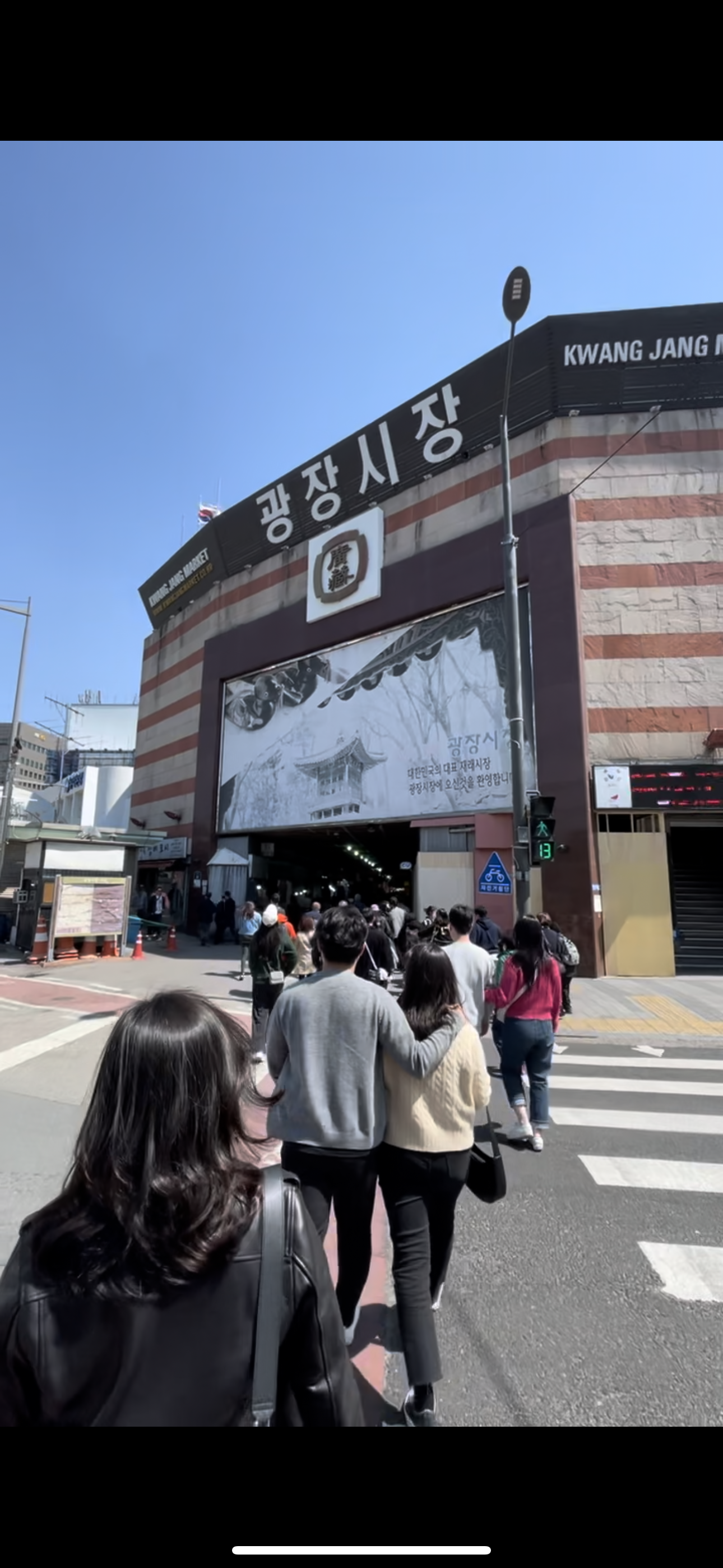
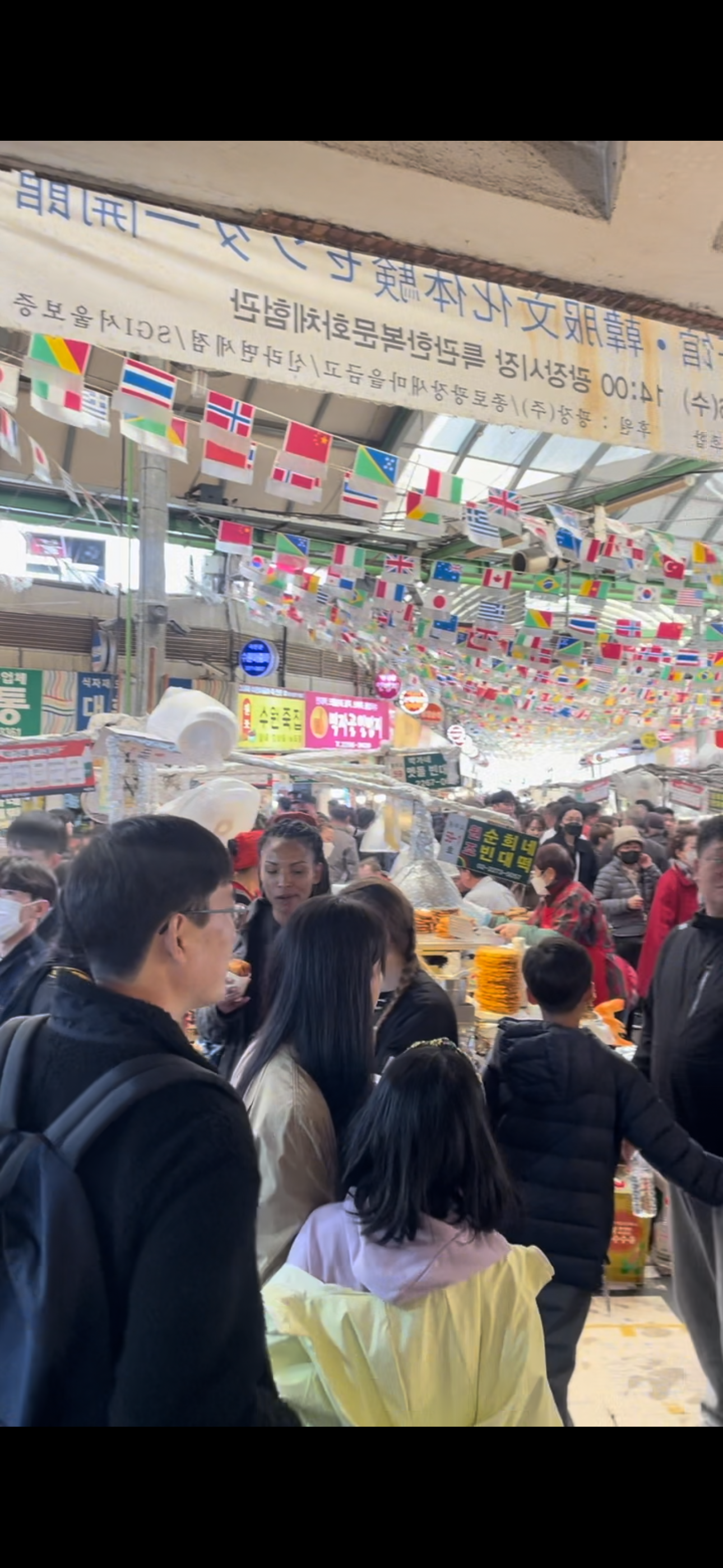
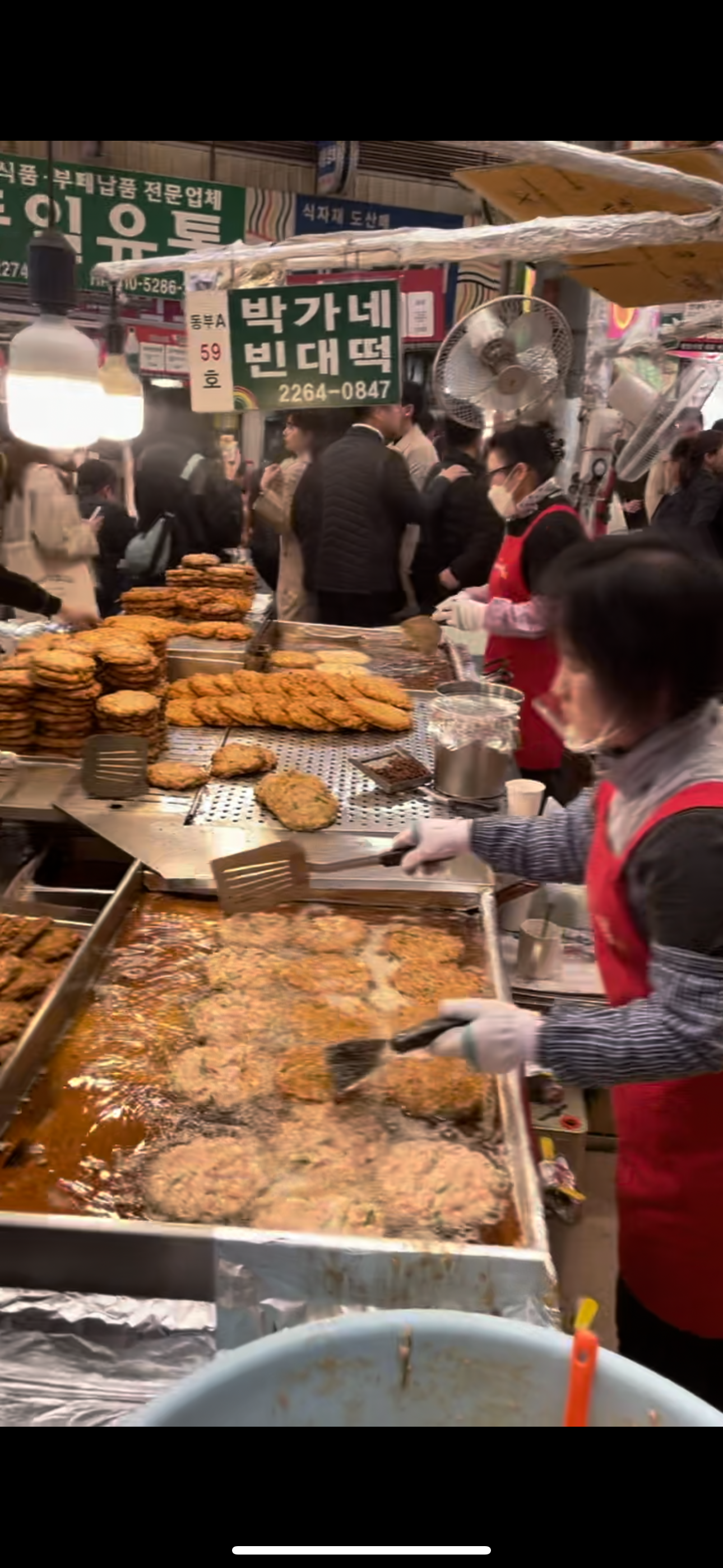
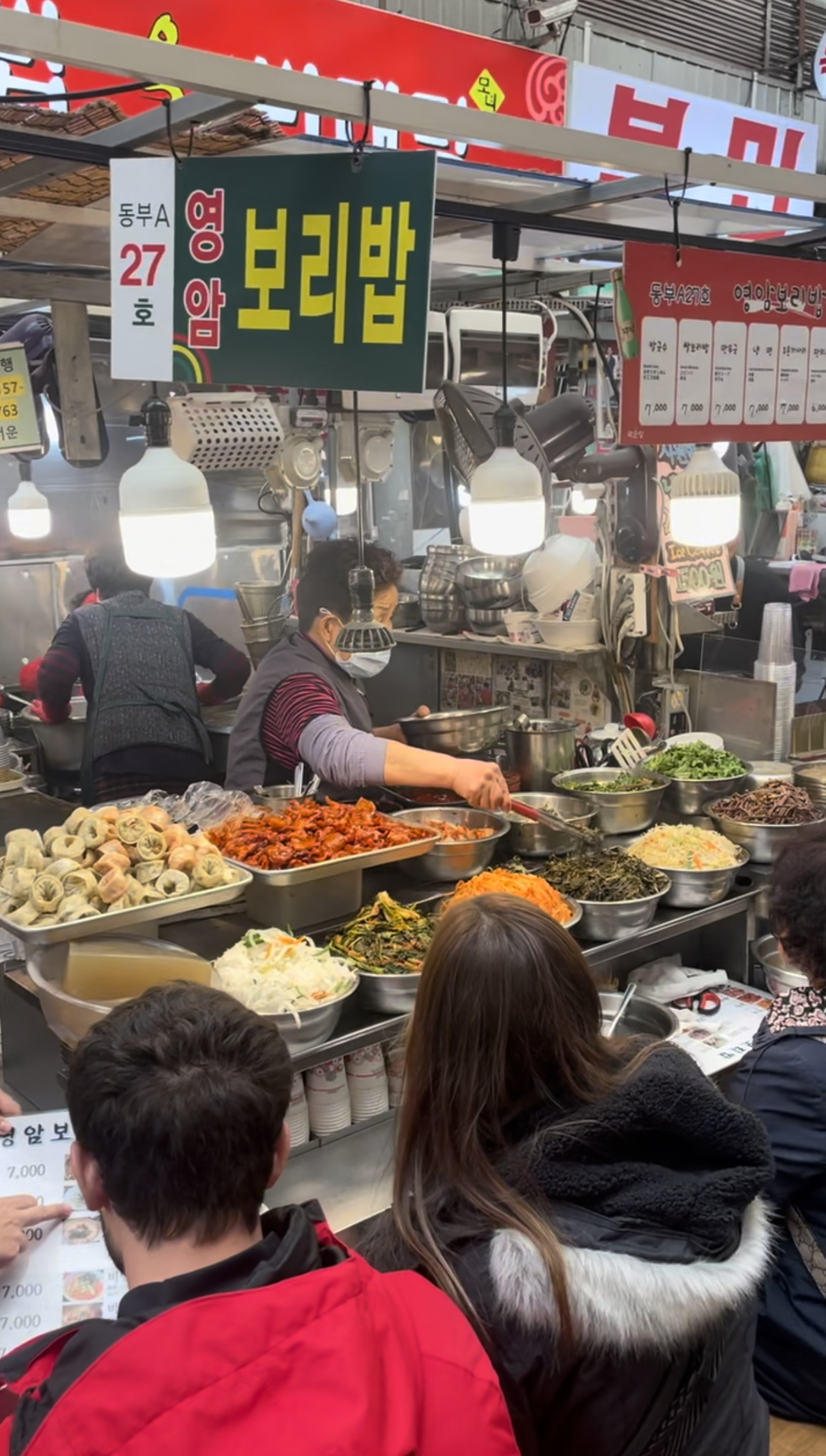
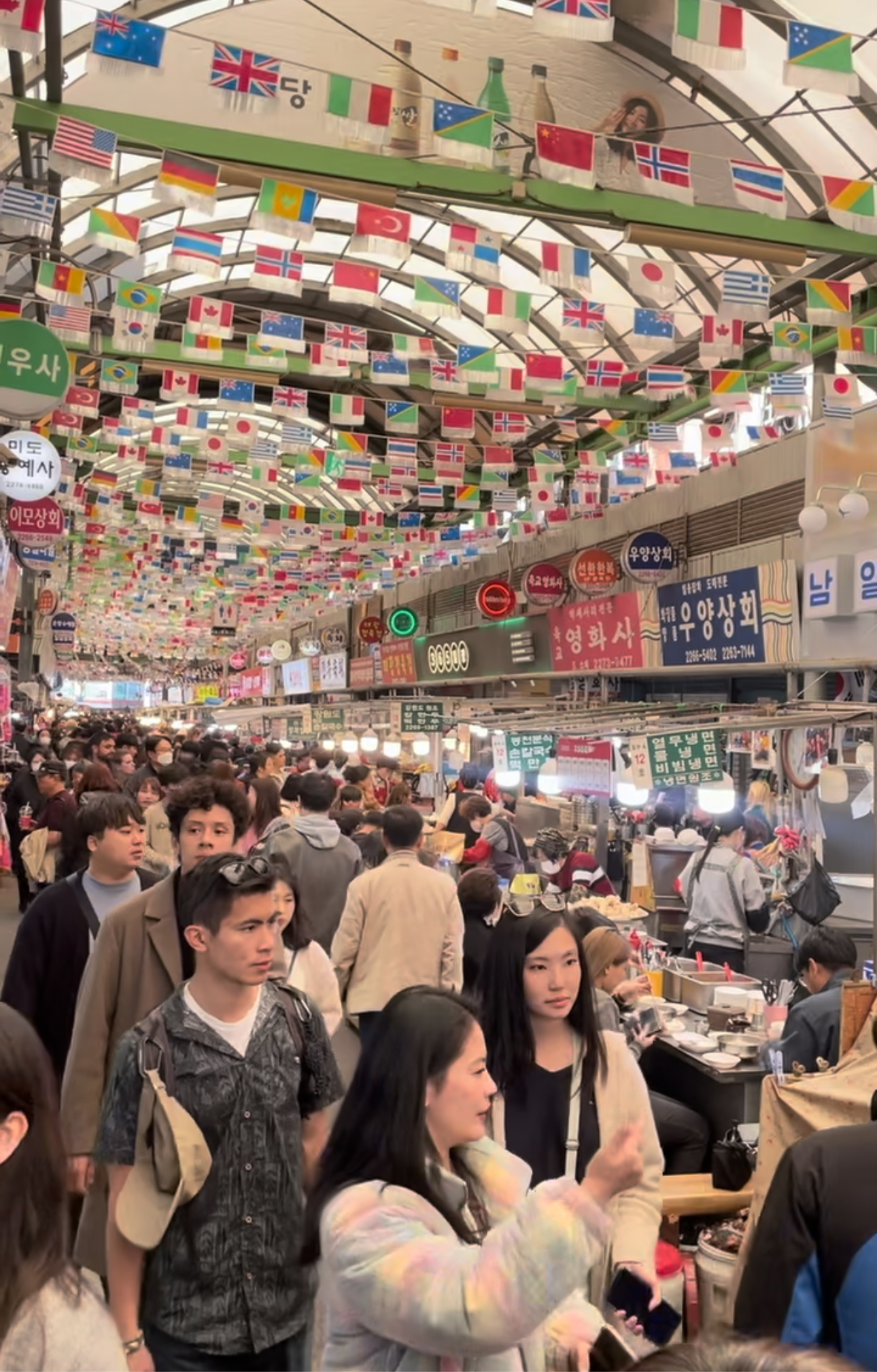
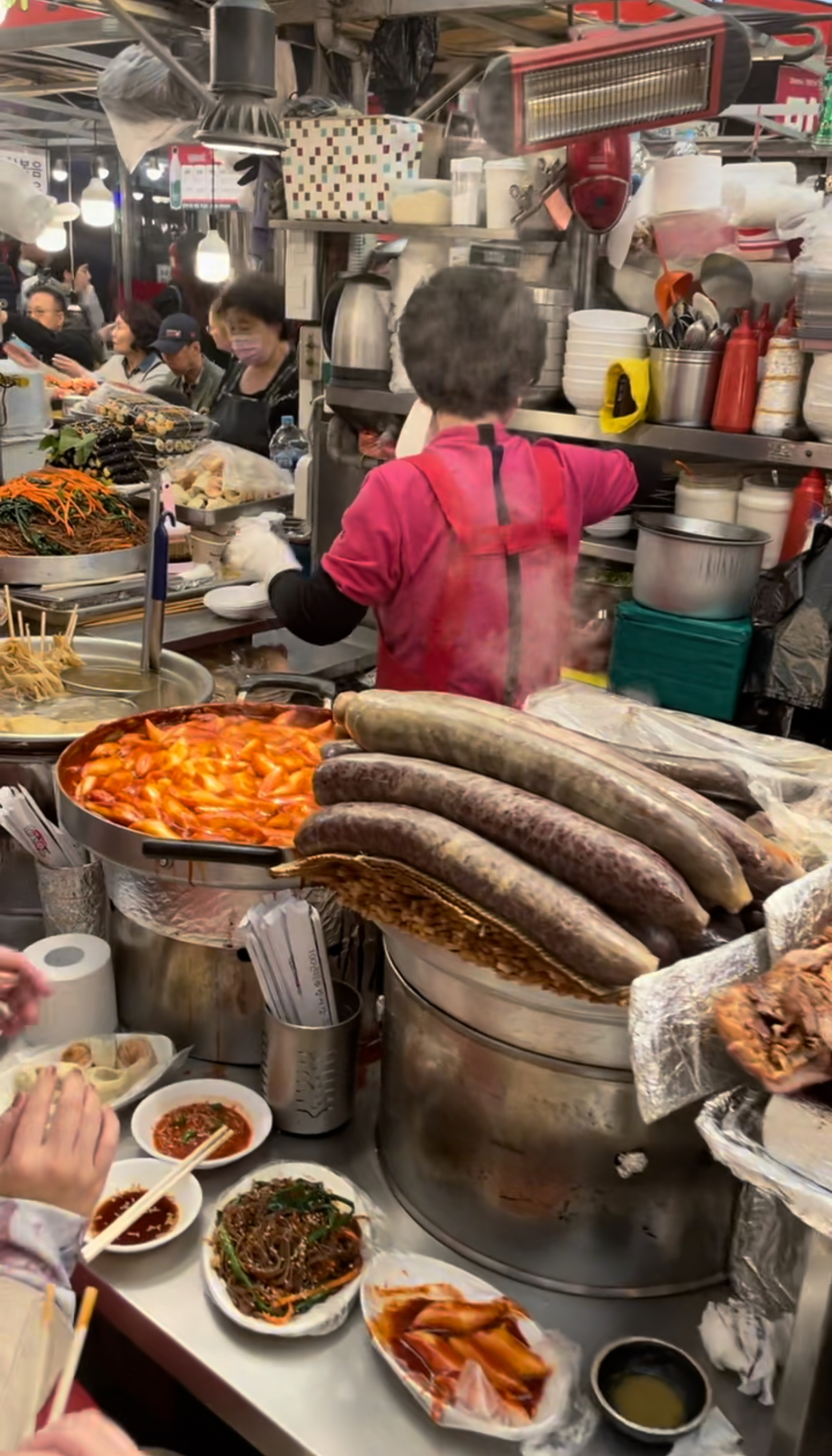
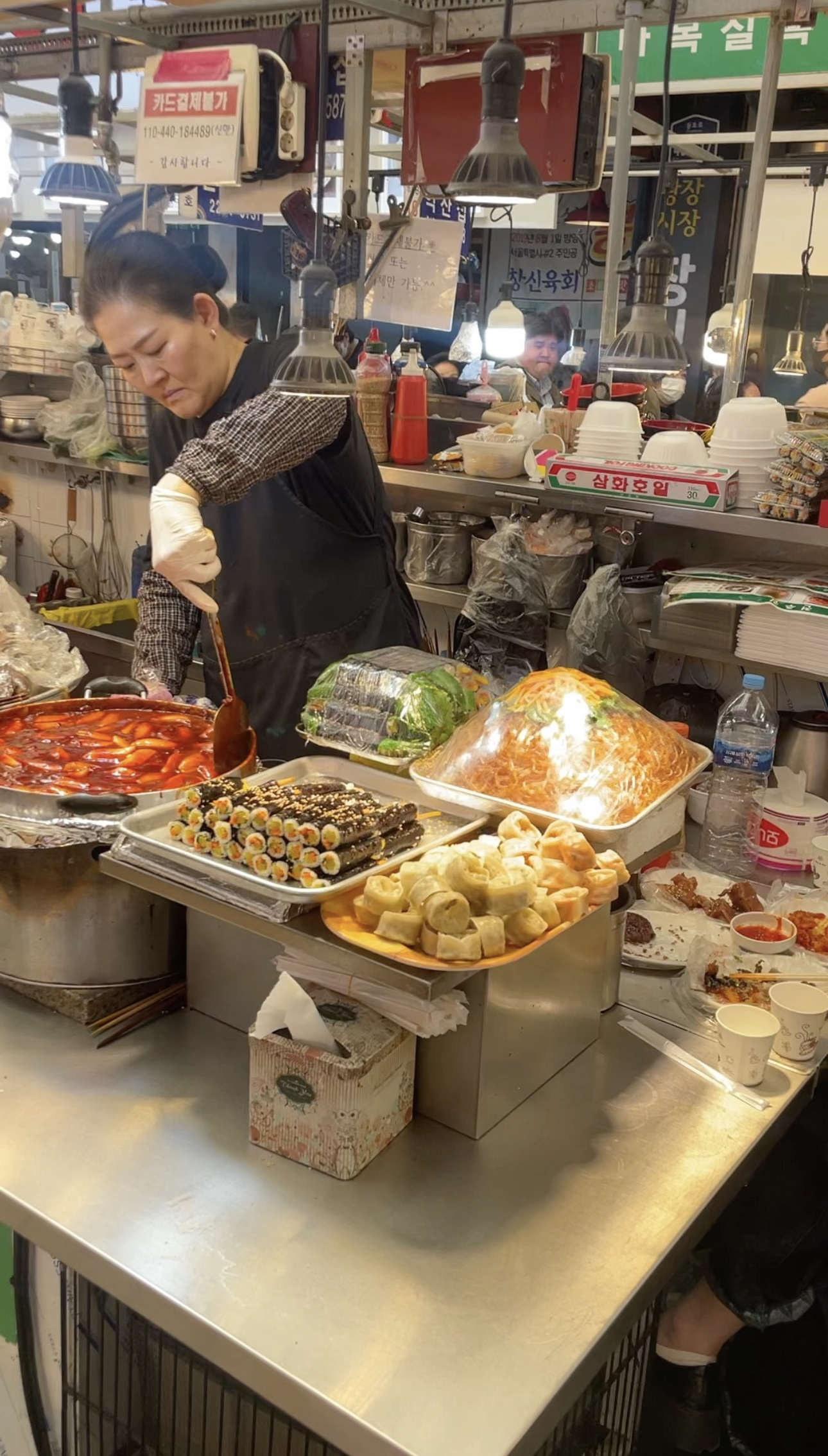
To reach Gwangjang Market, we hopped on the metro. Despite being more convenient from our previous hotel, the efficient metro lines made the journey easy.Upon arriving at the market, we noticed it was a large under roof market, looking already quite huge from the outside. Stepping in, we encountered a considerable crowd – perhaps not the ideal choice for a Saturday visit Initially passing stores offering various items like kitchenware, we observed international flags hanging from the ceiling. As we ventured further into the middle, the food section unfolded—a large area with numerous food options and, unsurprisingly, a considerable crowd. The challenge now was finding a seat and deciding where to start.
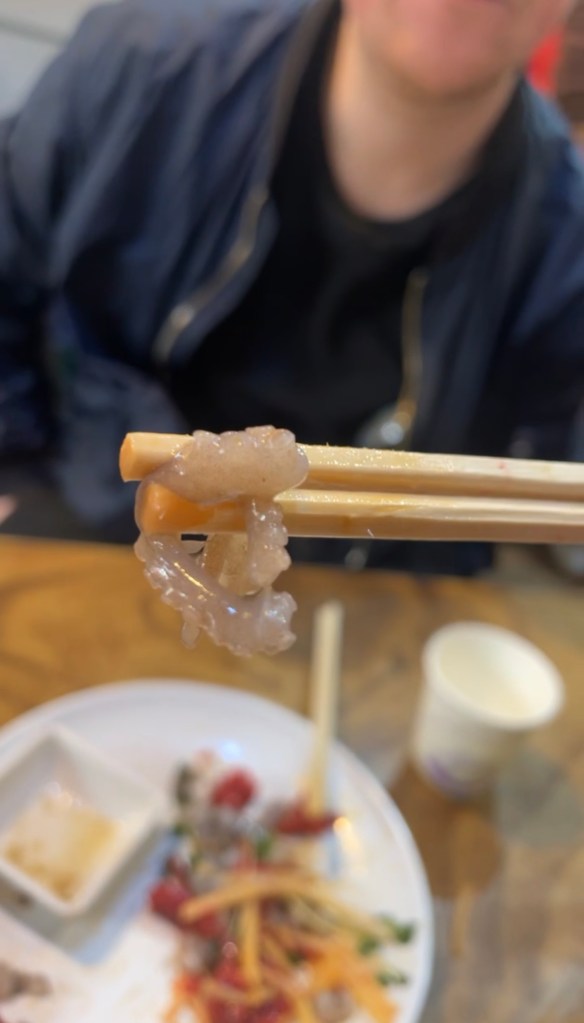
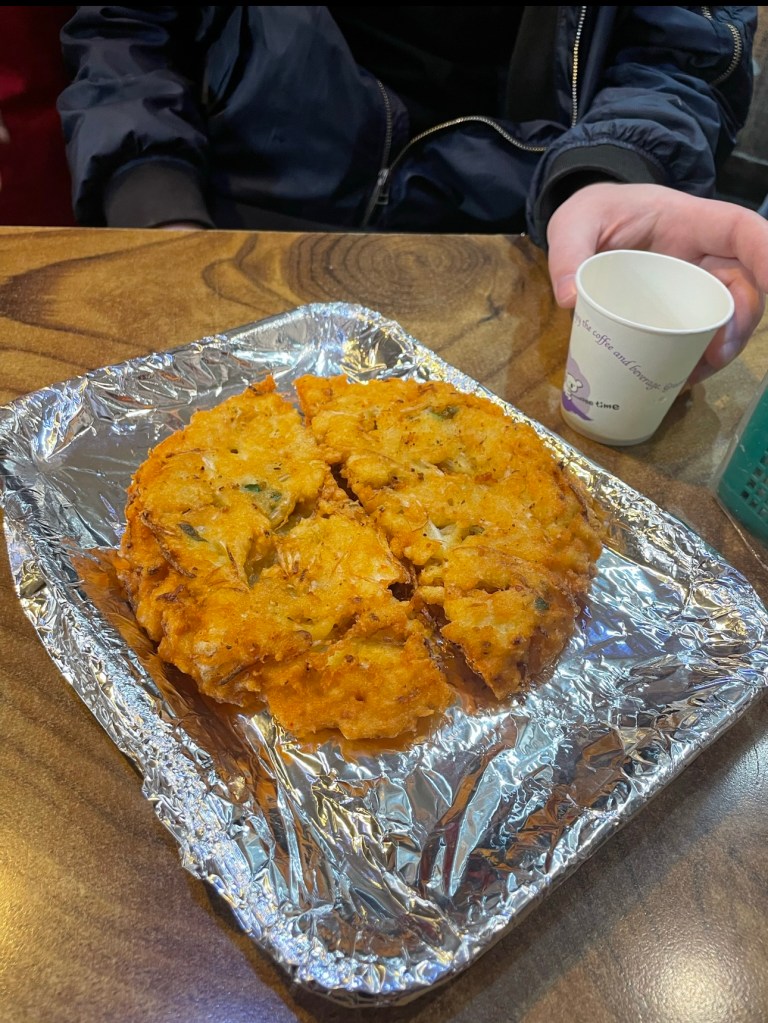
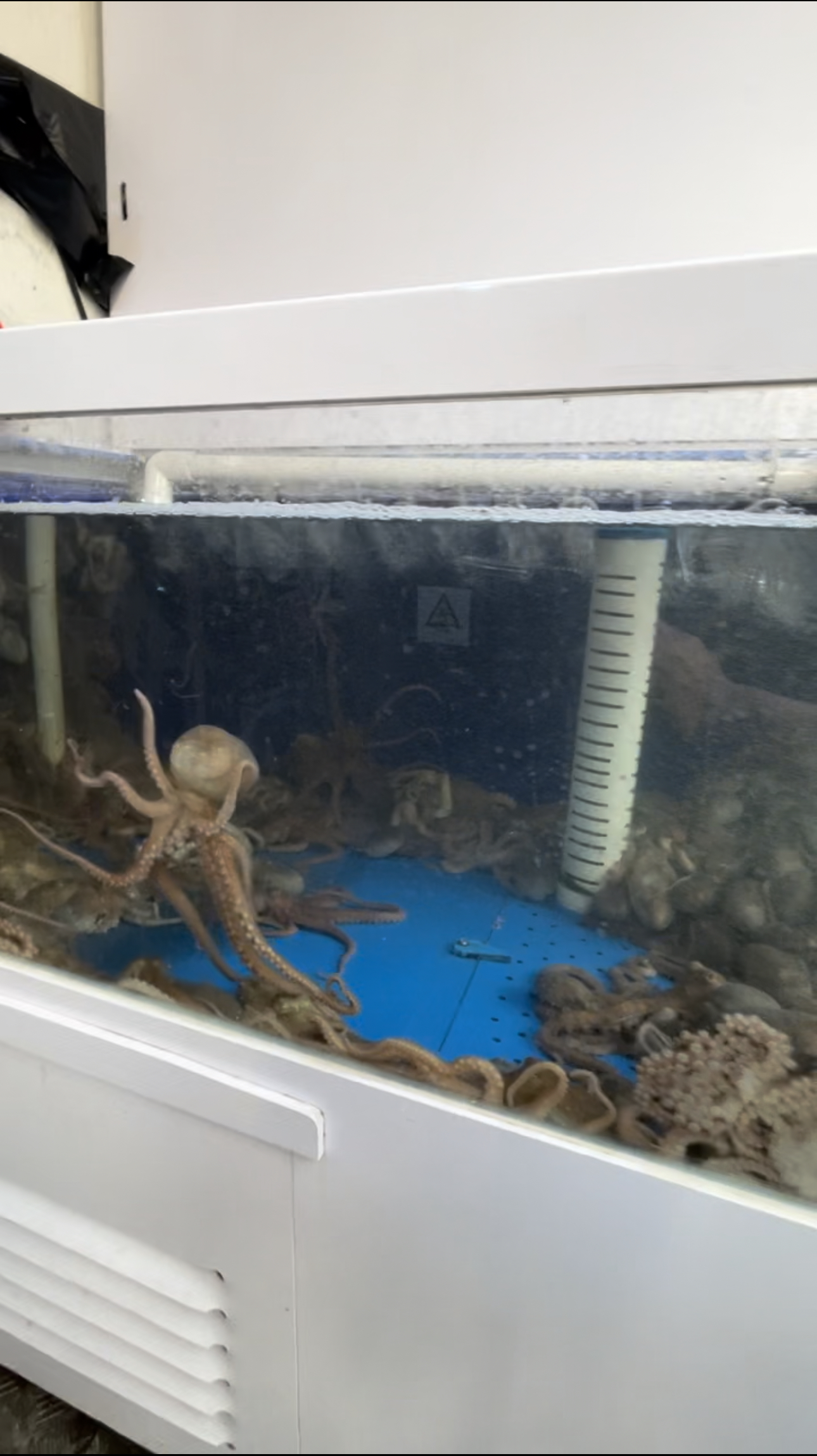
My friend insisted that I try the mung bean pancake, a market specialty, so we patiently waited in line for a seat. Eager to try a bit of everything on the menu, and explore other food stalls, although not entirely practical, we decided to begin with the pancake.Another intriguing item I wanted to try was the live octopus. While it’s not truly alive, the octopus’ muscles continue to move even after being cut, creating the illusion of life. The phenomenon is often attributed to residual nerve activity, causing the appearance of motion in the tentacles.
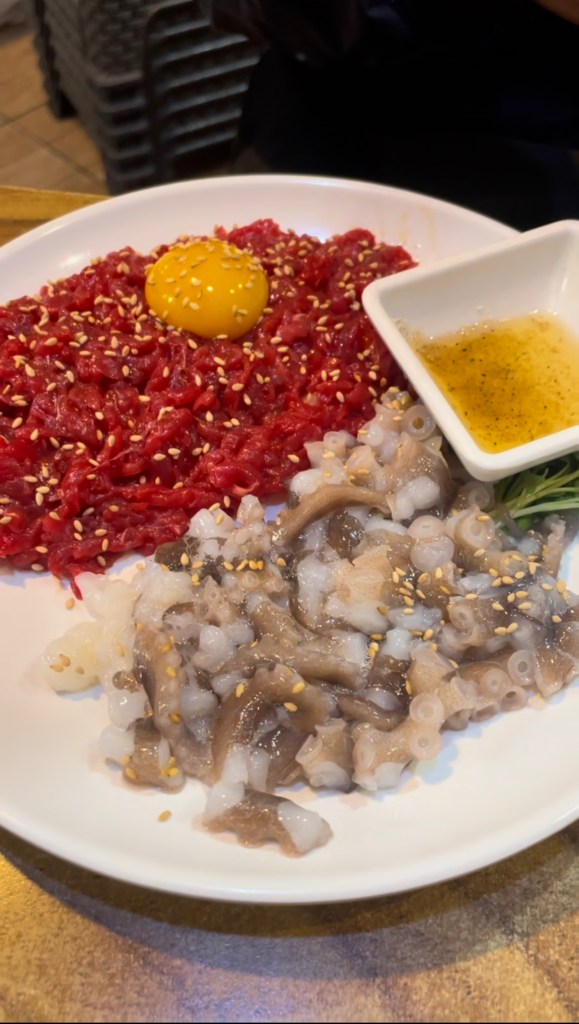
Our Gwangjang Market experience included sampling the pancake, live octopus, and raw Korean beef, similar to a beef tartare. While these might sound unusual, my love for exploring new flavors and specialties from different countries reflects my belief that food is a gateway to understanding diverse cultures. Surprisingly, the live octopus turned out to be quite tasty! It resembled the freshest sashimi, and the moving part wasn’t as disturbing as expected; it clung to the tongue with a rather amusing sensation. The raw beef, though needing a touch more seasoning, offered an enjoyable flavor. The pancake rounded off the experience. What made it even more enjoyable was the presence of two older Korean ladies sitting next to us, sipping soju and sharing various foods. Despite not speaking a word of English, they found it very amusing to share various dishes with my partner and encourage him to join them in drinking soju. Being as kind as he is, he happily went along with it.
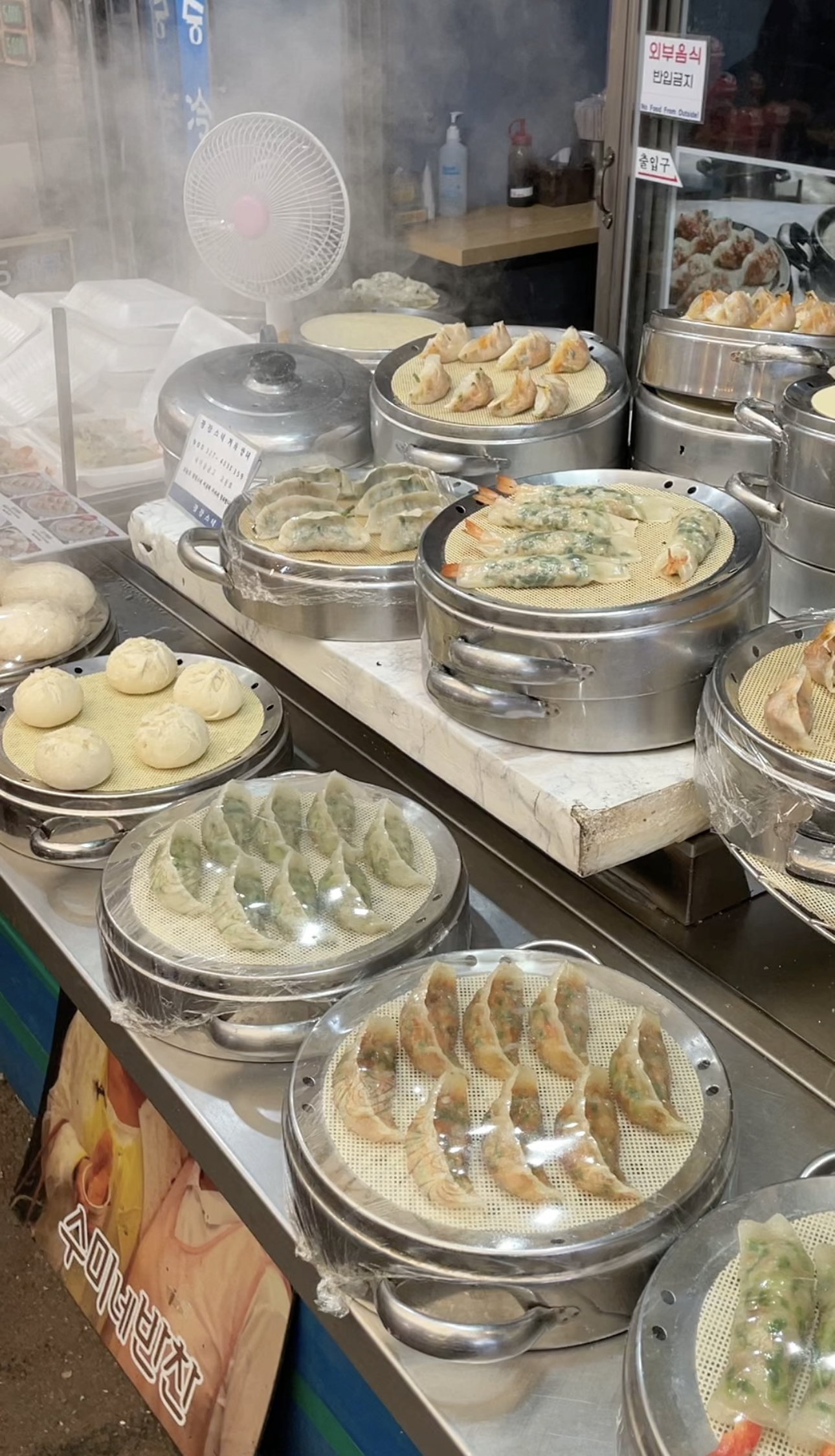
We continued our walk passing by numerous seafood and dumpling options in the heart of the market.There were countless octopuses in aquariums and many other intriguing things I had never seen before – a variety of seafood, kimchis, and more. I wished I could have tried everything.
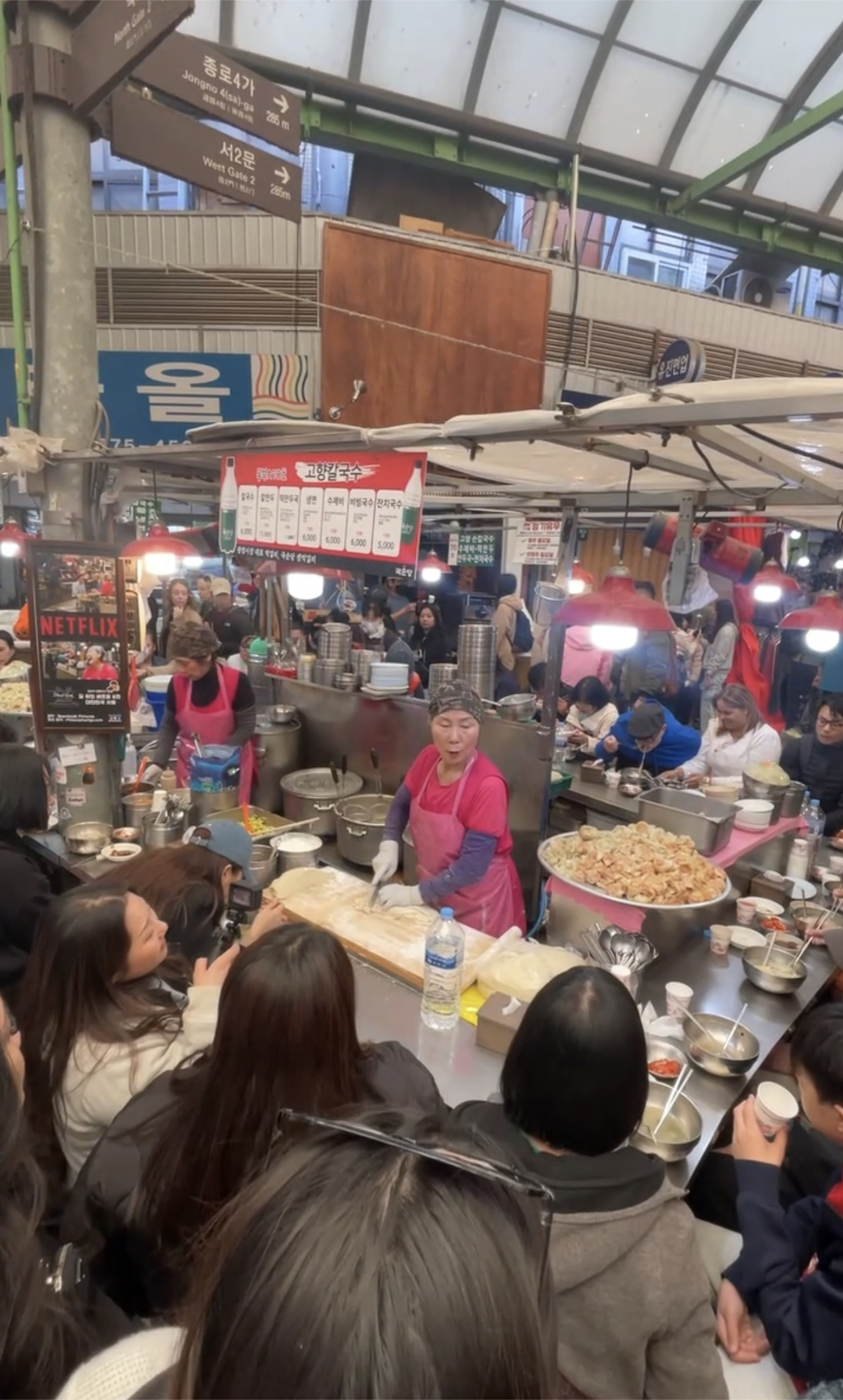
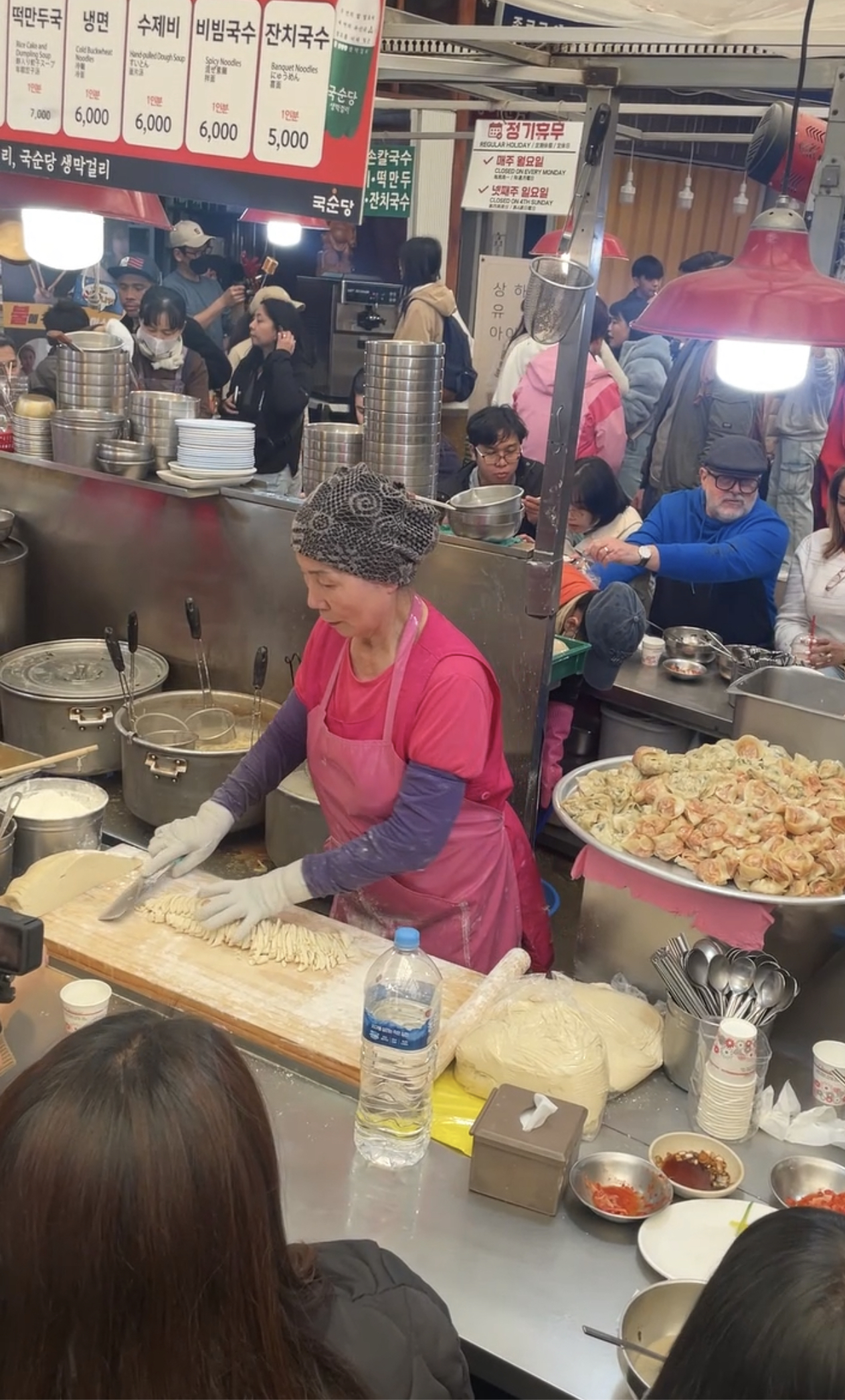
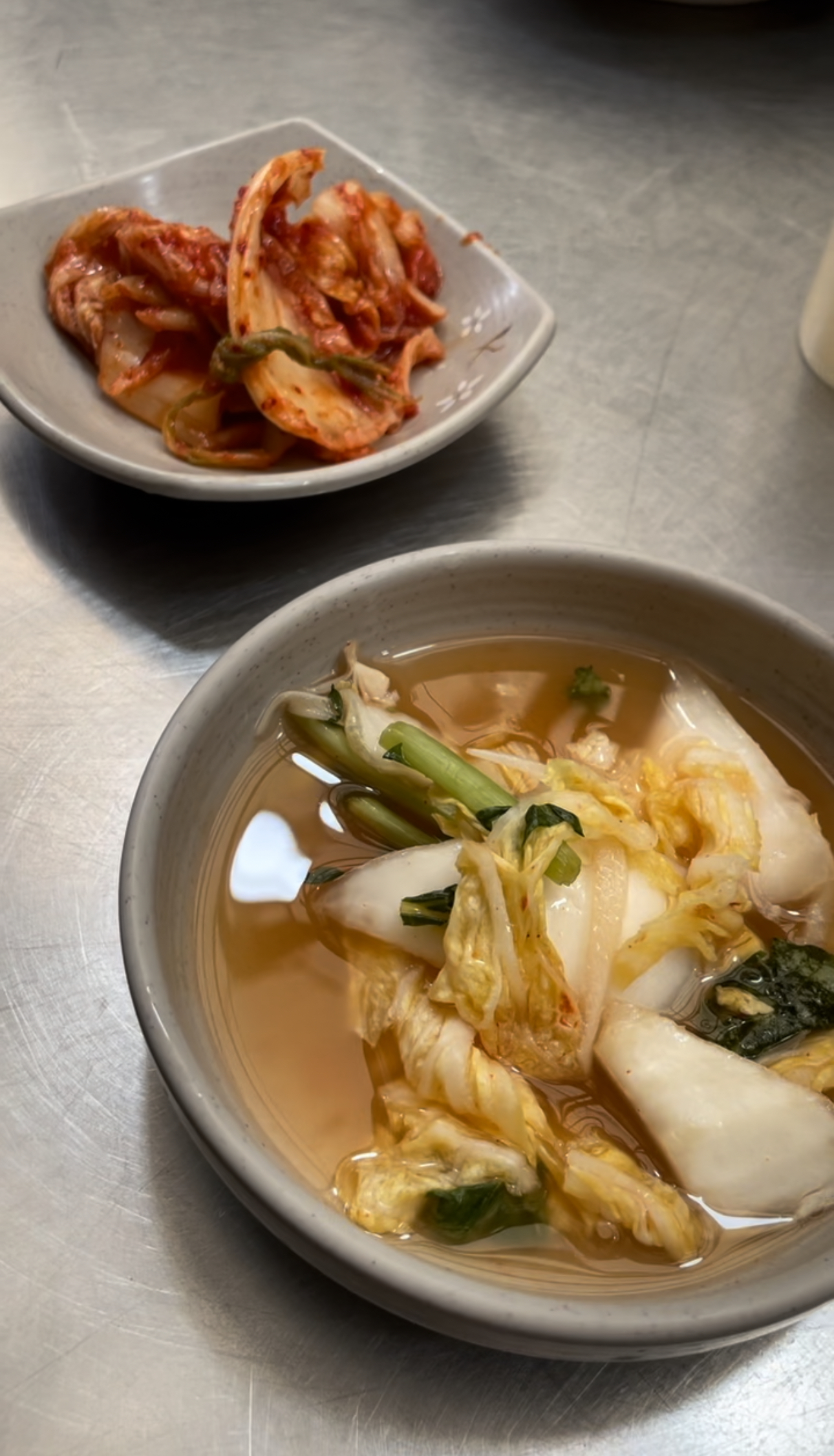
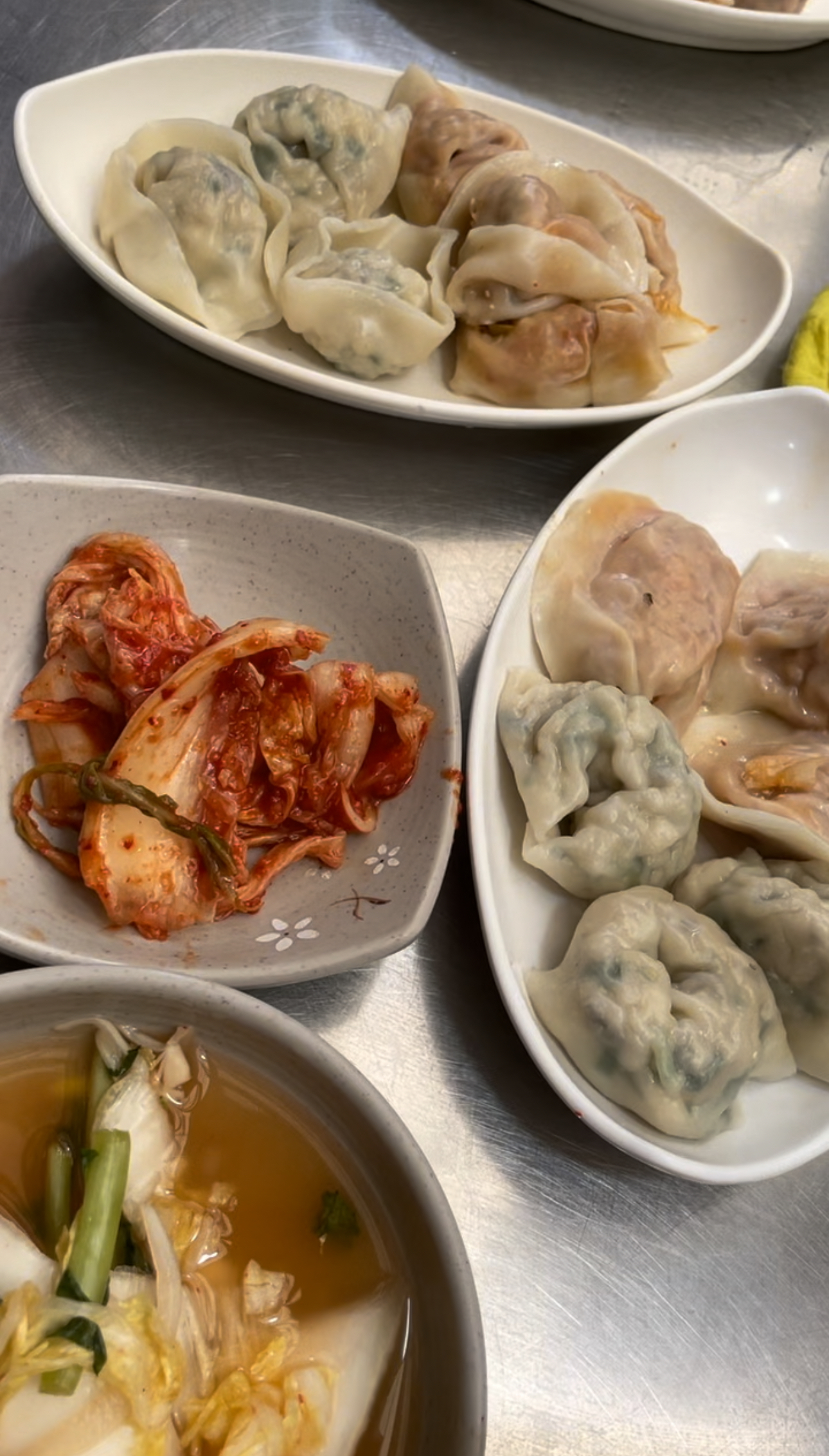
One of the stands caught our attention, where Choo Yonsoon, known from the Netflix series “Street Food,” was making dumplings. Though we didn’t try hers, we opted for similar-looking ones from a nearby stall due to the long line. These dumplings were delicious, with various fillings like kimchi. We also tried a dumpling soup, accompanied by a side of kimchi. Regrettably, this concluded our dining at the market as we were already quite full, despite sharing everything. I wish I had tasted more dishes, particularly seafood, dumplings, and gimbap. I had my eyes set on trying gimbap with raw beef, but we simply couldn’t indulge in more food.
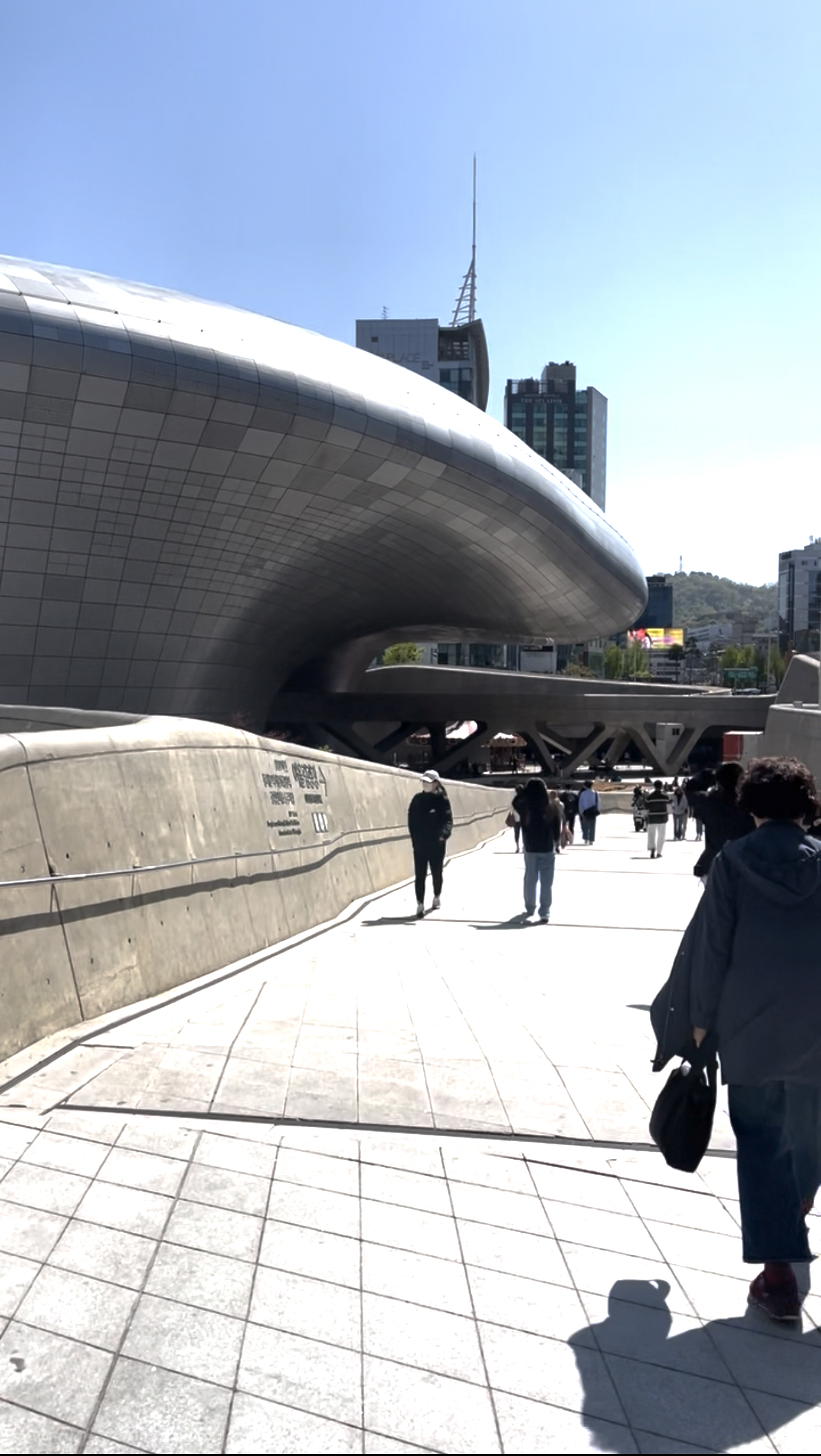
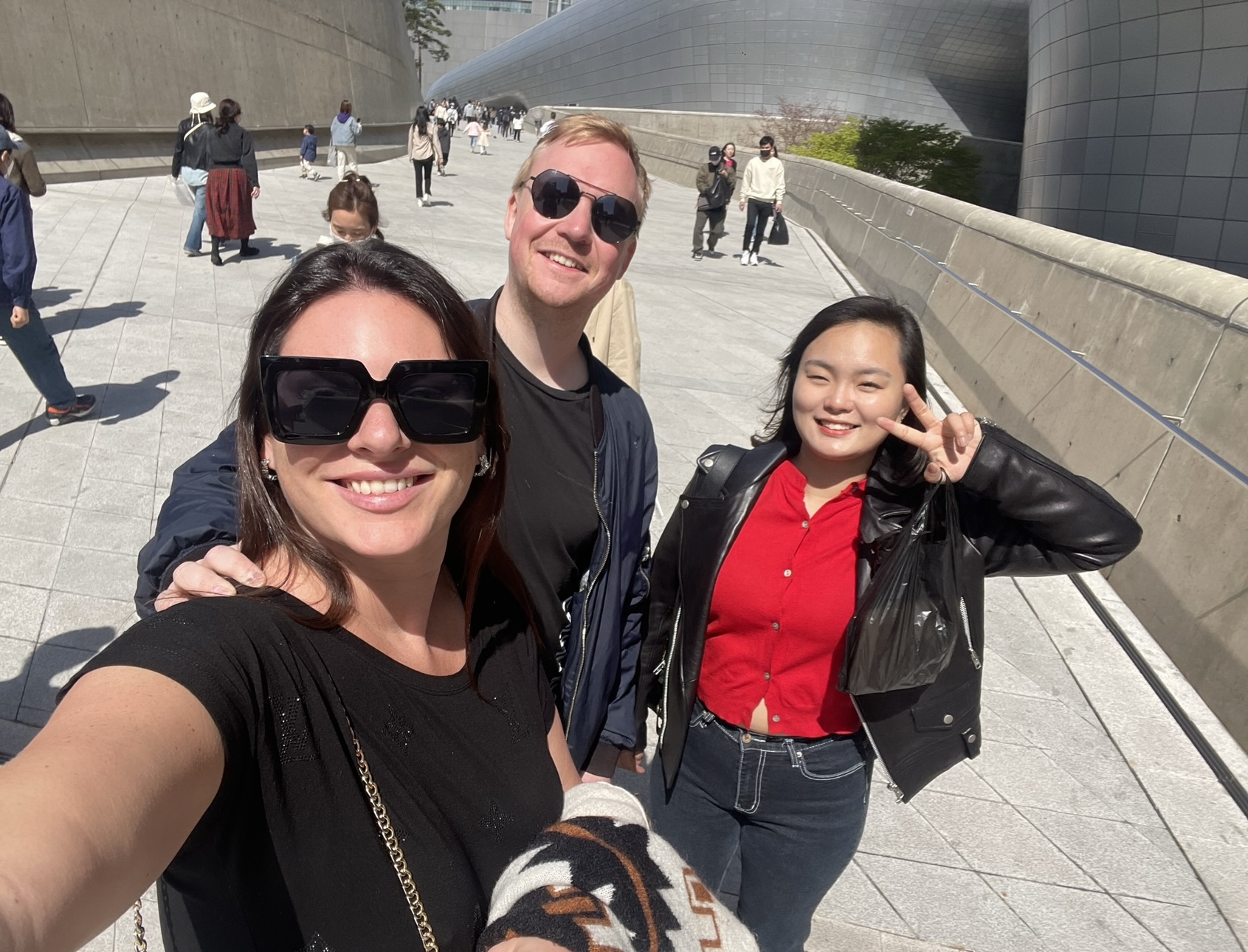
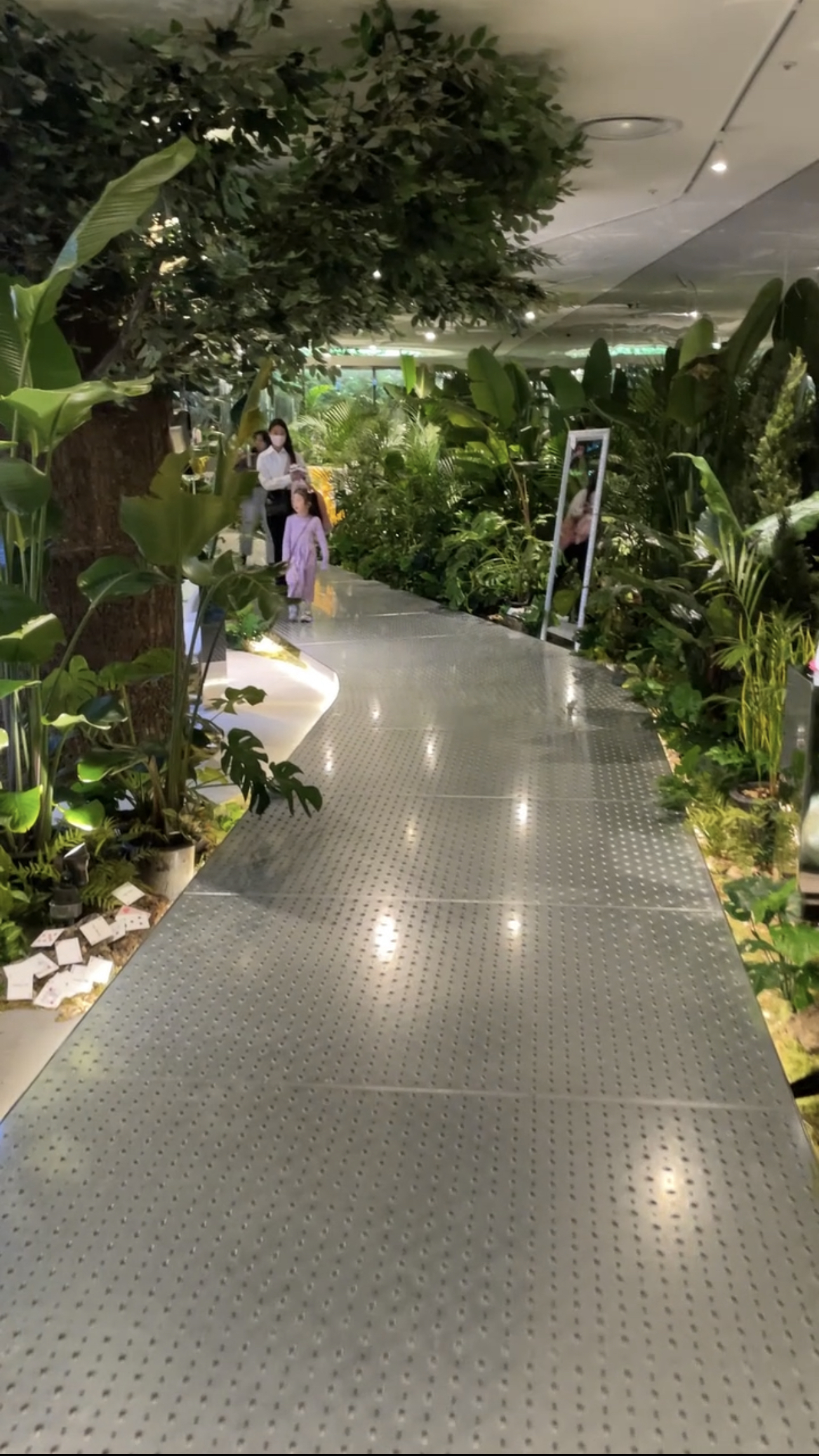
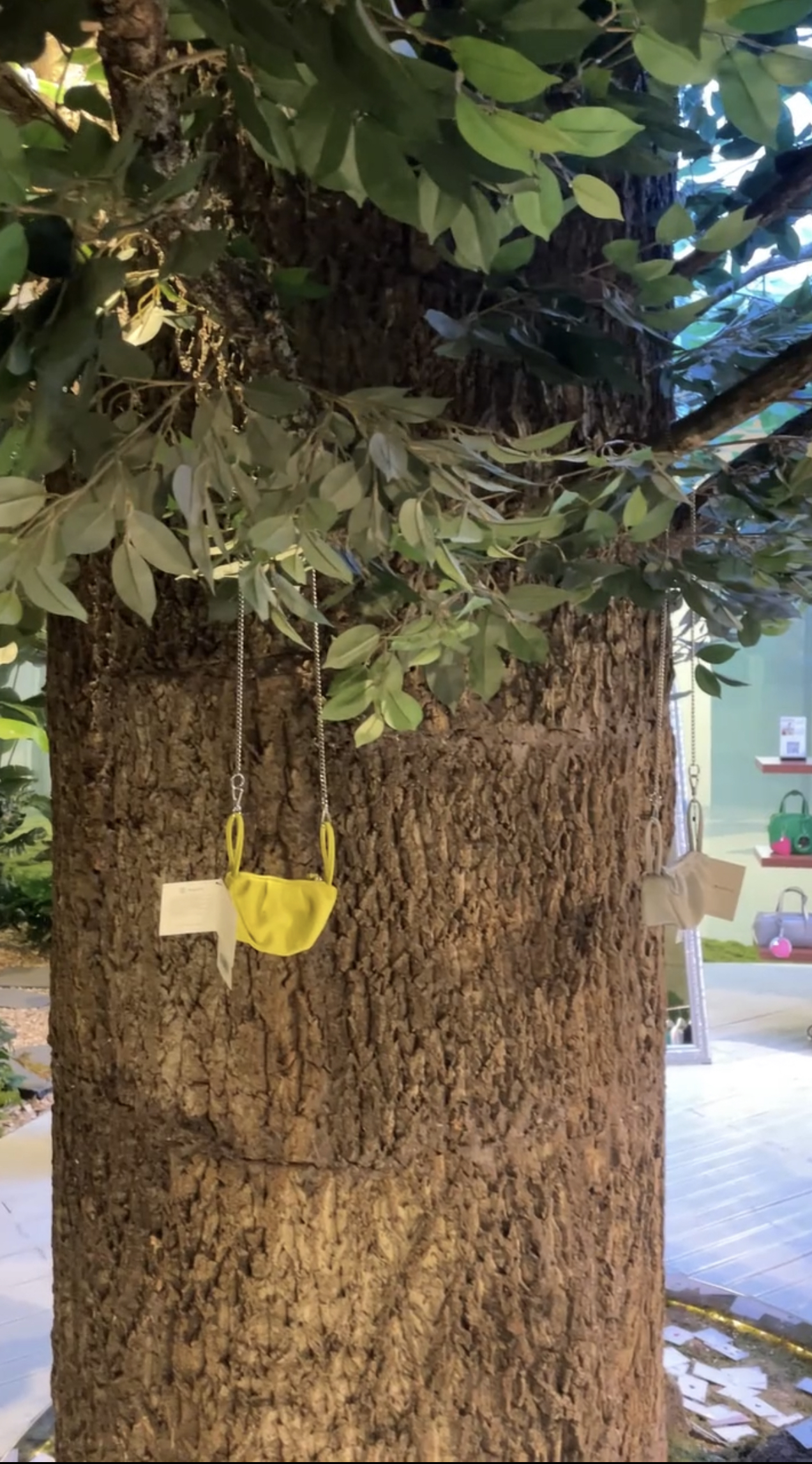
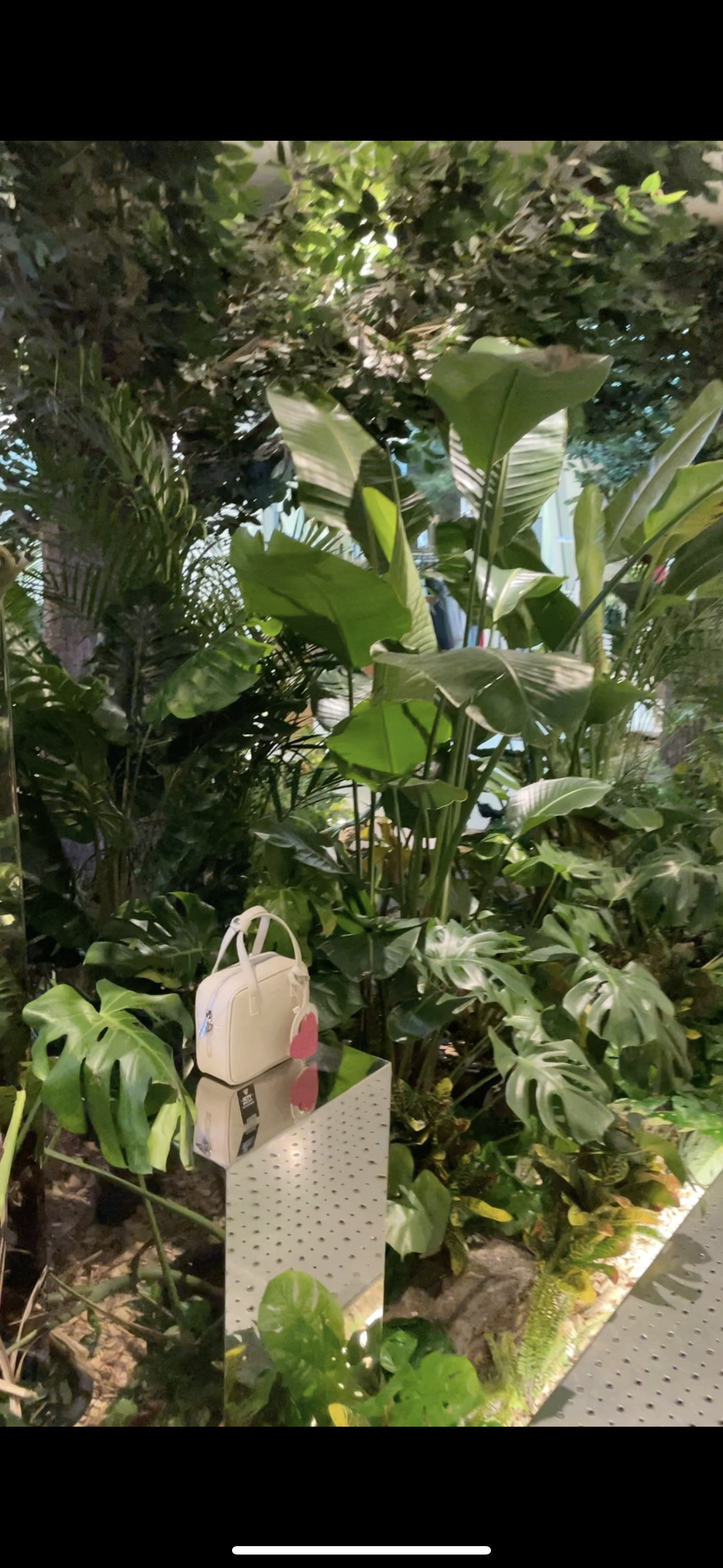
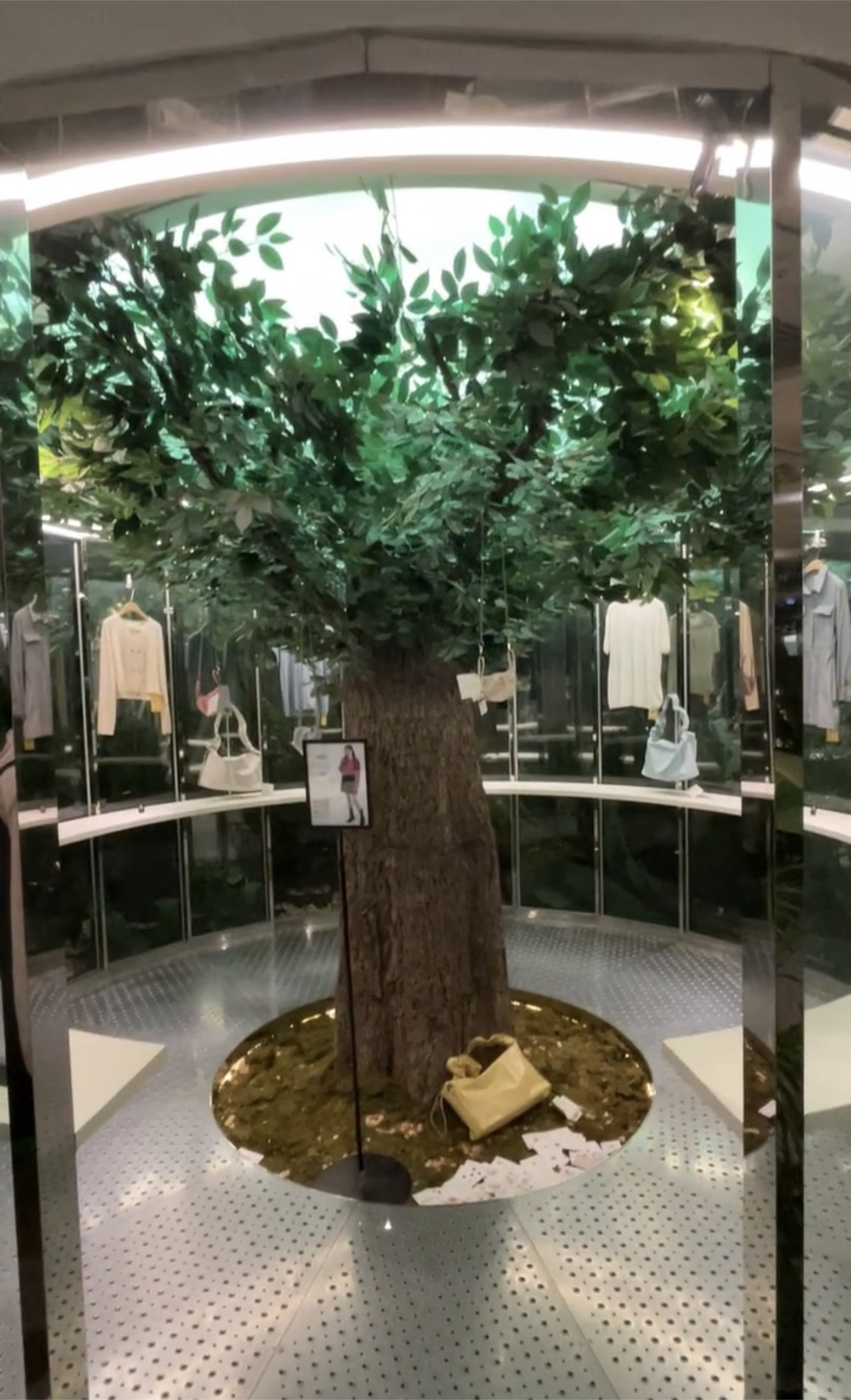
Our final stop was to grab some coffee and juice for me – I guess I still haven’t fully embraced adulthood as I never developed a liking for coffee. Afterward, we continued exploring the streets of Seoul with Liz. She introduced us to Dongdaemun Design Plaza, conveniently located in the same area. I’m grateful that she took us there because I might not have chosen to visit it on my own. It turned out to be a captivating building with interesting exhibits inside. One highlight was a shopping exhibition featuring a rainforest-themed setup with bags hanging from the trees – a visually appealing concept. Given its close proximity to the market, it’s a great idea to explore both places at the same time. Additionally, there’s a stylish modern coffee place for coffee enthusiasts and, of course, for those like me who prefer alternative beverages.
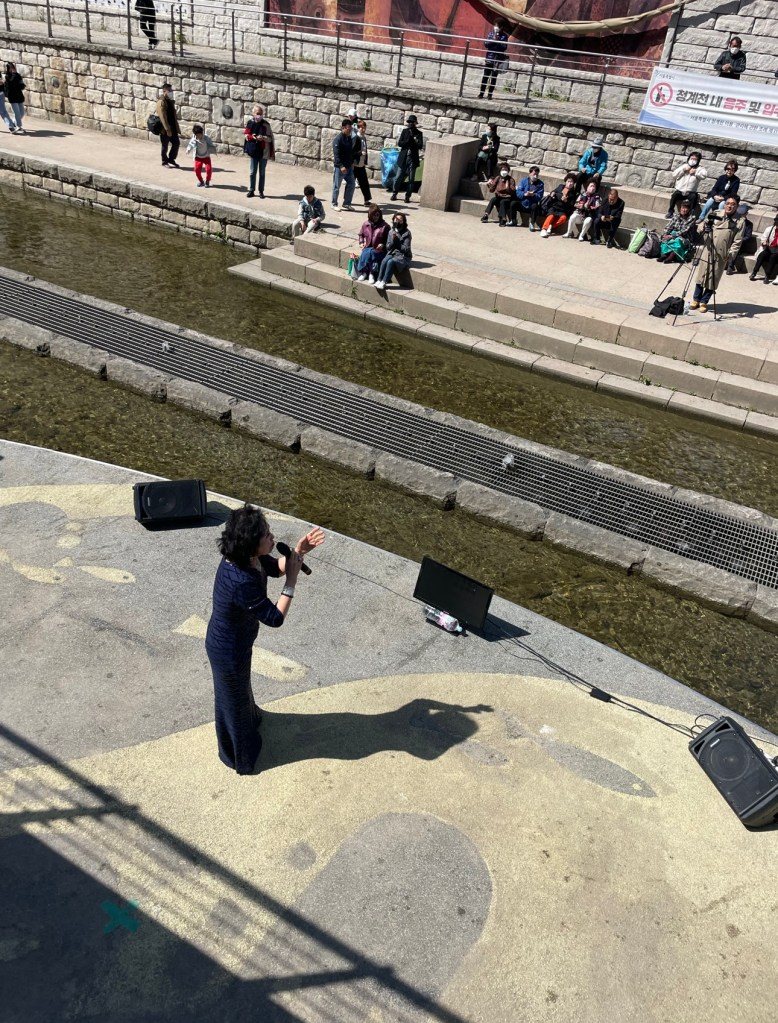
Another attraction in the area is the Cheonggyecheon Stream, apparently known from many Korean movies and TV-series. It’s genuinely pleasant to walk along this stream; many people stroll around, and we even stumbled upon some kind of concert featuring older Korean ladies, presumably famous back in the day, having a free concert down by the stream. The atmosphere was charming.
Seoul offers multitude of incredible attractions and you can simply wander around, uncovering something new and interesting in every direction. Therefore, I suggest exploring freely, getting lost in the streets, and discovering without excessive planning. That’s precisely what I would have done, but regrettably, time constraints prompted us to stick to the plan to see all the things we desired. Next time, I’ll certainly plan more time in this city. In the upcoming post, I’ll delve into the remaining activities of that day, including the Han River sunset cruise.
What positive events have taken place in your life over the past year?
I lived an incredible life in the heart of Warsaw; I tried some really amazing restaurants; I finished my 3rd master’s degree; I bought an apartment in Spain; I went to South Korea, Spain and Zanzibar; I moved from Warsaw to the north of Norway where you can see the northern lights quite often; I started my first work as psychologist; I have visited many places nearby, including several visits to Finland, and celebrated my birthday in a beautiful setting in a northern light hut in Finland and had some great food and drinks at an amazing sami inspised fine dining restaurant; I went to the Santa Claus village in Rovaniemi, Finland and met the official Santa Claus, I am in the process of moving to a new, beautiful house 🙂 It’s been an amazing year and it’s still not over 🙂
Our stay in Itaewon had come to an end, and with a checkout time of 11, we gathered our belongings, completed the hotel checkout, and geared up for the next chapter of our adventure in Gangnam—famous for Psy’s song “Gangnam Style.”
Gangnam, located south of the Han River, is a vibrant district known for its upscale lifestyle, trendy shops, and bustling nightlife. With a mix of modernity and tradition, Gangnam offers a diverse range of experiences, from luxury boutiques and high-end restaurants to vibrant street markets and entertainment venues. It’s a dynamic area that perfectly captures the energetic spirit of Seoul. Unlike Itaewon, where the architecture had a Korean feel and the area was hilly, Gangnam had tall buildings and a bustling city vibe.
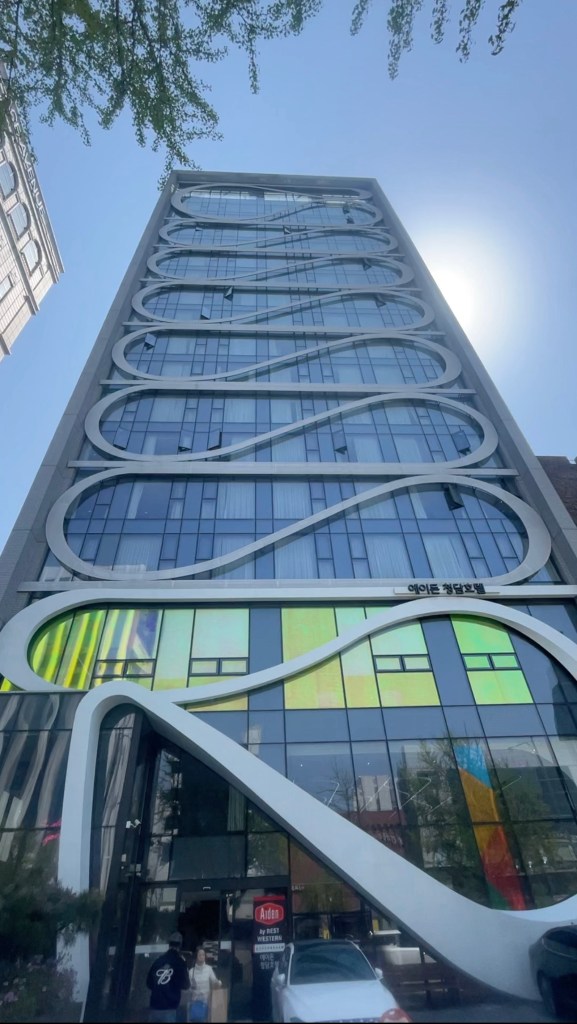
Aiden by Best Western Cheongdam
Even though we picked the budget-friendly Aiden by Best Western Cheongdam over the luxurious Mondrian, I was pleasantly surprised by its quality. The interior had a modern style, though smaller, with a compact lobby. Our stay at the Aiden by Best Western Cheongdam marked the end of our time in Seoul and our South Korea journey, concluding with a planned two-night stay. While some may argue that Cheongdam is a distinct area fro Gangnami, it is, in fact, an integral part of the broader Gangnam district. I’ll delve deeper into this in an upcoming post.”
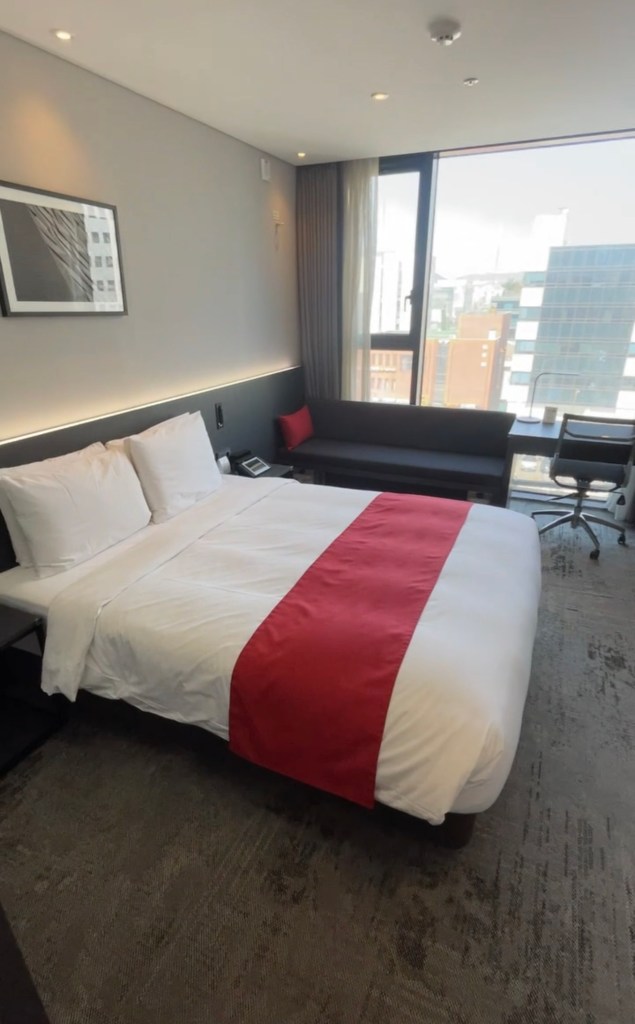
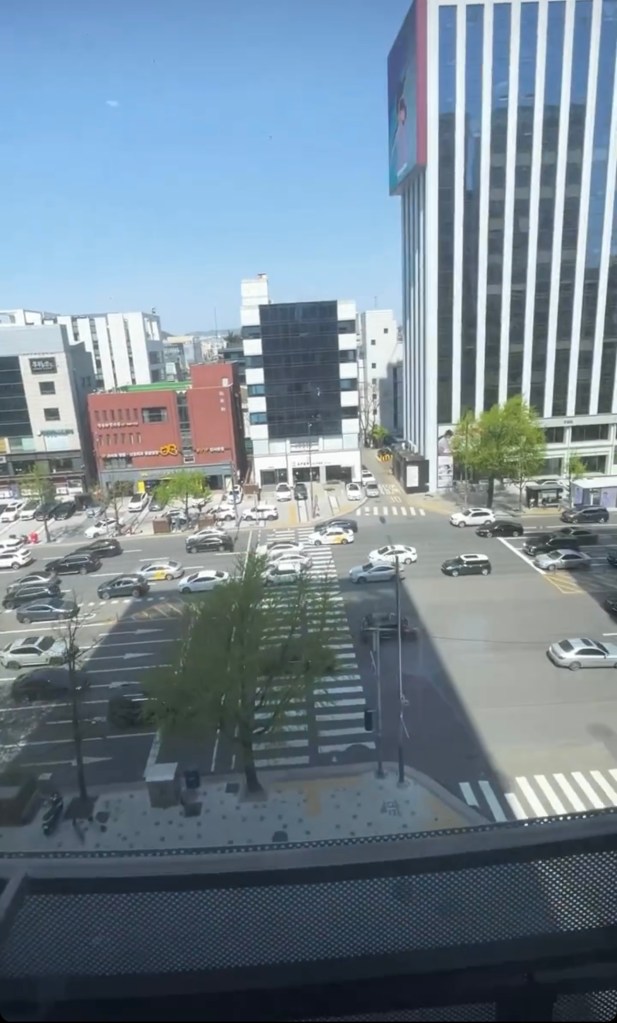
Room: I especially enjoyed the view from the hotel, overlooking a bustling street filled with cars, providing a direct look at the traffic flow. The room featured another large and comfortable bed. I must admit, we were fortunate with our hotel choices in Korea, particularly considering my focus on finding accommodations with comfortable beds. This preference stems from previous experiences in Asia, where beds were not only firm as wood but also uncomfortably short and narrow for someone of my stature. Once again, being on the taller side, I appreciated the spacious and cozy beds in Korean hotels, with the exception of that one boutique hotel in Jeju City. The bathroom in this hotel was also quite satisfactory, contributing to our overall contentment with the choice.
As mentioned earlier, I selected this hotel not only for its amenities but also for its location, a topic I’ll delve into in a later post. After checking in, my Korean friend Liz, whom I hadn’t seen since our studies in the USA 11 years ago, was waiting downstairs in the lobby to greet us and guide us through Seoul. Stay tuned for more details in the next post!
After a short break at the hotel, we got ready for a night out in Itaewon. Despite feeling a bit tired, we were determined not to let that hinder our plans. Our intention all along was to experience Itaewon on a Friday evening, and we were eager to fulfill that plan.
In the heart of Seoul, Itaewon comes alive at night, offering a lively mix of bars, clubs, and eateries. With something for everyone, from trendy rooftop bars to cozy pubs, Itaewon’s nightlife is a must-experience for locals and visitors alike. Renowned as the most international area of Seoul, it brings together diverse cultures for a vibrant and unforgettable night out. Despite my usual preference for local experiences, Itaewon’s unique blend of international vibes and Korean character made it an exceptional destination.
Our strategy was to visit various spots and try the signature dish at each place. However, we soon realized that this approach wouldn’t work for every spot due to the large portion sizes, even when shared.
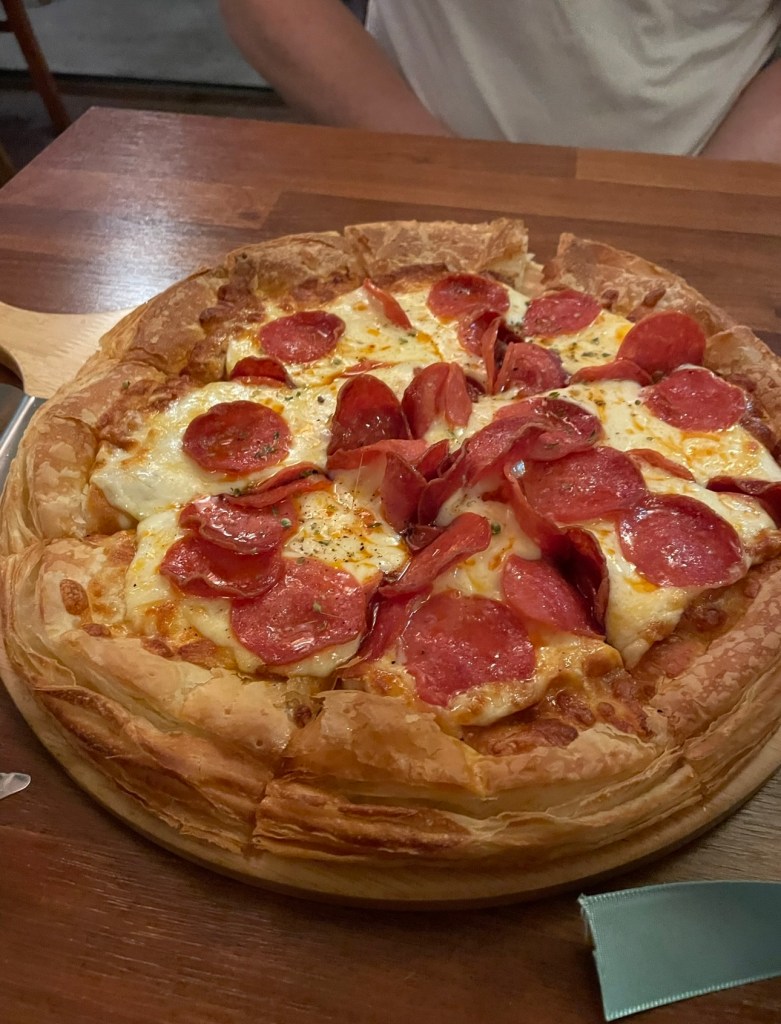
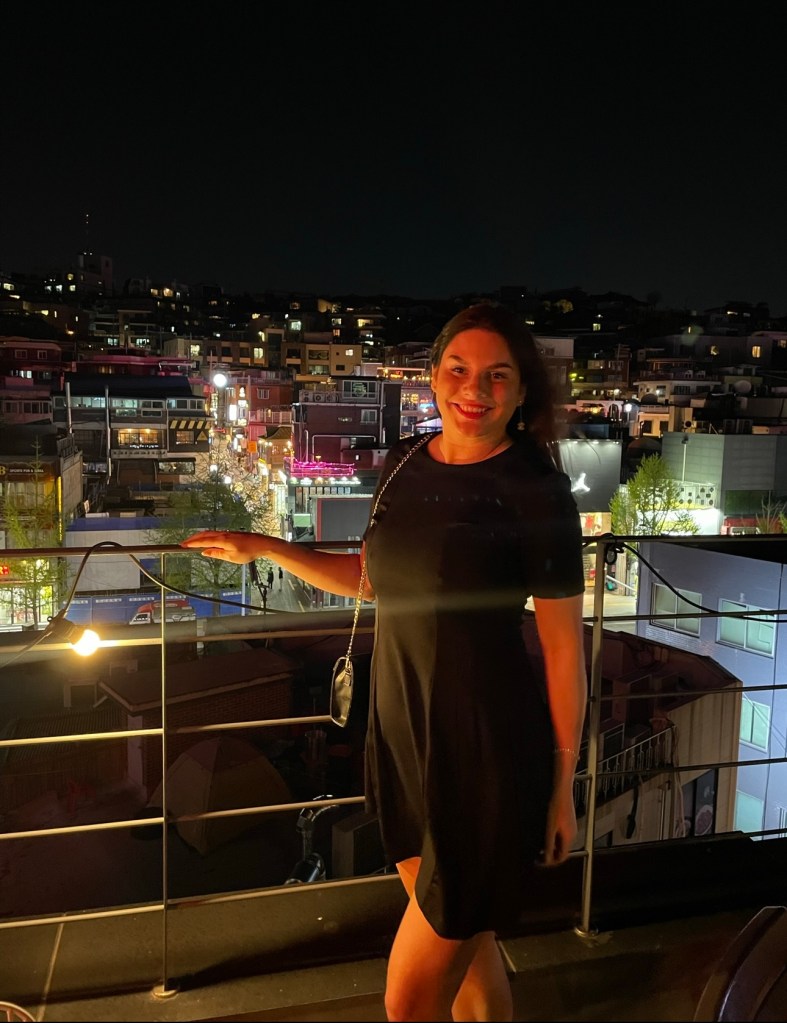
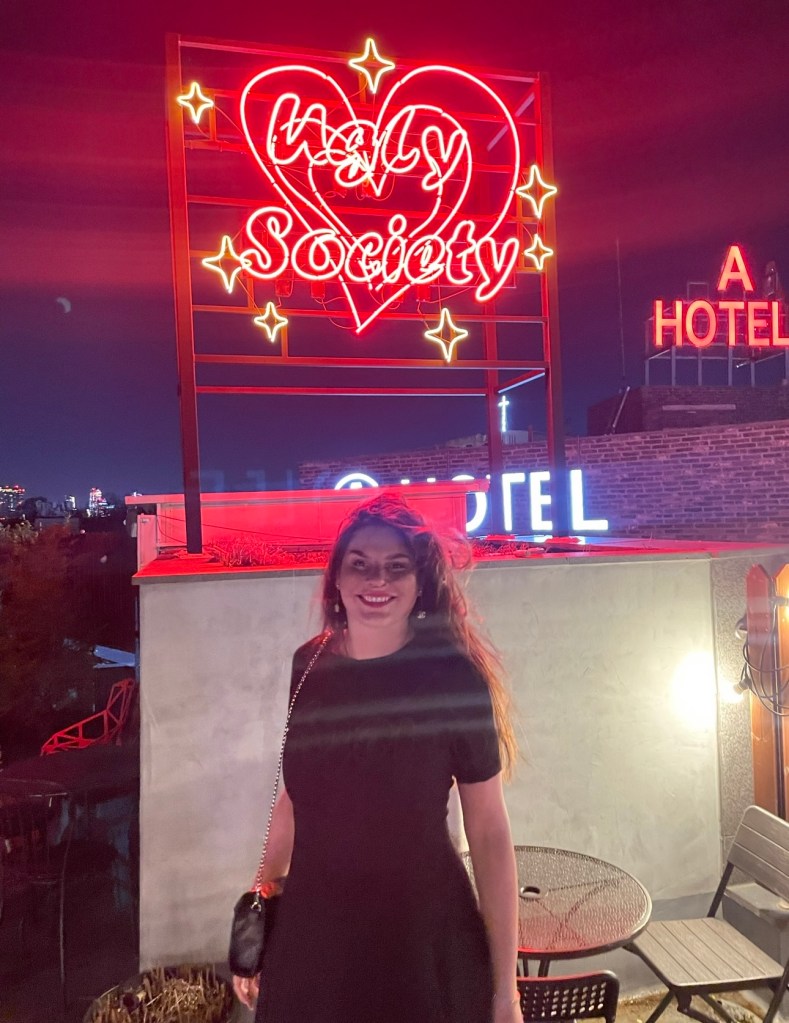
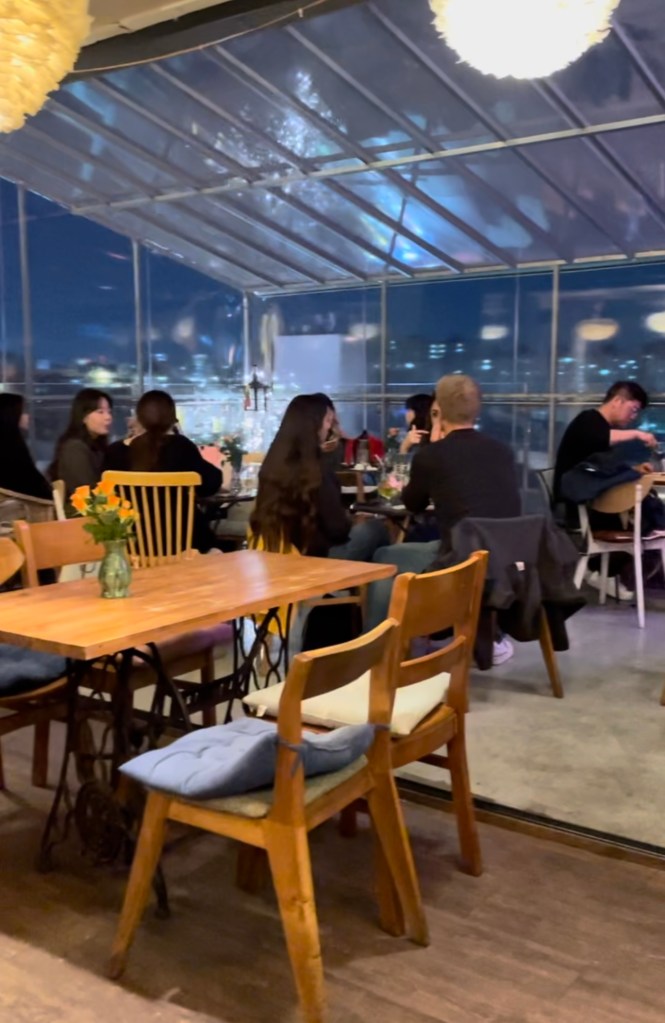
Ugly Society: We began our night at a place recommended by my Korean friend, called Ugly Society, a rooftop bar with a view of Itaewon. It was quite cold outside, so the outdoor area on the roof was naturally closed. Nevertheless, we had the chance to go up briefly to take some photos with the beautiful view. Due to the chilly weather, we kept the photo session short, especially since I was wearing a dress and hadn’t packed winter clothes, assuming the forecasted 20-degree weather from our home country would hold true (which later changed). It’s worth noting that the daytime temperature was much more pleasant, making April a decent time to visit Korea. Returning to the rooftop bar, the place was full, but we managed to secure a table—though without a view. We ordered their signature dish, a pizza made of French pastry. It turned out to be the best non-Italian pizza I’ve ever had; I can still recall the delicious flavor. Koreans, by the way, display surprising skill with pizza, and they have a fondness for cheese, which I truly appreciate.
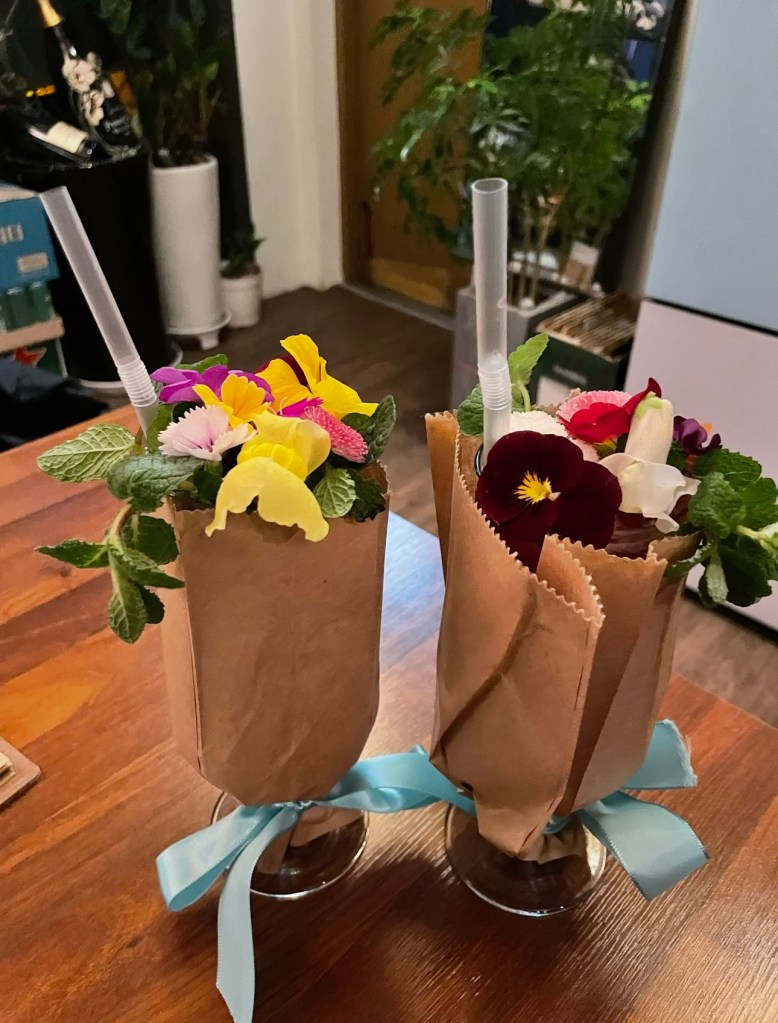
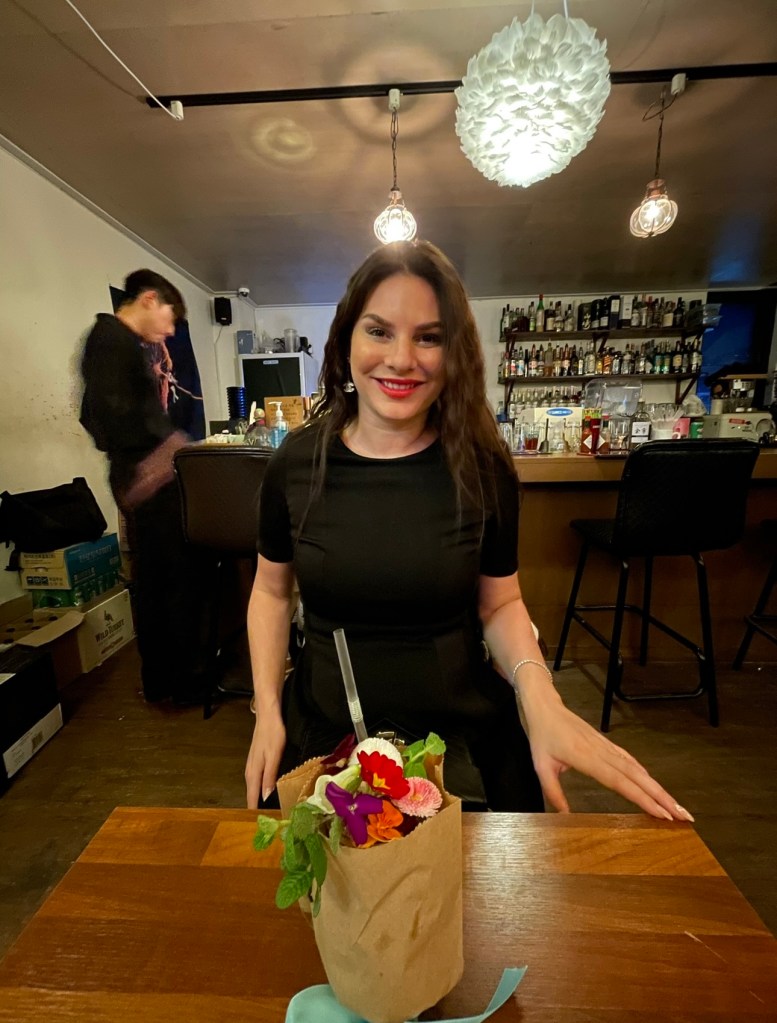
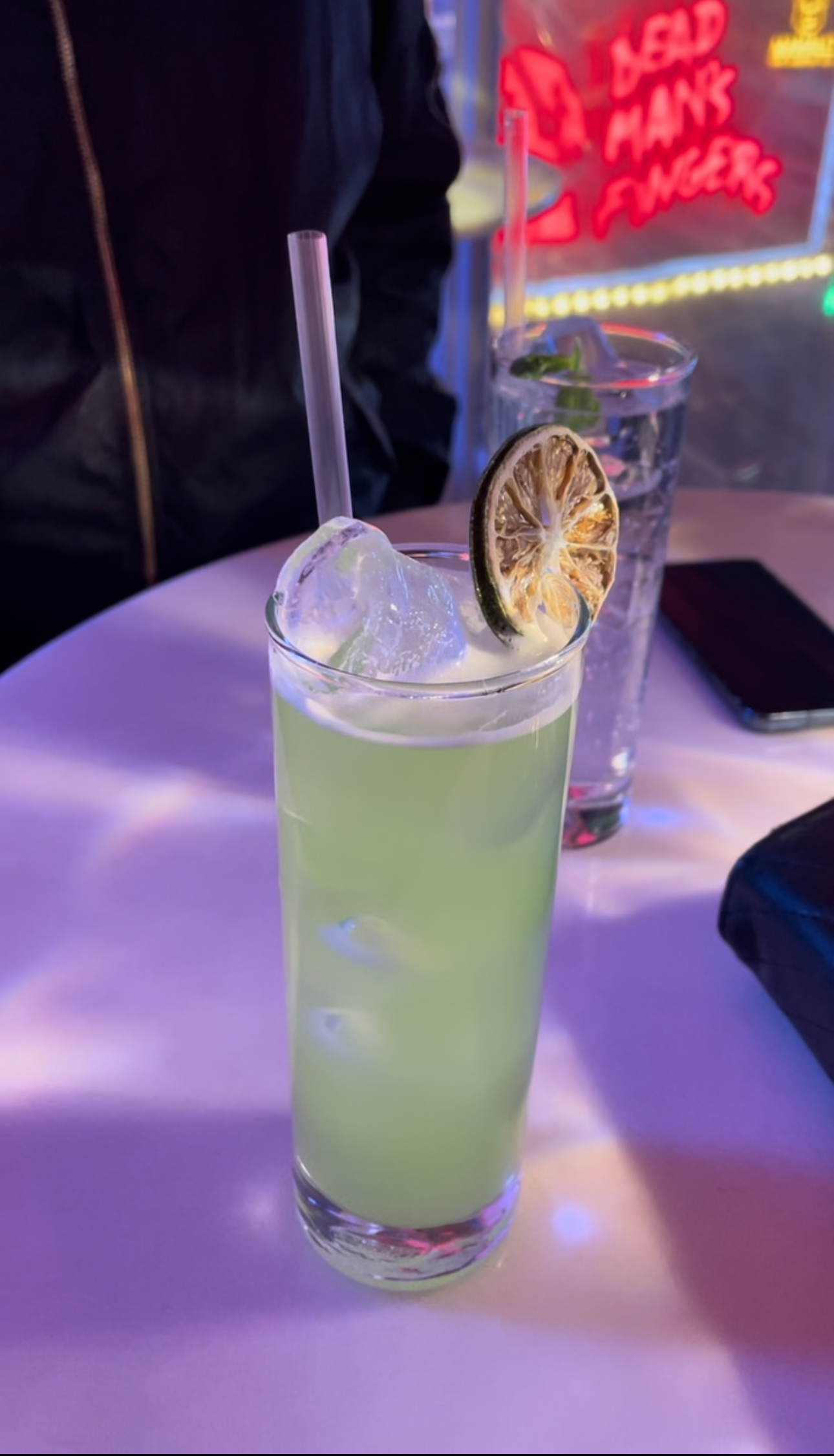
The cocktails at this place were beautifully presented, wrapped in paper, and enhanced with edible flowers, displaying vibrant colors. They were so visually appealing that I almost hesitated to drink them, feeling a sense of pity for their artistry. Nevertheless, this was a fantastic spot, and I highly recommend it. I can only imagine how enjoyable it must be in warmer weather, sitting outdoors and relishing the view over the entire Itaewon!
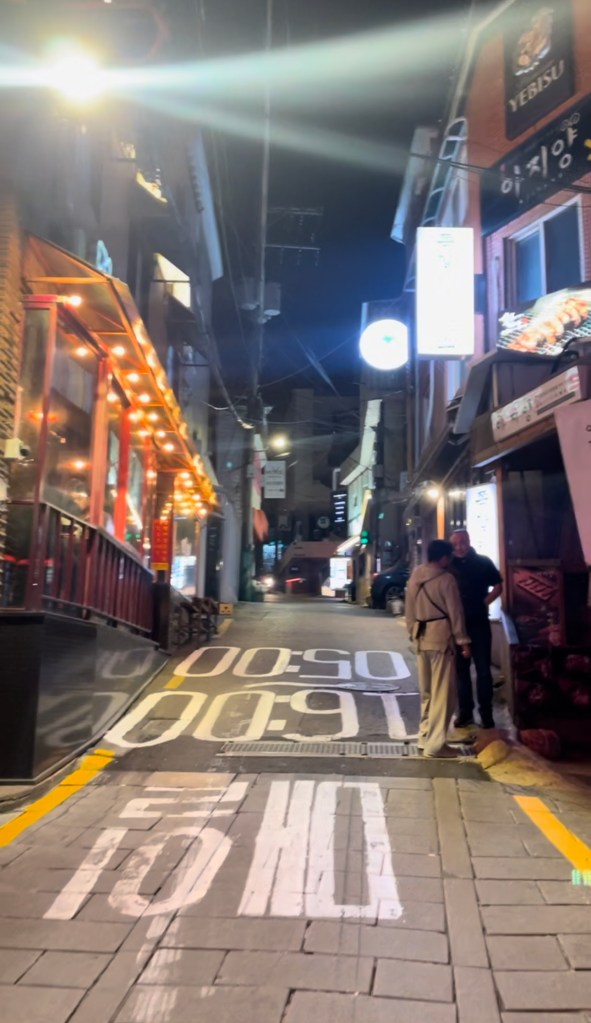
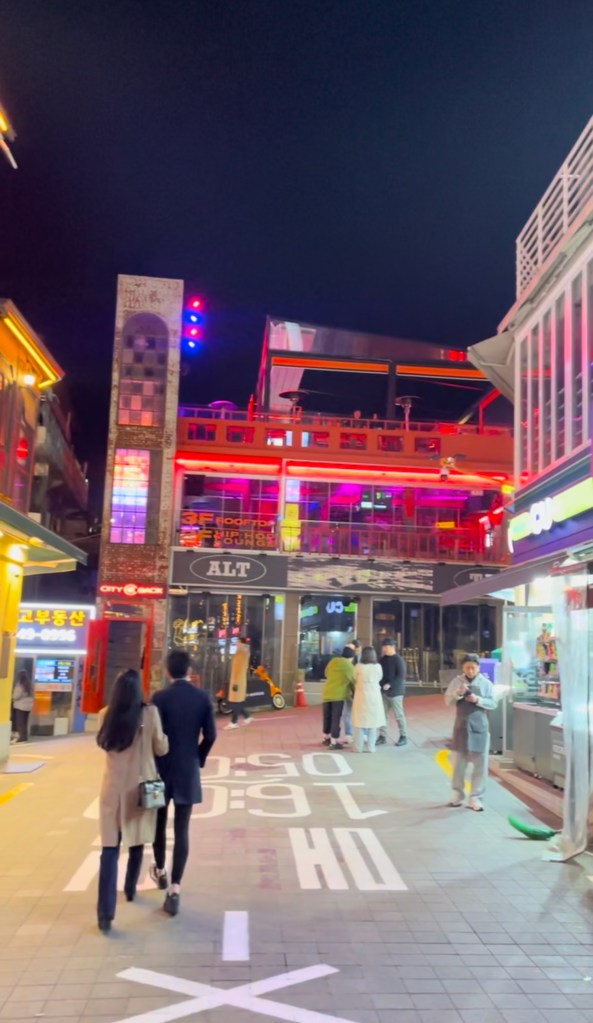
Unexpectedly Quiet Streets: Walking down the street with interesting shops, cozy cafes, and inviting restaurants, the colorful Vietnamese lanterns overhead created a lively atmosphere. The disappointment hit us when we reached the main party street, finding it surprisingly empty. Was it the cold weather, the off-season, or our early arrival around 9 pm? We explored various restaurant/bars, including a Mexican spot. Yet, we quickly left as it was entirely empty, and being alone in Itaewon wasn’t what we had in mind. To add to the unexpected turn, some of the places we had planned to visit were no longer there.
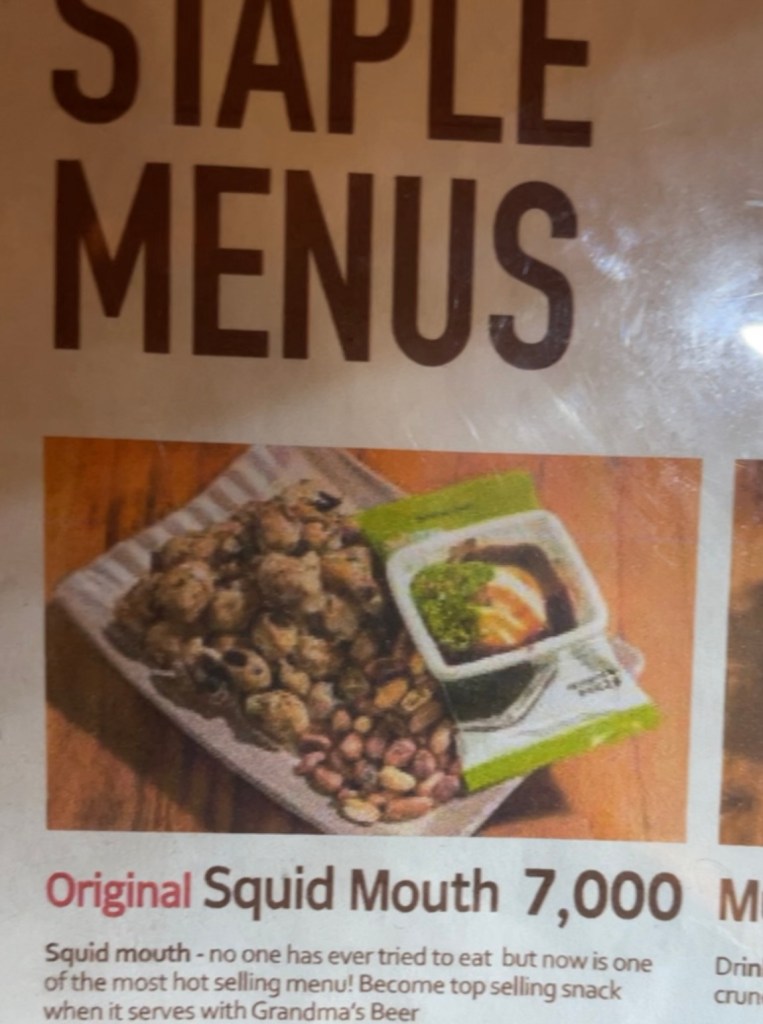
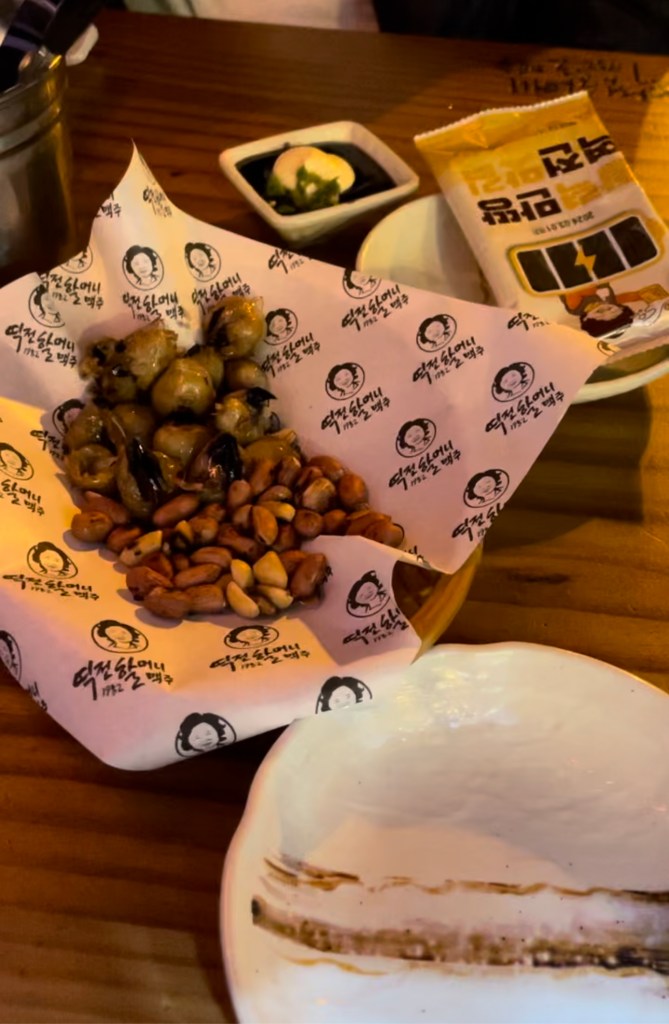
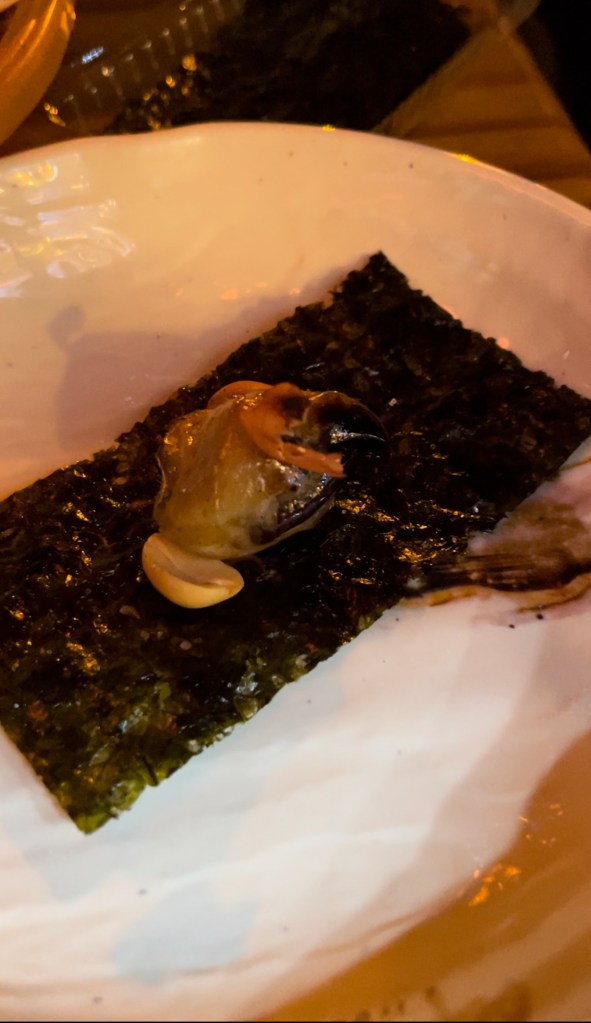
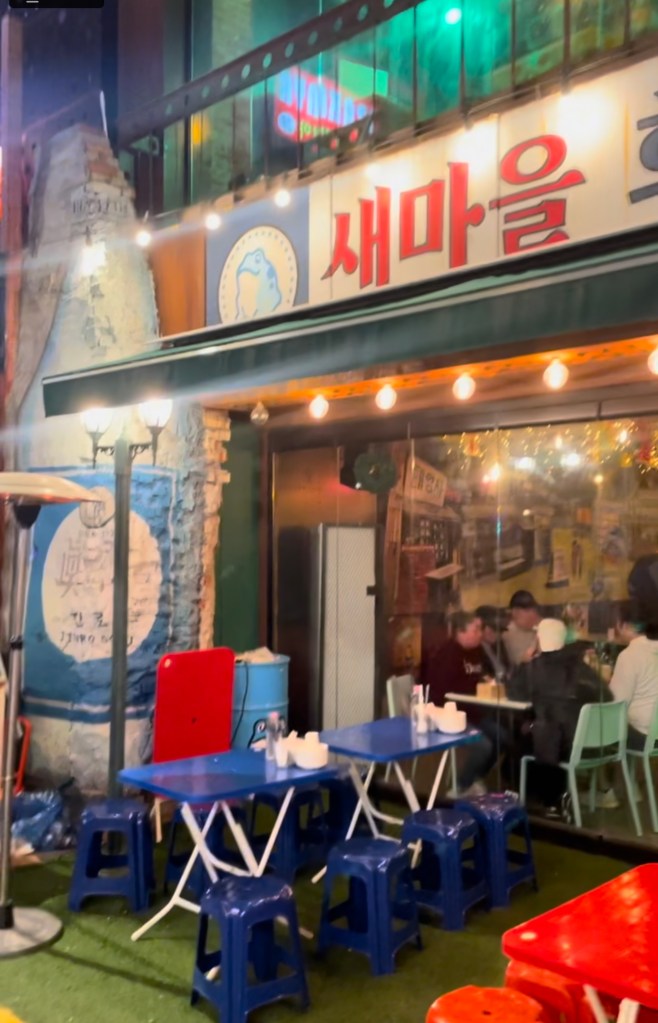
Korean Culinary Exploration: As our exploration continued, we found ourselves in a lively Korean restaurant where people ordered their food using iPads, featuring exclusively Korean items. Once again, we stood out as the only non-Koreans, surrounded by a youthful crowd enjoying beer and soju. Intrigued by the idea of trying more signature dishes, we decided on squid mouth. Served with nori, nuts, and sauce, it required crafting a wrap for consumption. However, the experience didn’t match my taste preferences, as the plastic-like texture inside the head, initially presumed removable, turned out to be an essential part meant to be eaten. Unfortunately, it didn’t quite align with my taste preferences.
Sipping Shots at Another Rooftop Bar: Continuing our walk down the streets, the drinks had surprisingly little effect on us. It felt like the alcohol served in Korea was diluted, as no matter how much I consumed, the tipsy feeling remained out of reach.
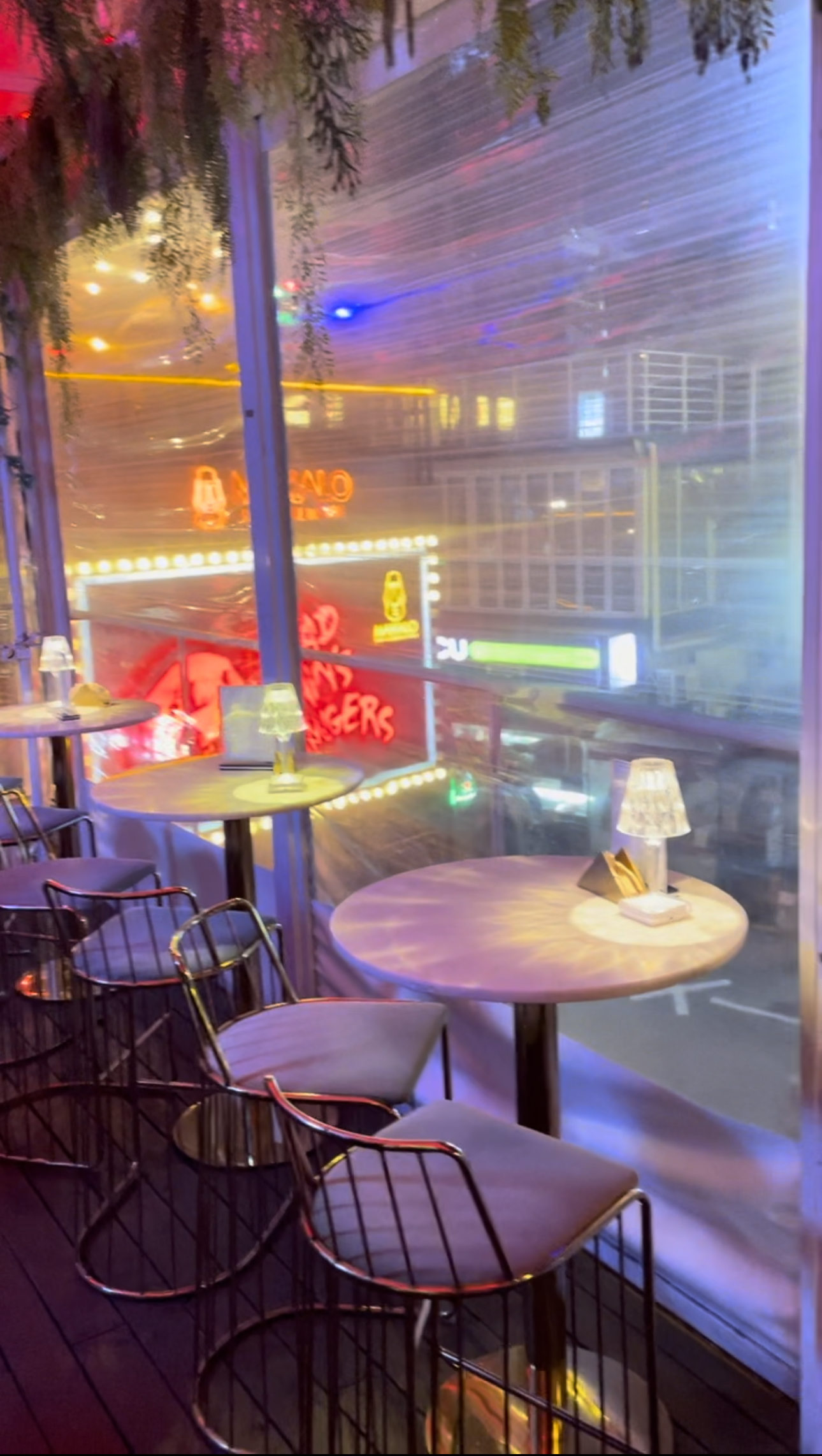
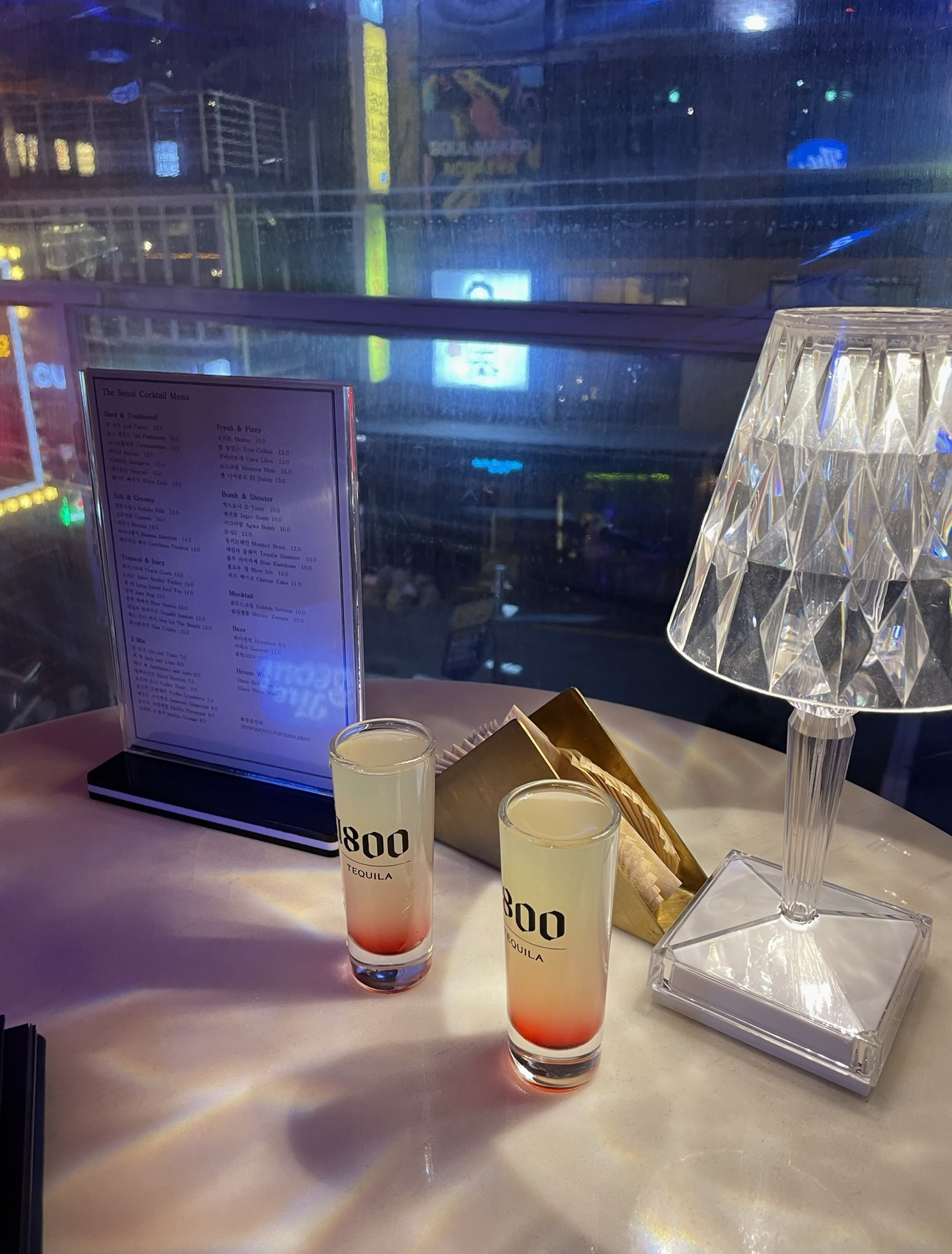
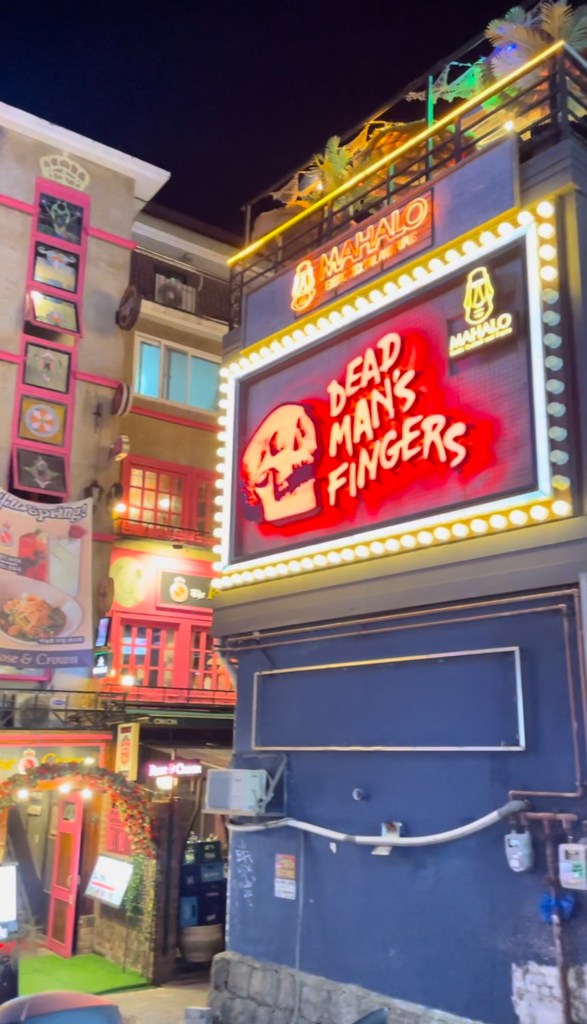
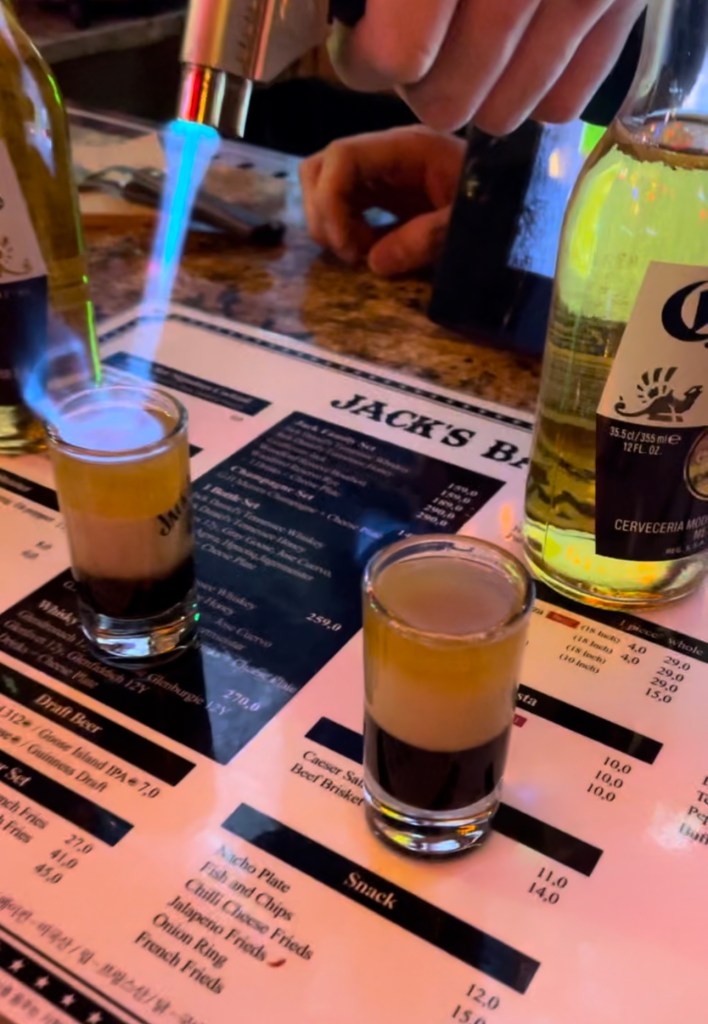
When we reached the main party street, it was surprisingly empty. An employee from one of the bars approached us, offering a free shot to entice us to their place, and we couldn’t resist. We found ourselves in another lovely rooftop bar with a fantastic view. Despite the emptiness, the cool vibe persisted, with only a couple of other guests.The waitress, who happened to be French, contributed to the diverse atmosphere of Itaewon. We enjoyed our shots, followed by a glass of red wine that seemed to have a more noticeable effect than the soju. Curious about the limited crowd, we learned from the waitress that the emptiness is due to the Halloween tragedy in Itaewon, a devastating event during which 159 lives were lost in a crowd crush during Halloween festivities in late October 2022, happening right on that street.Because of this, people tend to avoid this area due to the sentimental association. Despite this, when we left the rooftop bar, we ventured out and found the two floors underneath starting to get lively! Okay, so perhaps the timing did play a role after all.
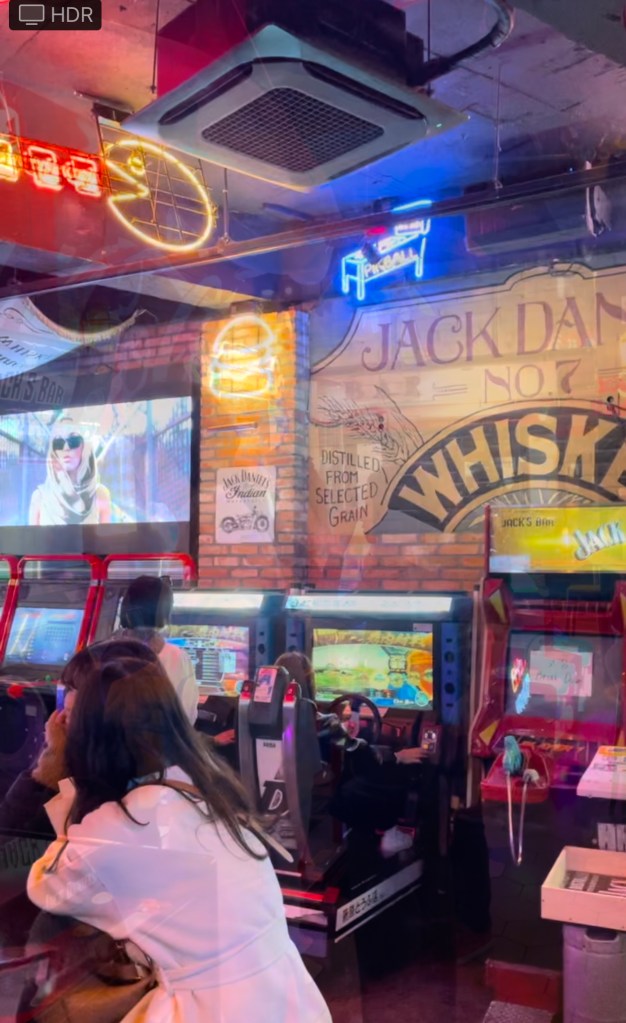
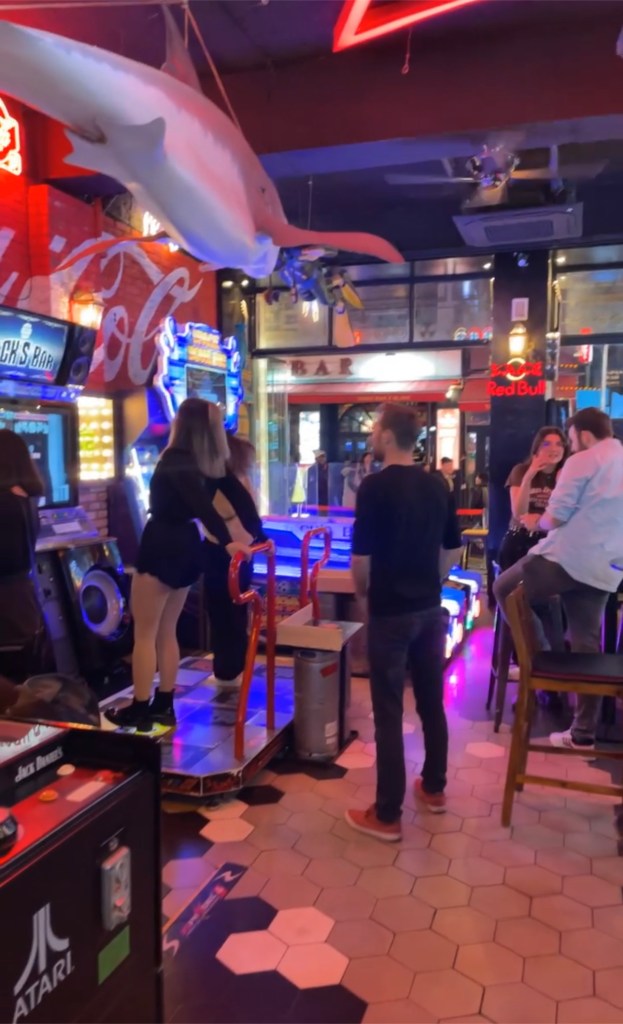
Bar hopping – From Jack’s Bar to Psytrance Surprises: We continued our exploration, making stops at various bars. One place that caught our attention was Jack’s Bar, evoking memories of “Whiskey in the Jar” in Poland. The place was crowded, filled with video games throughout, creating a game-hall atmosphere. As you walked further in, it transformed into more of a pub/nightclub setting. We had a drink and proceeded to explore more bars along the way.
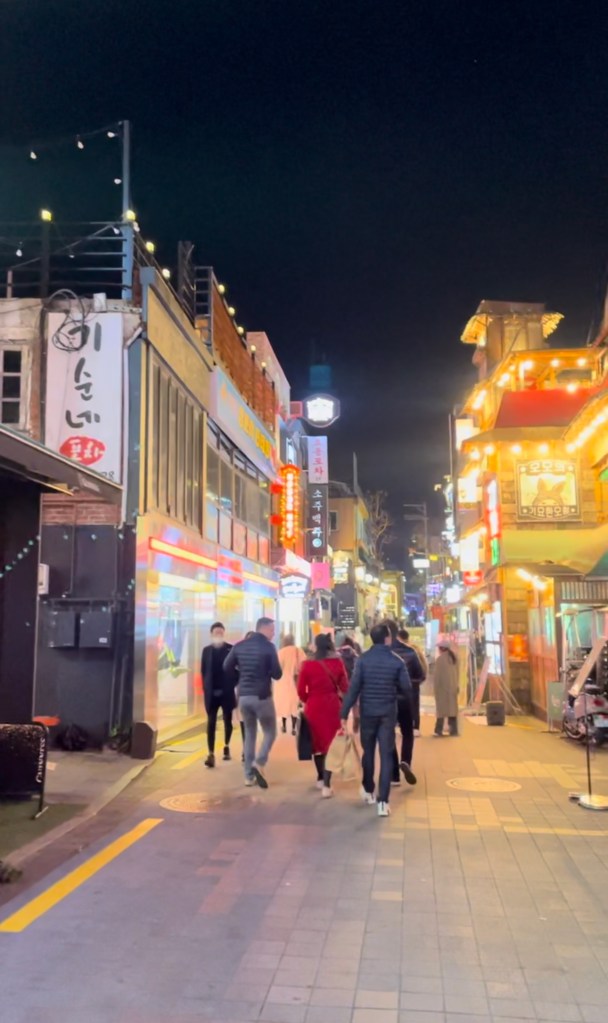
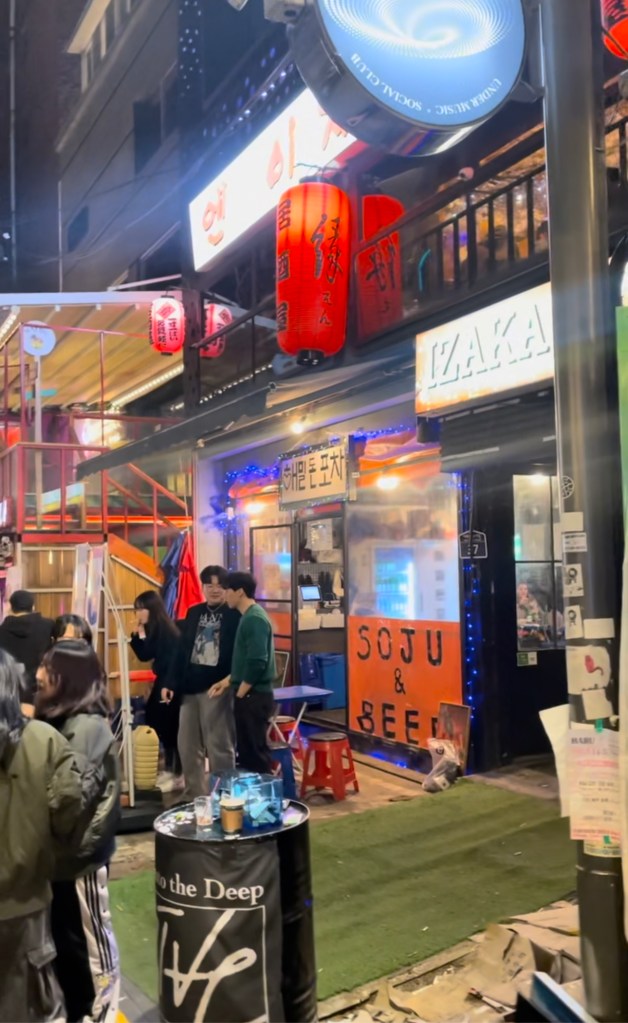
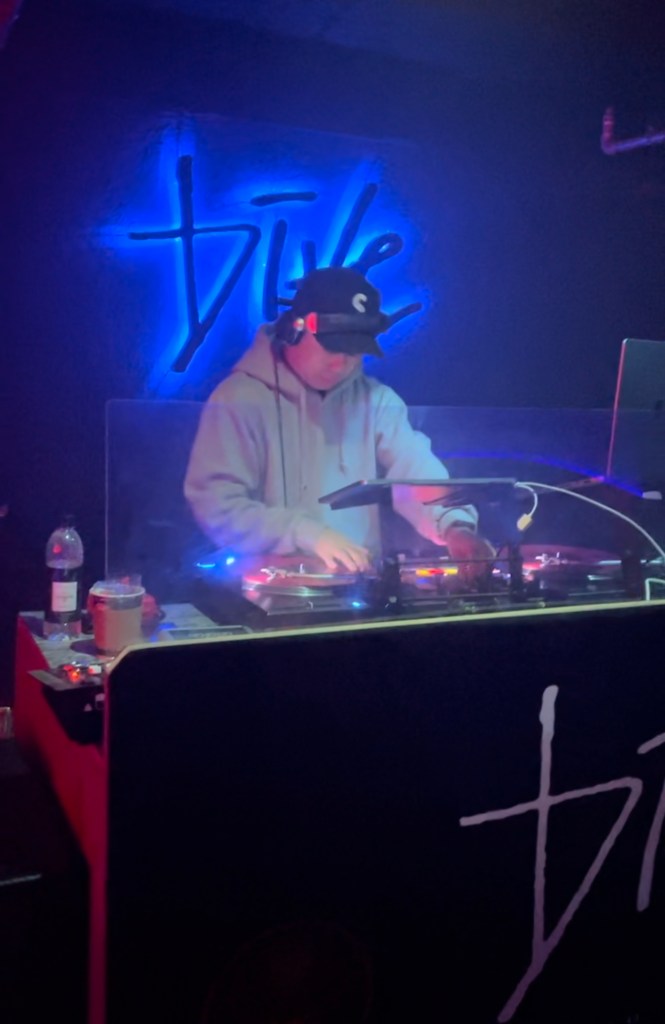
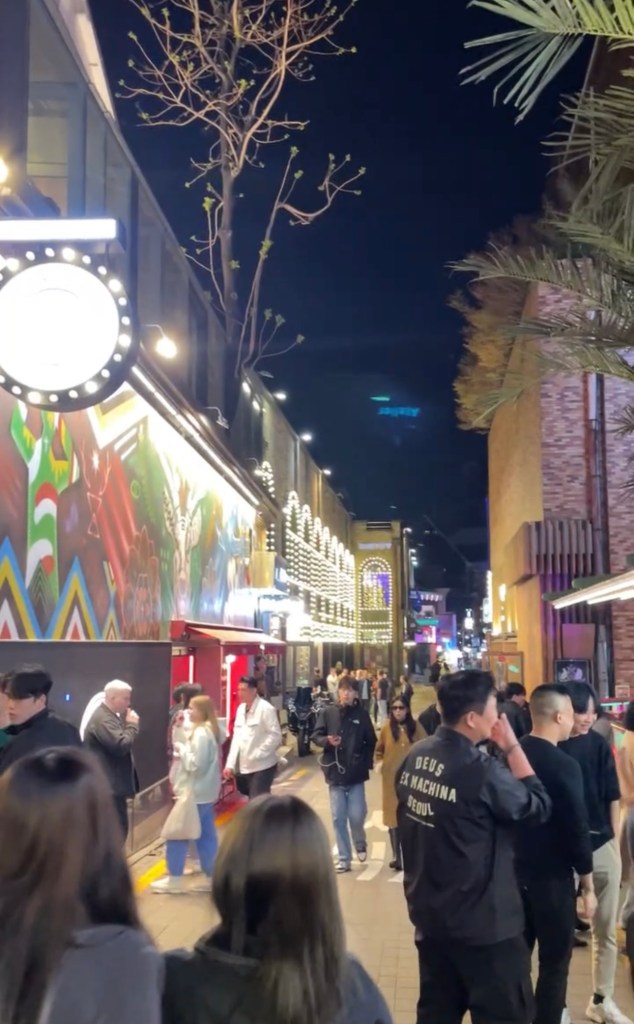
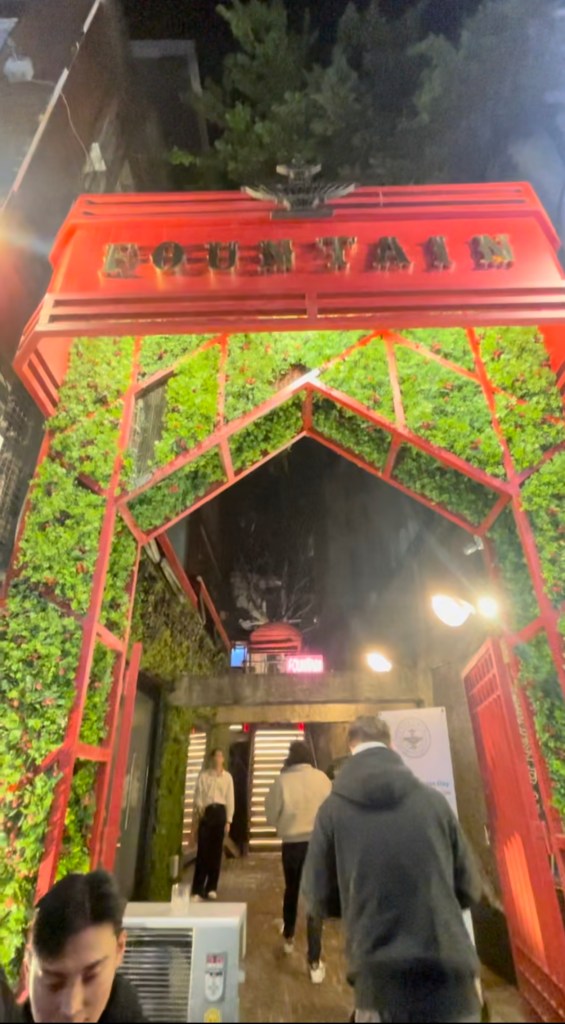
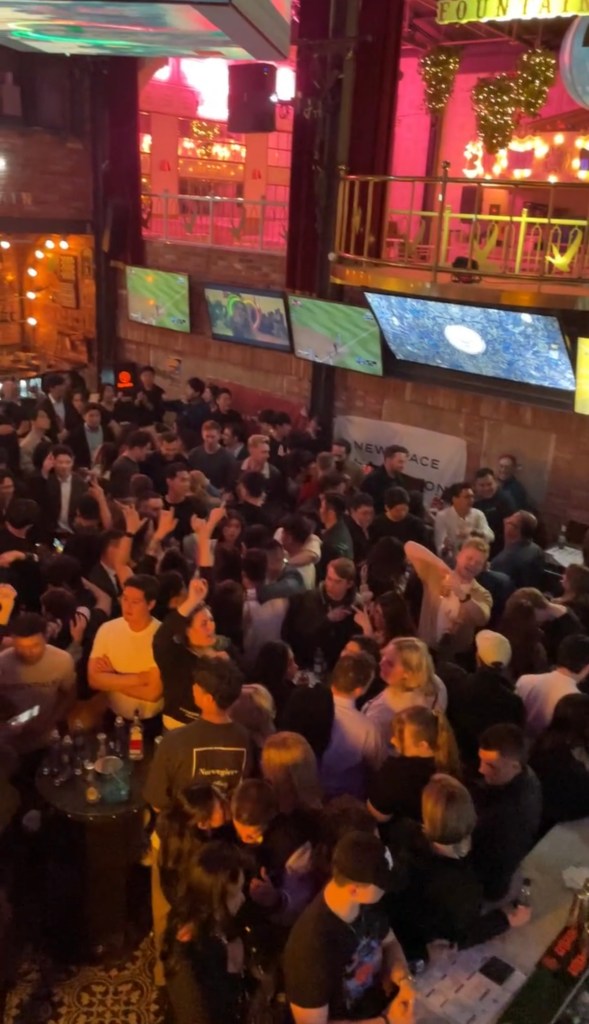
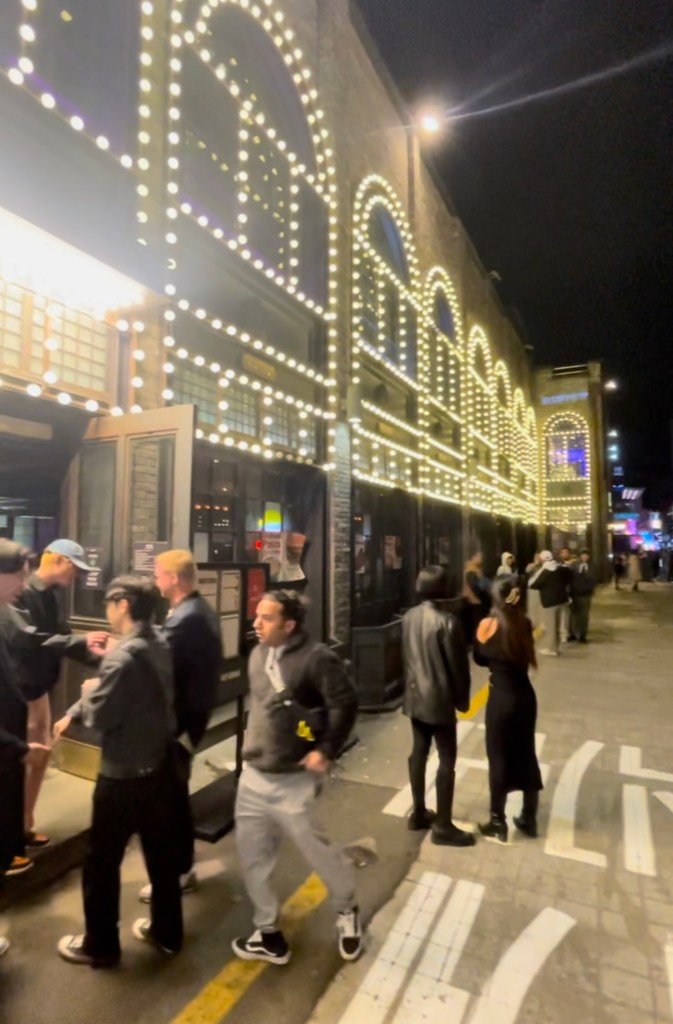
The streets were becoming packed with people, offering something for everyone! Despite famous bars and nightclubs closing down, there were still numerous options. We stumbled upon a psytrance place where visibility was minimal. I won’t detail all the places we visited as that would require more blog posts, but two highlights include “Hawaii,” a casual spot filled with locals and Koreans from abroad, exuding a happy and social atmosphere. It didn’t feel like we were just the two of us alone out partying. Everyone was welcoming, people danced on tables, and there was great international pop music and K-pop videos playing on screens. In hindsight, we should have stayed there for the evening as the vibe was exceptional. Another memorable spot was a massive nightclub we stumbled upon. With two floors, you could observe the lively scene below from the second floor. Despite having fewer locals, it was a perfect spot for those who enjoy vast nightclubs. So much for the notion that Itaewon has become a ghost town—it’s far from it!
Cab Ride Back to the Hotel: Reflecting on the Night: After a while, we decided it was time to call it a night; we had experienced a lot, yet there was still more to explore on the party street! Next time, we’ll plan for an extended stay in this area, ensuring we don’t miss out on anything. While we also have a curiosity about Hongdae, the local-favorite party spot, our tight schedule this trip didn’t allow for a visit. Opting for a taxi ride back to the Mondrian Seoul hotel, despite the short 10-minute walk, was a response to the chilly weather and our tiredness. As we traveled from the taxi to the hotel, we couldn’t help but notice the vibrant bars and nightclubs that lined the streets, making us realize we only scratched the surface of what Itaewon had to offer! The night was so enjoyable that we’re already planning to return and spend more time exploring this lively area. After reaching home, we rested, gearing up for another eventful day ahead, including a hotel change to the Gangnam area and exciting plans with my Korean friend Liz. Another night out awaited us, this time in the renowned Gangnam.
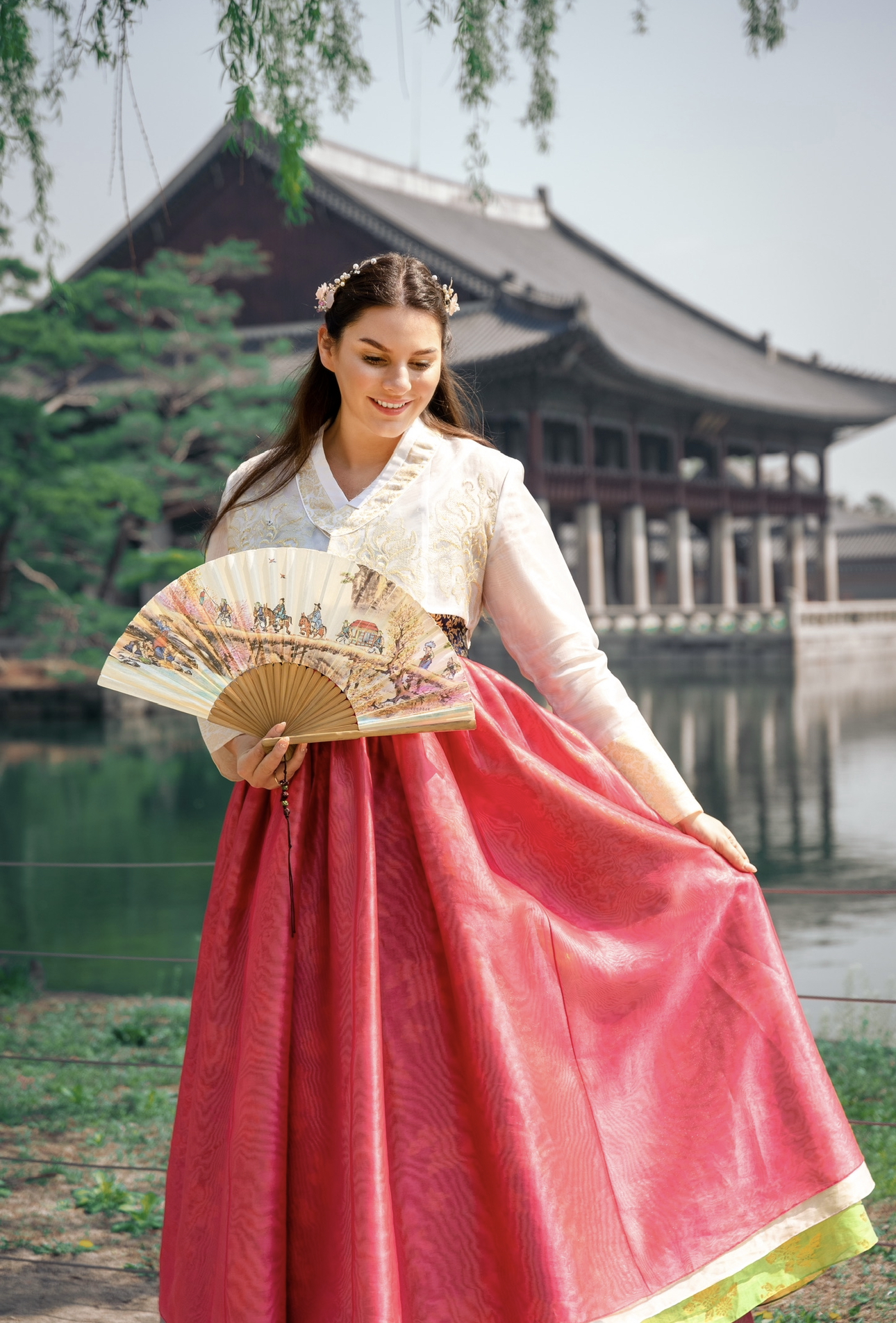
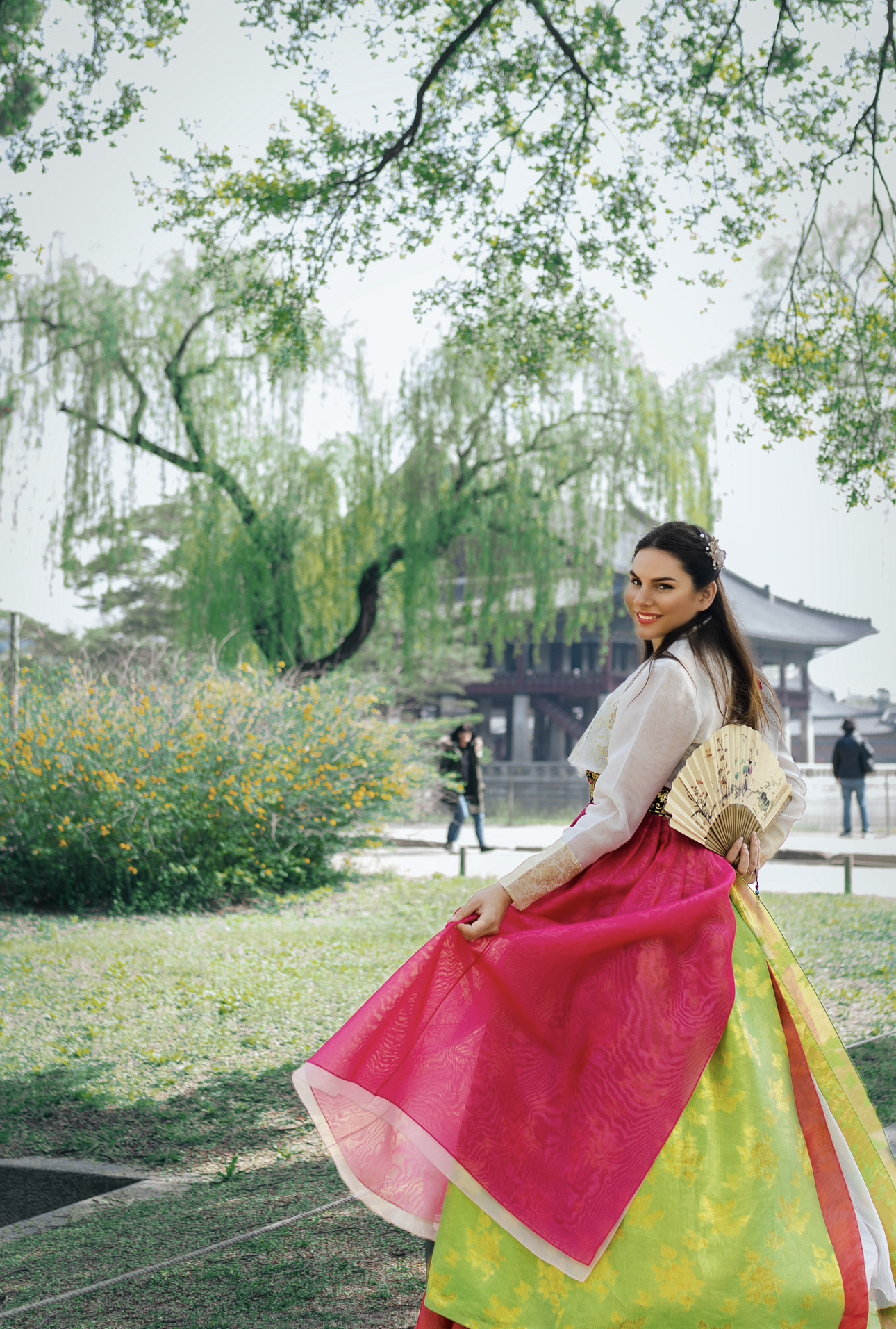
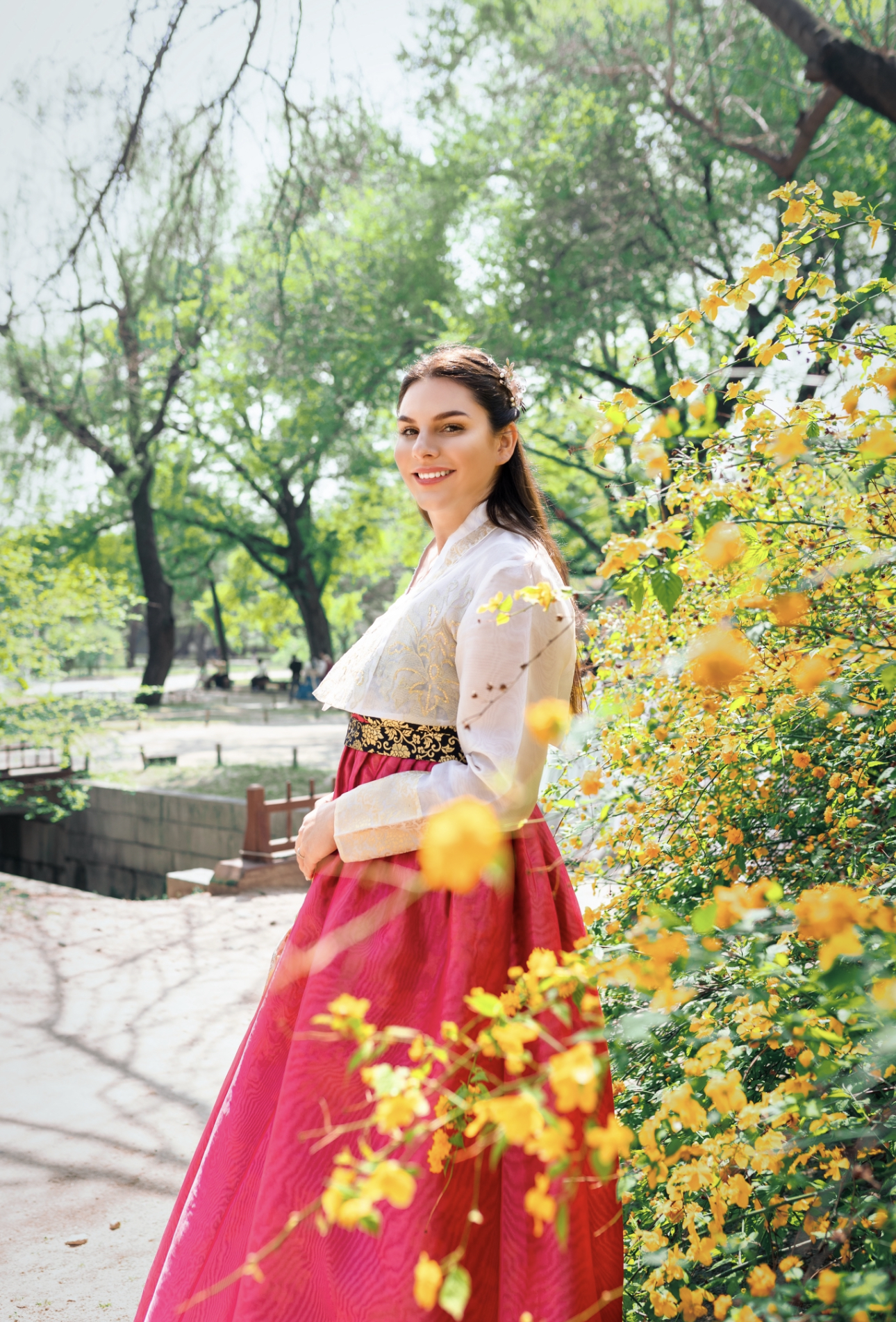
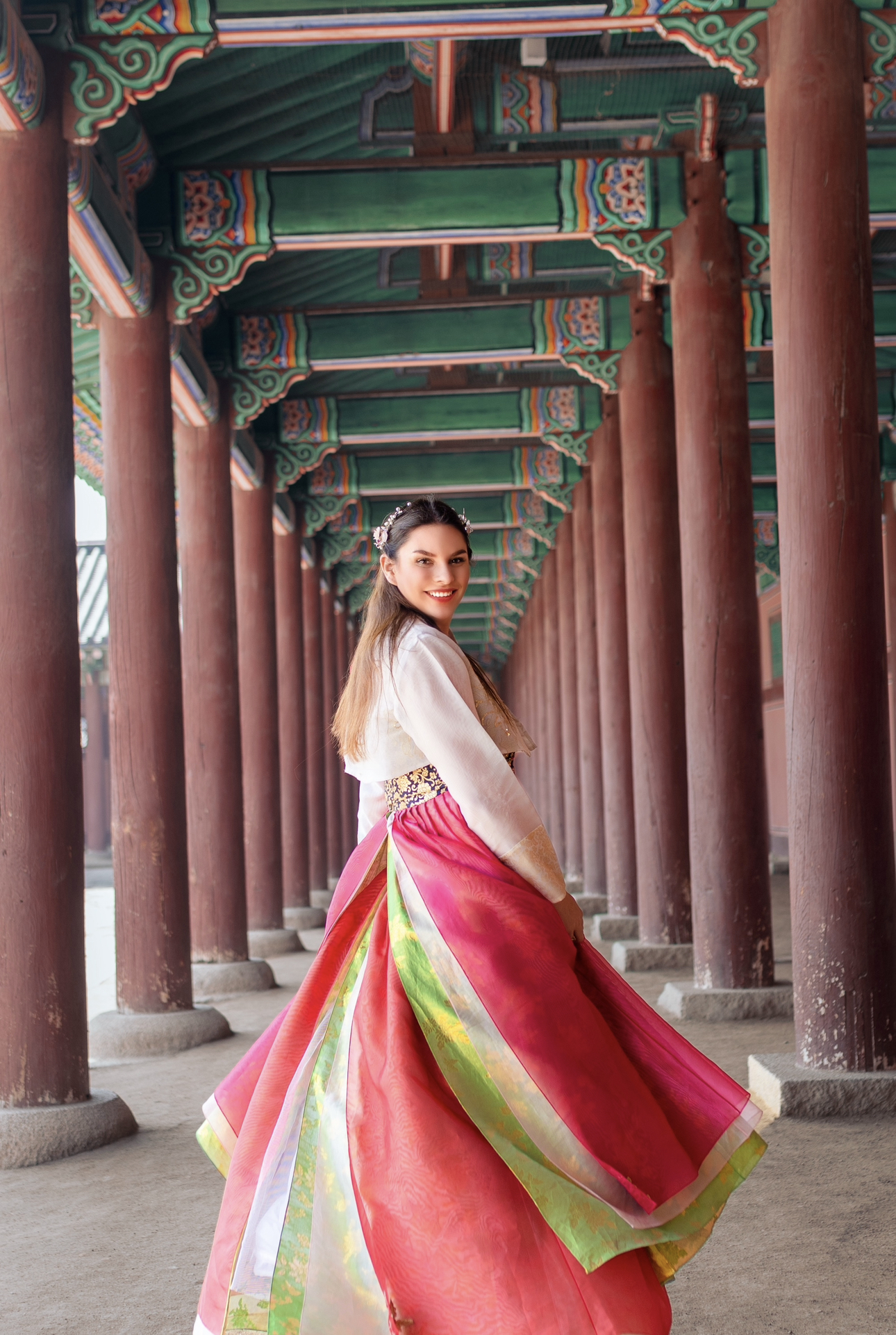
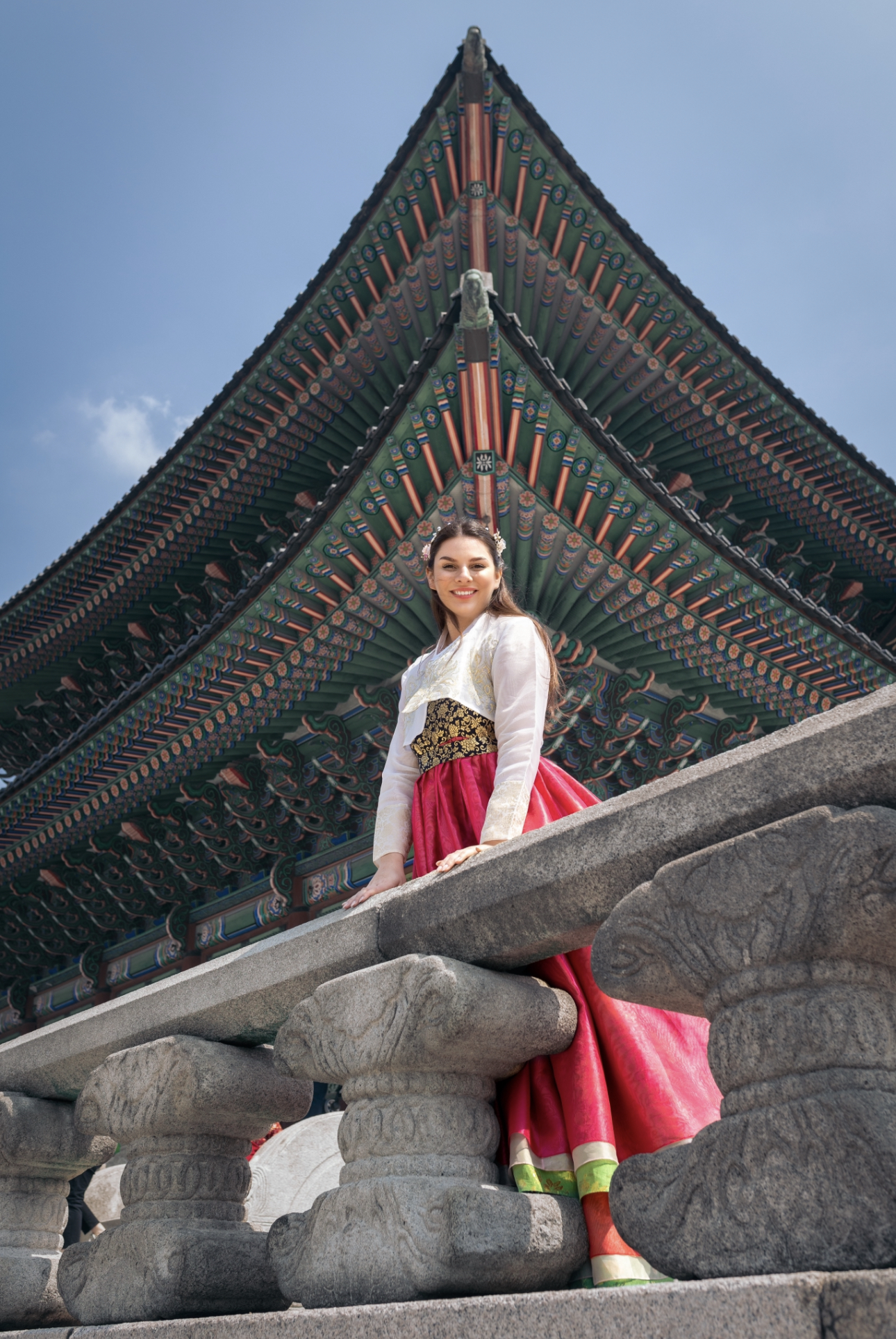
Whenever I go on vacation to a new country, I make sure to find photoshoot session on Airbnb to capture the beauty of the places I visit and create lasting memories. My trip to South-Korea was no exception. Despite the cost, I felt it was an experience worth investing in. The photoshoot I booked took place at Gyeongbokgung Palace, where I had the opportunity to wear hanbok, the traditional clothing of Korea. Historically worn by royalty and aristocracy, hanbok is reserved for special occasions and celebrations such as weddings and New Year’s Day, bringing a touch of cultural significance to the entire experience.
I chose an early photoshoot to ensure we could complete it and then enjoy the rest of the day. Despite selecting a Friday morning, anticipating less crowd than on a Saturday, it was still surprisingly crowded. We used the metro system, traveling from Itaewon to Gyeongbokgung Palace. The metro proved to be efficient, even with stops and line changes.
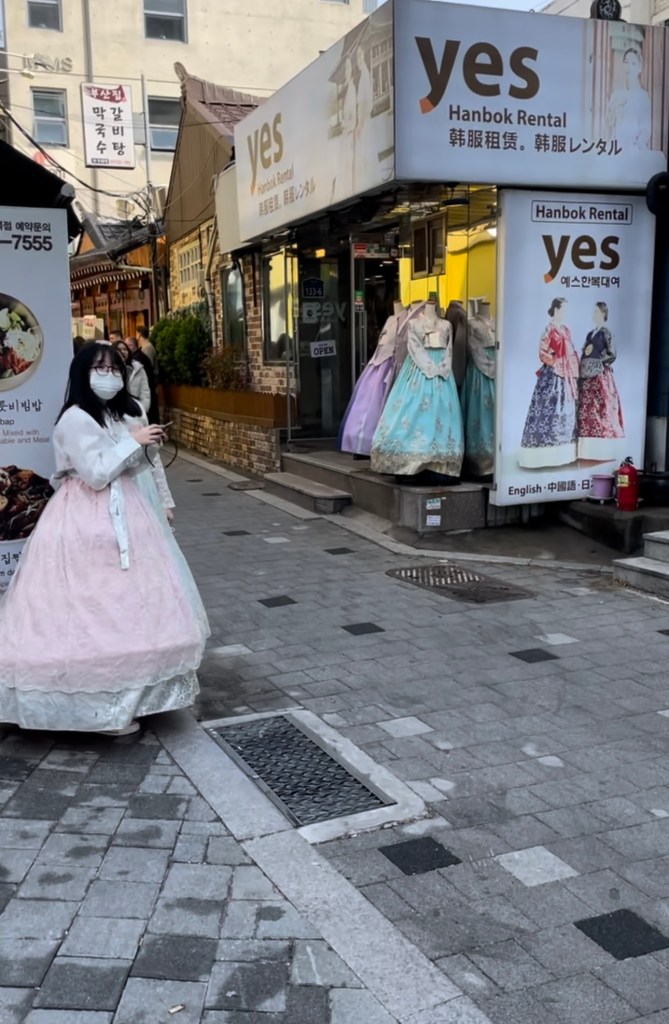
When we exited the metro, we found ourselves right where I was supposed to meet, outside of a hanbok store. I initially thought this would be one of the few in the area, but to my surprise, the entire area was filled with hanbok stores! It seems like a thriving business for many. Moreover, it’s important to note that if you wear the hanbok to the palace, you can enter for free, which explains why so many people choose to do so.
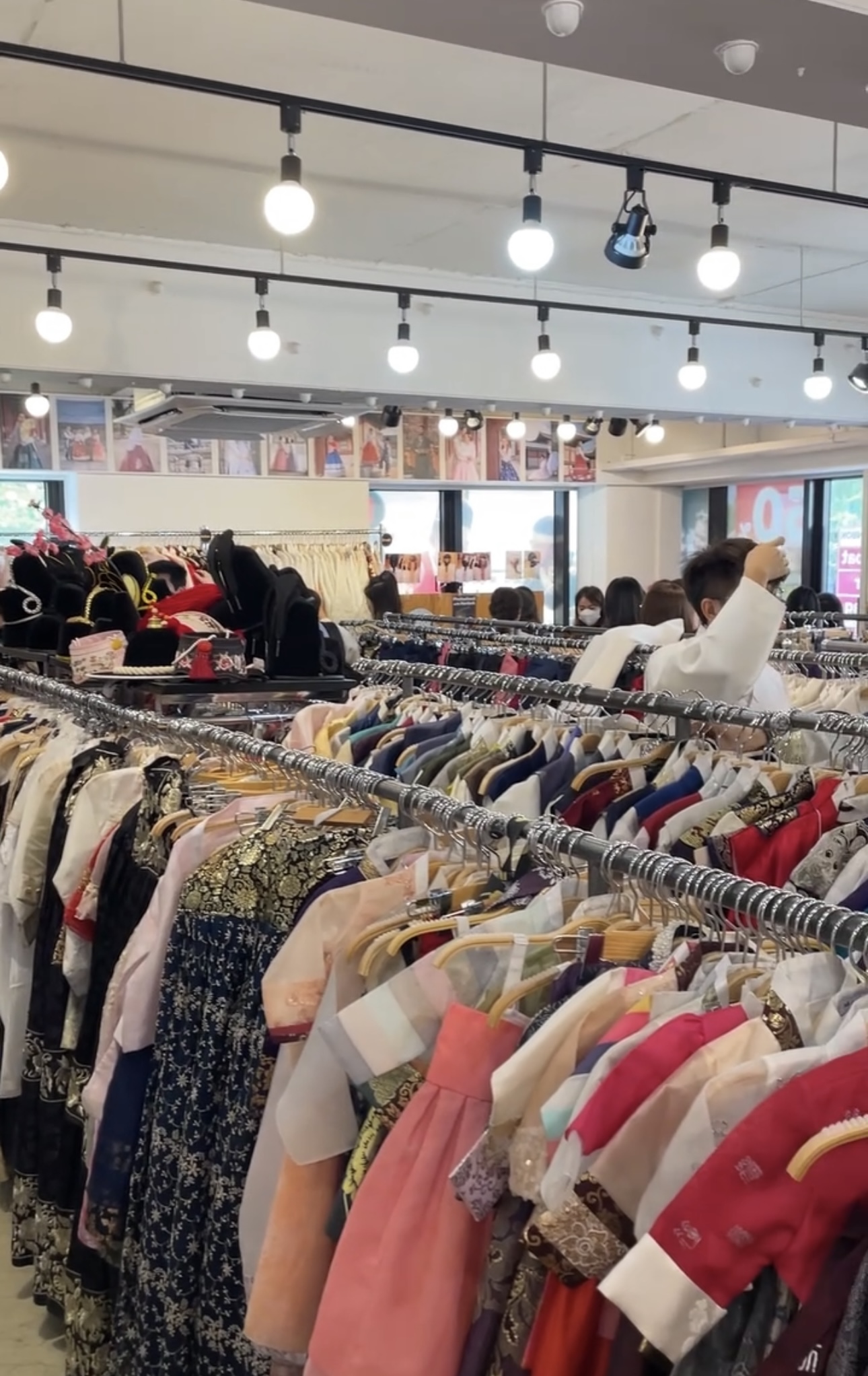
I arrived at the store, met the photographers, and found the place full of people. We began the process of selecting the hanbok we wanted. Naturally, my height posed a challenge; standing at 182 cm tall or 6ft, finding a hanbok that suited my length was difficult. Additionally, finding a sufficiently large blouse presented its own challenge, not only because Korean girls are generally of shorter stature but also due to the crowded conditions, with foreigners also in need of bigger blouses.
There were numerous beautiful hanboks, making the decision quite challenging. I was uncertain about which one to pick, but in the end, I chose a more traditional style in pink with a white blouse. While I initially preferred a black one, none were available in my size. However, everyone assured me that the colors matched perfectly, so I went along with it. I must mention that the hanbok’s skirt was too short. The photographer cleverly solved this by finding another skirt of the same color to place underneath, creating the illusion of a longer skirt.
The dressing room had a long line, with ladies assisting us in putting on the hanbok. Despite being instructed in the email to wear shorts or something light underneath and a blouse, it turned out to be unnecessary. Some even had nothing underneath, and others wore dresses. I opted for tights and a top, storing the rest of my belongings in a locker.
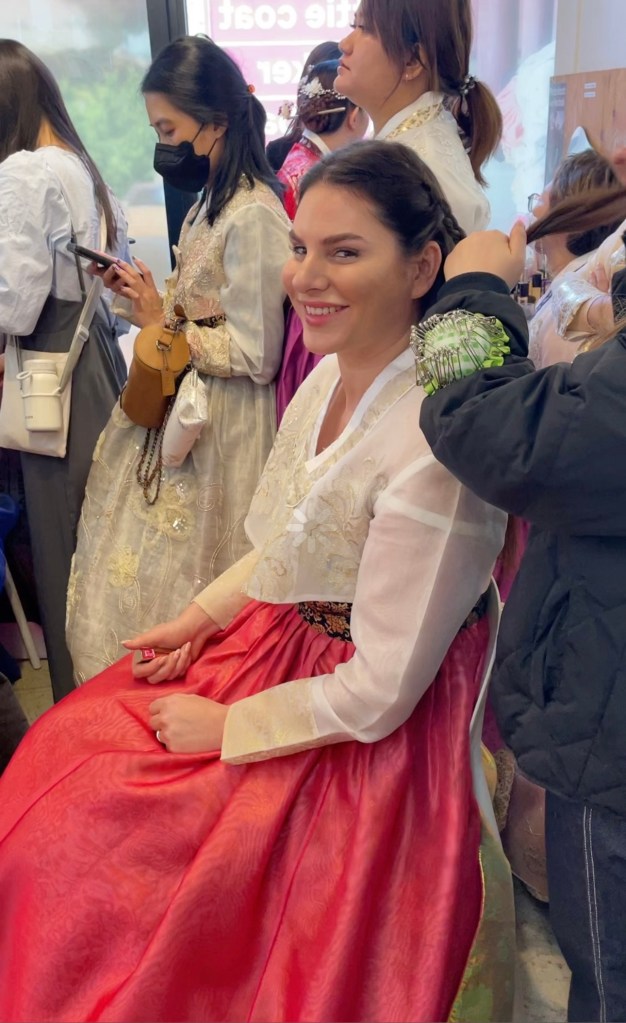
After a lengthy process of getting into the hanbok, I headed to get my hair done. Standing in line, I noticed the store was filled with people, leading my partner to wait outside due to the chaos. Contrary to my expectations, the process didn’t take the whole day. When it was my turn, I got my hair done, having already done my makeup at home. I preferred to leave my hair loose to avoid emphasizing the roundness of my face, and the stylist did a great job with a tiny braid and some hair accessories.
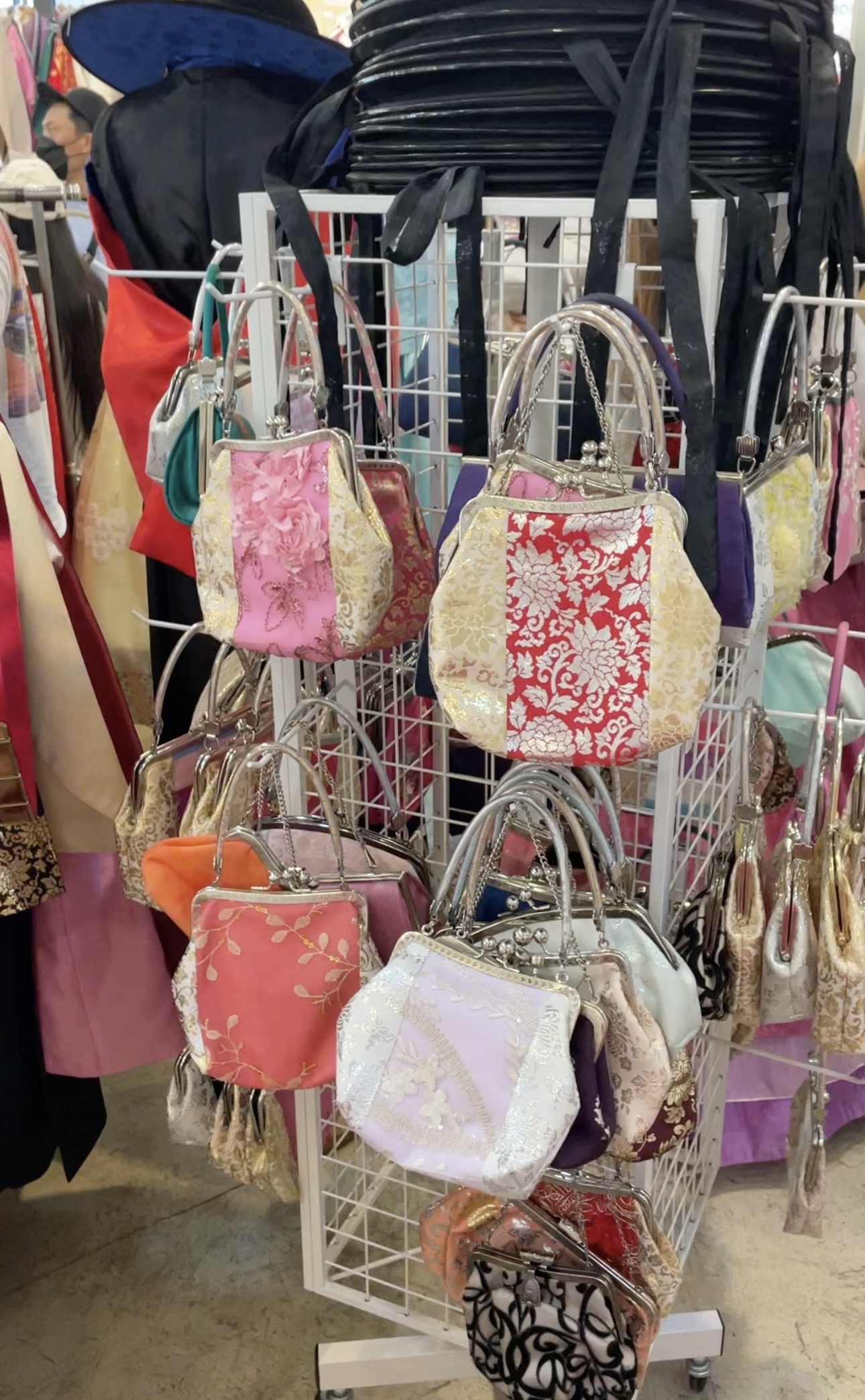
The final step involved selecting accessories, including a bag, all included in the package. Afterward, I patiently waited for the rest of my group to complete their hair and hanbok selection. This part turned out to be the most time-consuming, and people were becoming a bit impatient, particularly given that wearing the hanbok was not the most comfortable experience. I was a bit concerneed about using the restroom while wearing it, and indeed, it posed a challenge, particularly with the double skirt.
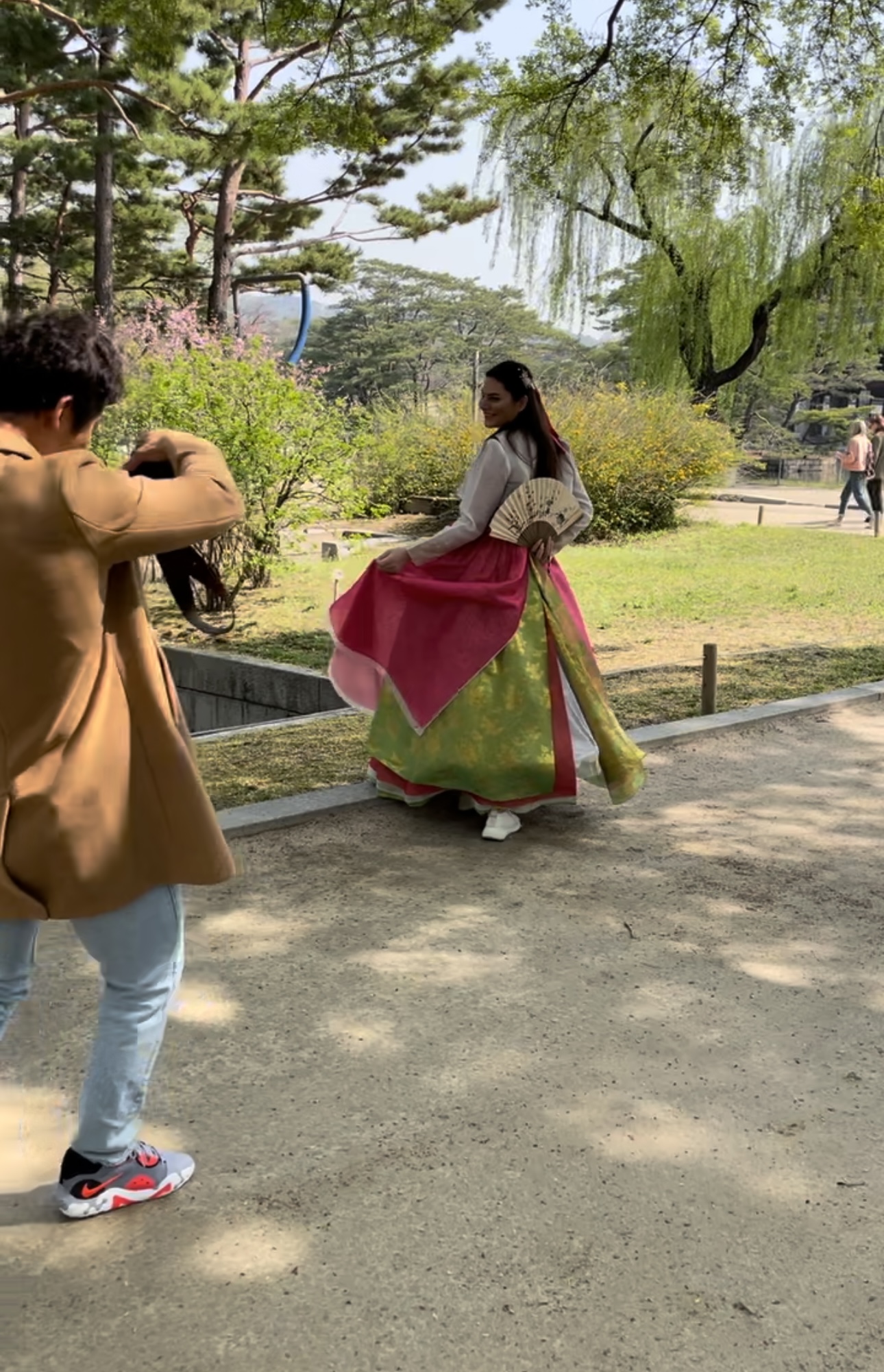
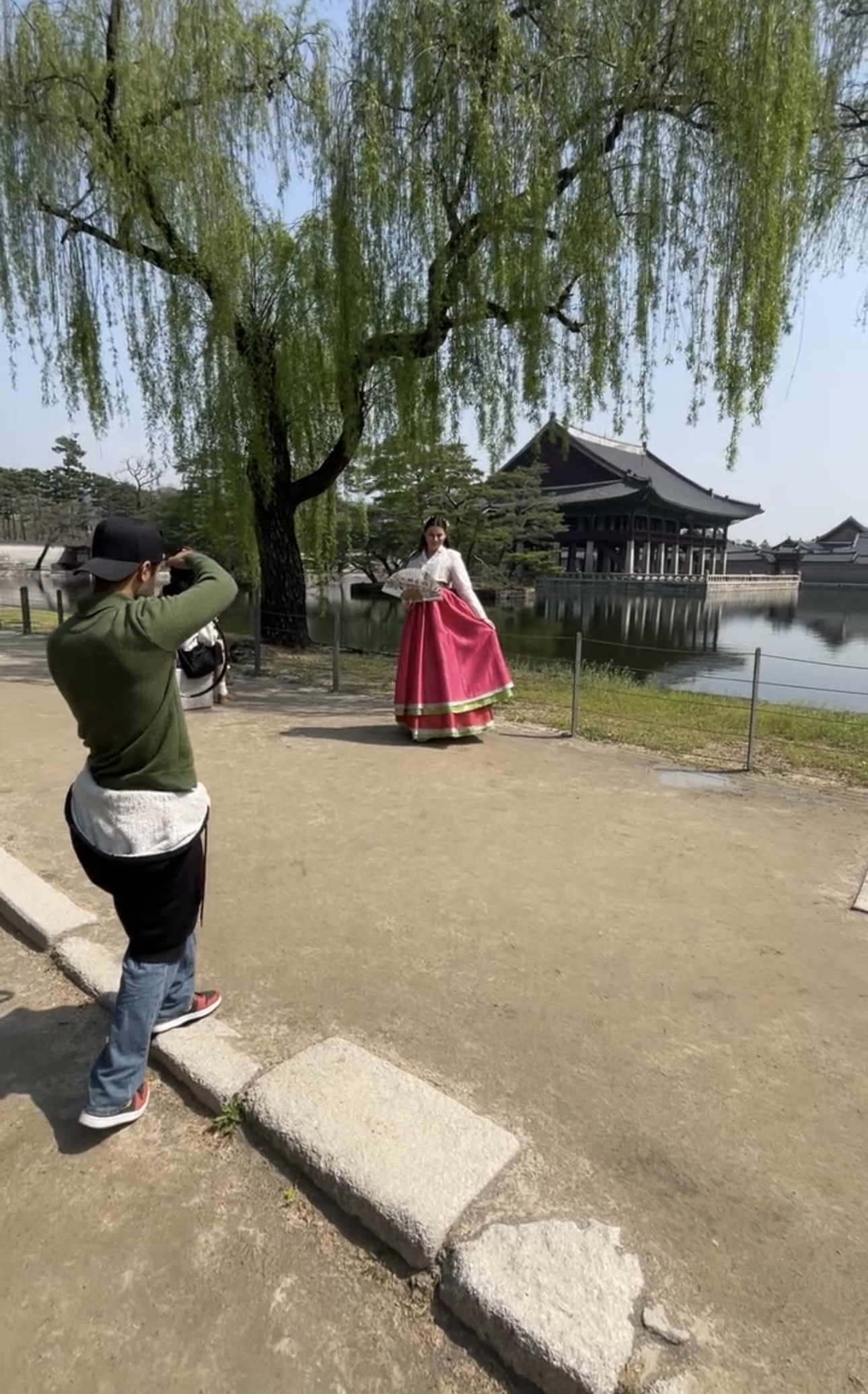
When everyone was ready, we were finally set to go to the palace. Our group consisted of about 7-8 people from various parts of the world, accompanied by two photographers. To speed up the process, we were consistently divided into two groups, switching photographers. The palace and its surroundings are simply breathtaking! It’s undoubtedly a must-visit in Korea. The beauty and tranquility of the place create a stark contrast to the bustling city of Seoul, as if you’re entering a different world. The palace grounds are stunning on their own, but what adds to the charm are all the people wearing hanboks, creating a scene from the past with royalties walking around—an incredible sight. Despite the crowds, it remained a beautiful experience, highly recommended whether you’re interested in a photoshoot or not. The photographers demonstrated exceptional skill, making everyone comfortable in front of the camera, even with the rest of the group watching. Everyone looked fantastic in that picturesque setting, and the photos turned out exceptionally beautiful—I am very satisfied. The shots were taken in various locations around the palace.
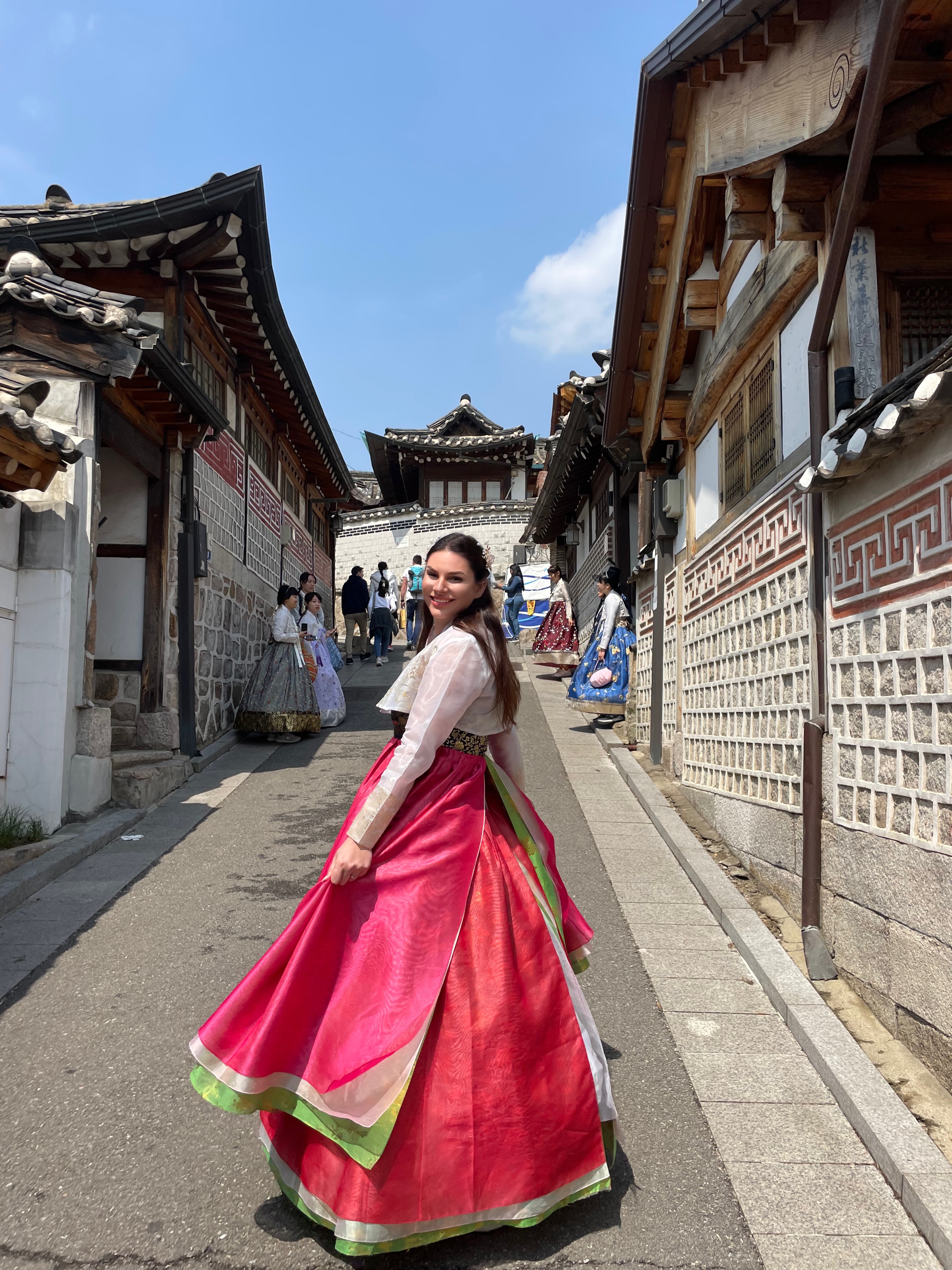
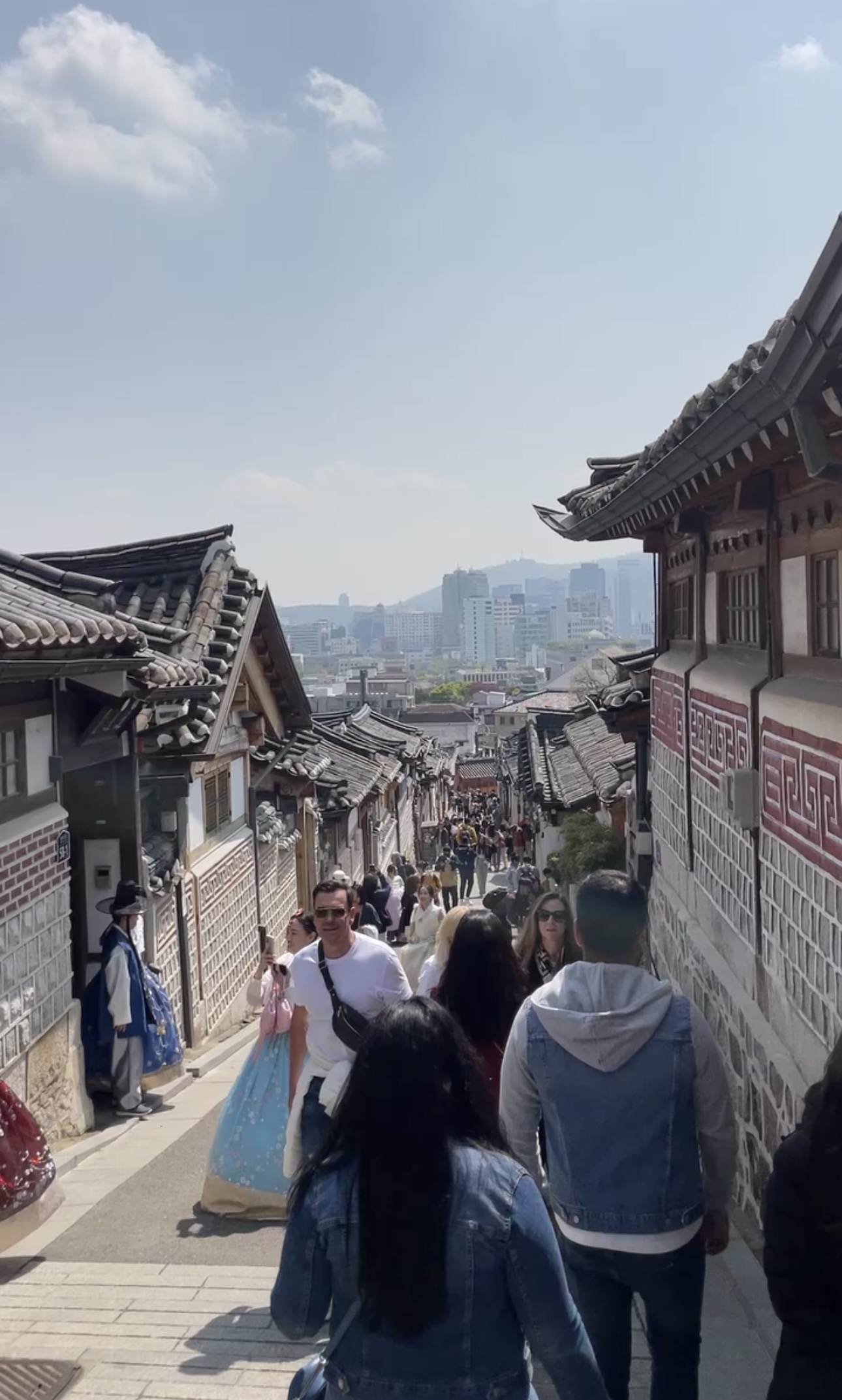
After the photoshoot, we were allowed to keep the hanbok on for some more time to explore the palace and the area around. We decided to visit the little village in the area, Bukchon Hanok Village. Bukchon Hanok Village is a traditional Korean village with a history dating back to the Joseon Dynasty. It is known for its well-preserved hanok (traditional Korean houses) and narrow streets, providing a glimpse into the past.
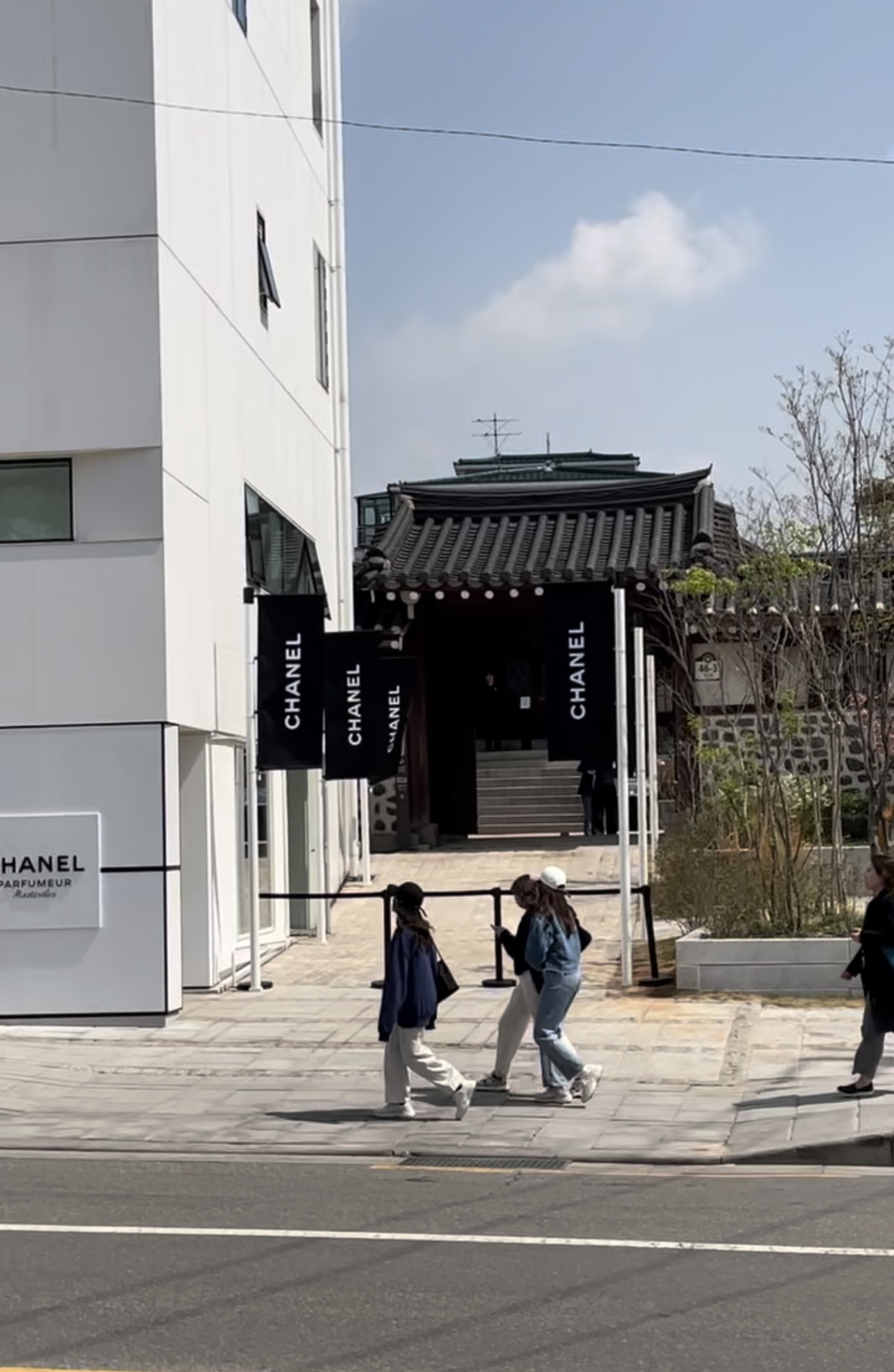
It took us a while to find the village, wandering through the narrow streets alongside other people in hanboks who, like us, seemed a bit lost. The challenge of navigation might be attributed to Google Maps not working efficiently in South-Korea, and Kakao Maps not always being fully English-compatible. Despite these challenges, we eventually found Bukchon Hanok Village. Walking up the hill through the village felt like stepping back in time, and the visitors wearing hanbok added to the overall charm of the place. The village offers a unique blend of history, culture, and a serene atmosphere. Besides the historic charm of small houses, there were unexpected modern touches, including a Chanel store and various cafes.
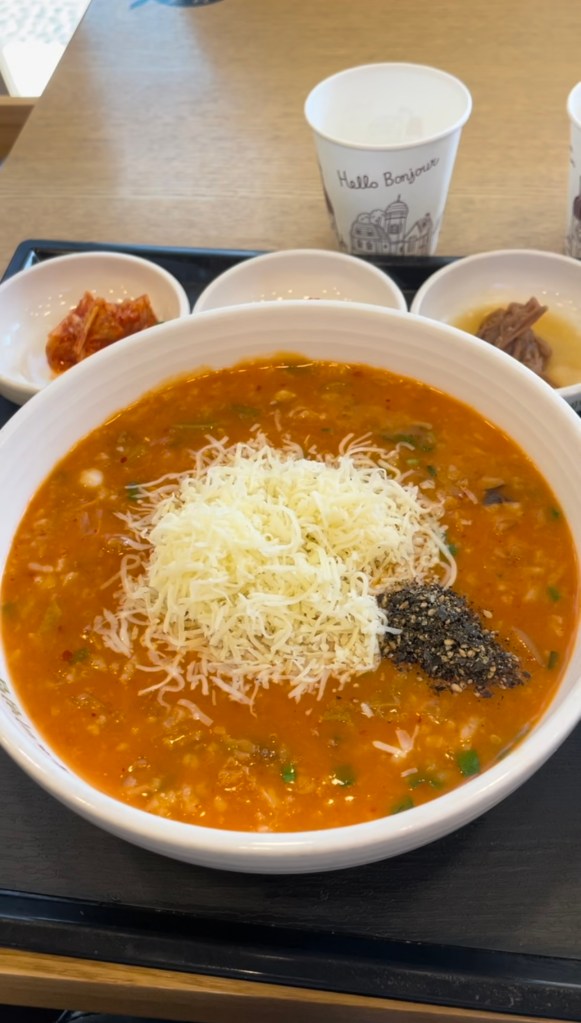
Despite wanting to try the local cuisine in the village, we didn’t find exactly what we were craving among the numerous options. Additionally, I hesitated to eat in my hanbok, considering its lack of comfort and the risk of staining it. Consequently, we returned the hanbok to the store and went for lunch in the area. The meal, which turned out to be different from what I thought I had ordered (fried octopus with cheese became a soup with cheese), wasn’t the ideal choice, but we enjoyed it nonetheless. By this time, we were extremely tired because, although it sounds and all looks very close by, it actually is quite a walk! Afterward, we headed back to the hotel, took some time to relax in the room and at the pool before preparing for a night of exploration in Itaewon.
In summary, we had a beautiful day filled with the enchanting beauty of hanboks, the historical charm of Gyeongbokgung Palace, and the picturesque surroundings of Bukchon Hanok Village—an experience that I recommend for everyone visiting South-Korea
Stay tuned for more on the vibrant nightlife of Itaewon in my next post!
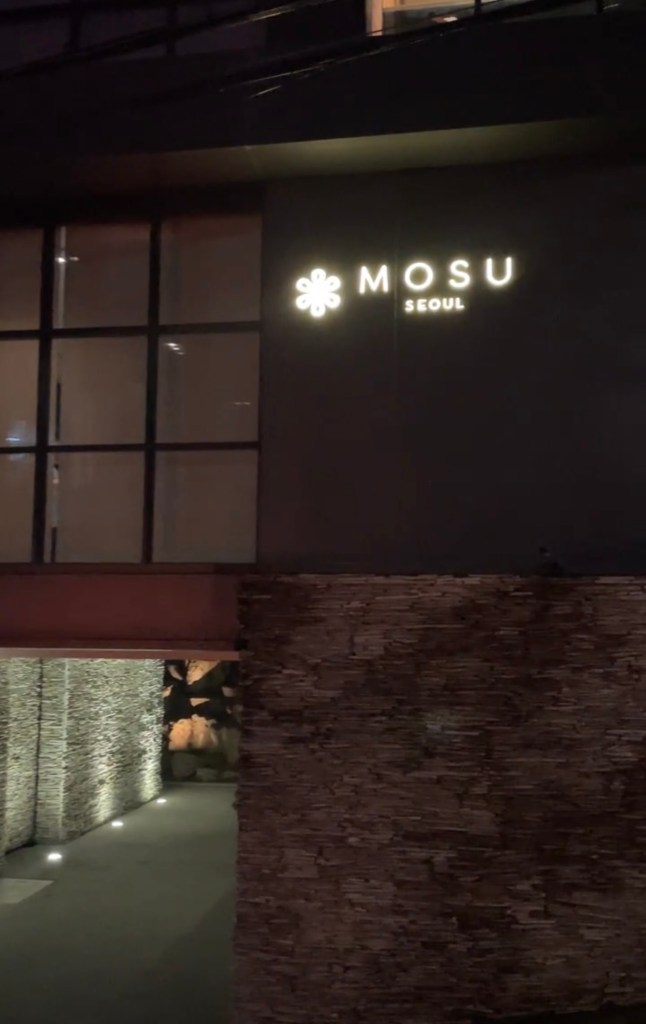
Before the trip to South-Korea, I dedicated a considerable amount of time to researching Michelin-starred restaurants in South-Korea. Through my research, I found many outstanding fine dining options and several restaurants with Michelin stars in Korea. After careful consideration, I settled on Mosu because the description of its cuisine captivated me. It promised a blend of fine dining and Korean flavors, precisely what I was seeking for an exceptional culinary experience in Korea. Mosu is the restaurant of Chef Ahn Sung-Jae, renowned for his innovative approach to Korean cuisine, seamlessly blending traditional flavors with modern culinary techniques.
Securing a reservation at Mosu proved to be a challenge, requiring advance planning approximately two months ahead. I had to communicate via email because the restaurant was consistently fully booked on the online platform Catch Table, commonly used for restaurant reservations. The restaurant facilitated the process by sending a payment link, allowing me to pay a deposit equivalent to half of the price per person. The experience, exclusive of wine pairing, came at a cost of 320,000 KRW.
For those following my previous post, you’re aware of the stress we encountered reaching this culinary haven due to a sudden change in our itinerary—flying directly from Jeju to Seoul and missing a night in Busan as originally planned. Navigating Seoul’s rush hour added to the challenge, extending our journey from the domestic airport to Itaewon to a full hour. Note that Seoul’s rush hour at 5 pm is no joke. Upon our arrival at the hotel around 5:50, without completing the check-in, we promptly requested the hotel staff to call the restaurant. We informed them that we might be up to 15 minutes late for our 6:00 PM reservation. Fortunately, the restaurant was understanding, even though the confirmation explicitly stated that we needed to be on time. We opted for a cab to reach the restaurant. Surprisingly, the taxi driver wasn’t familiar with Mosu’s location, despite its standing as one of the best restaurants in Asia and the world. Fortunately, after a bit of navigation, we successfully located it on a tranquil street, housed within a modern building.
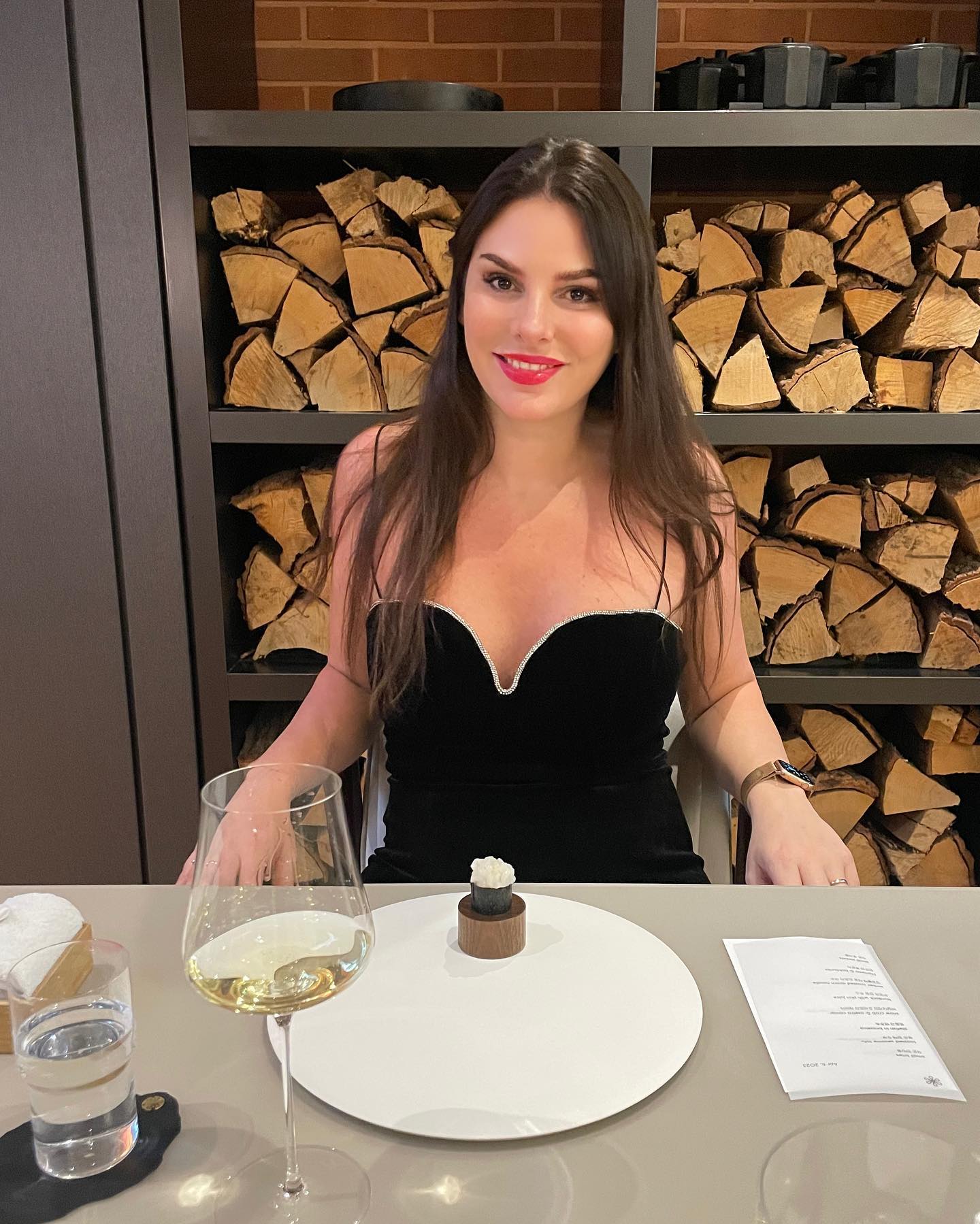
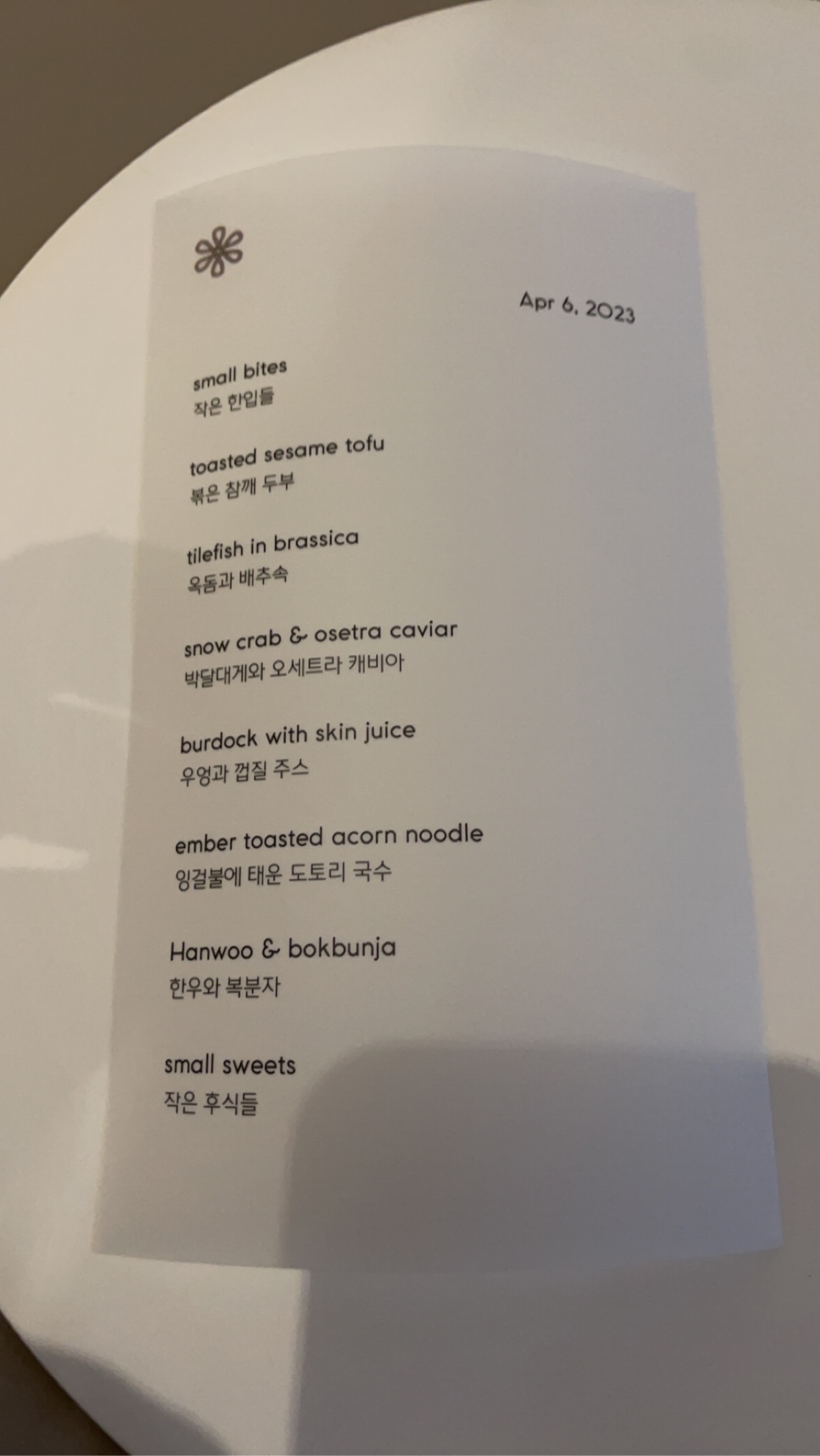
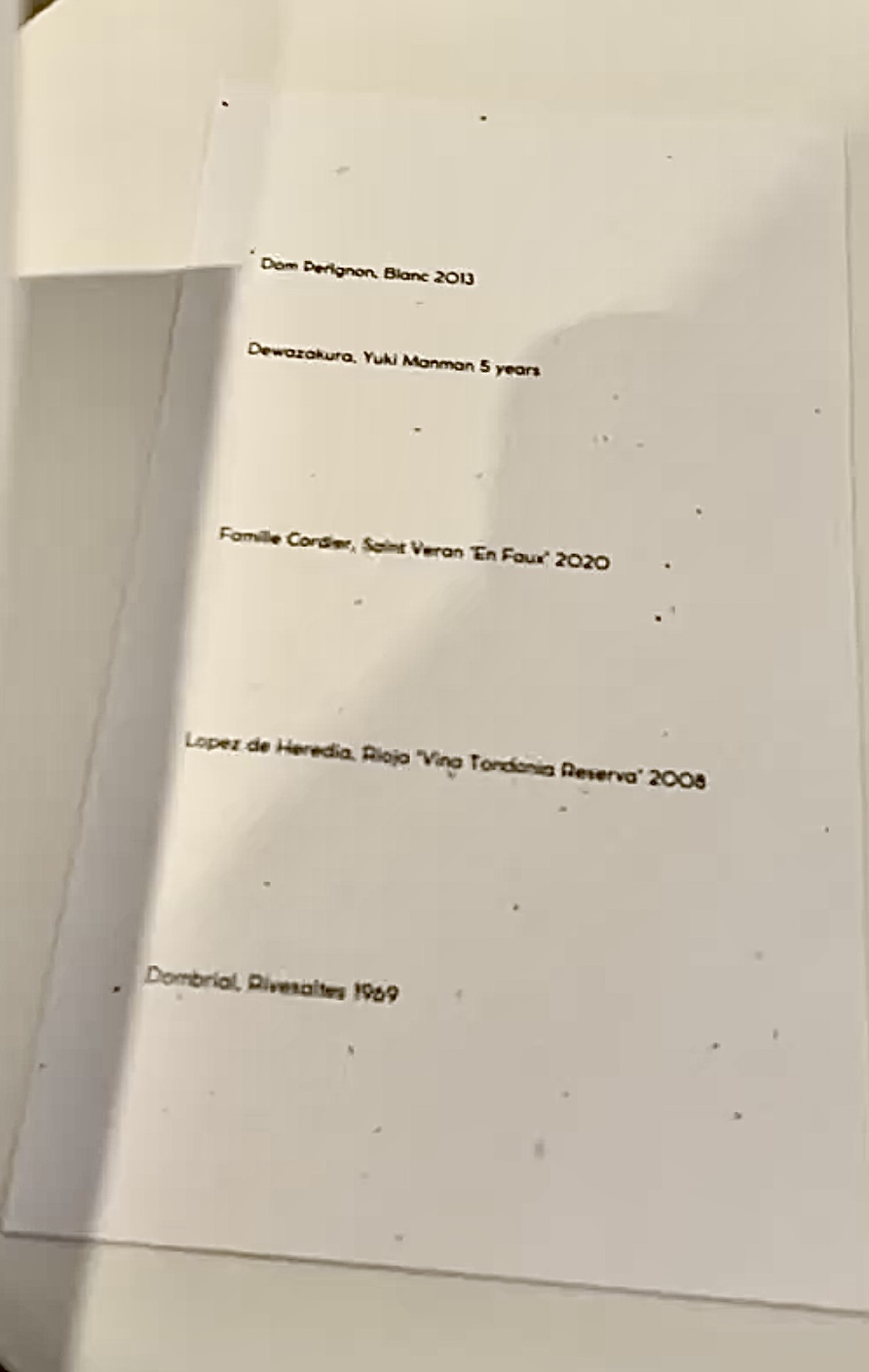
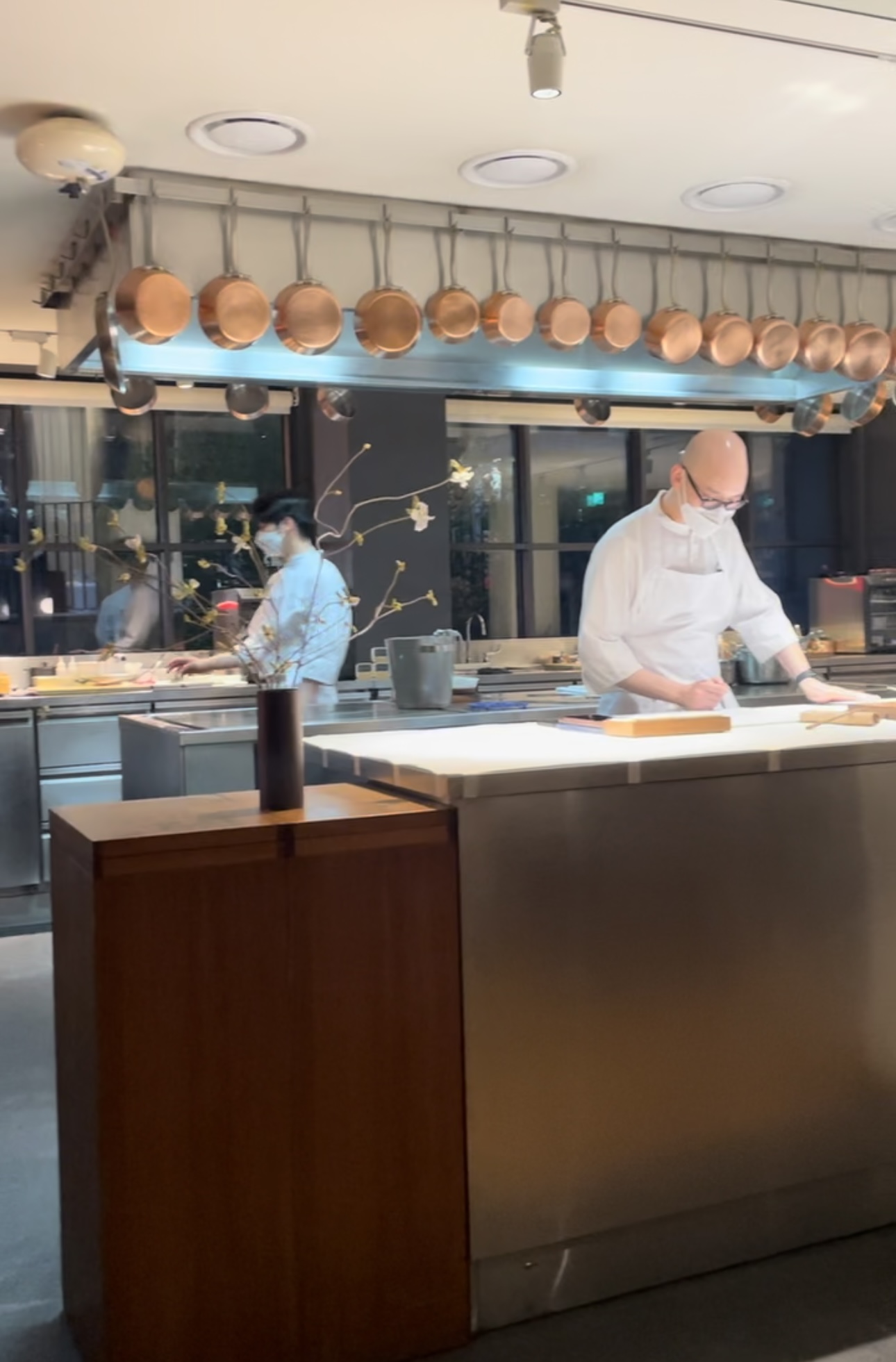
Awaiting us outside, the restaurant staff warmly greeted us and promptly escorted us to our table. Positioned adjacent to the open kitchen, we enjoyed a front-row seat to watch the culinary team in action as they prepared our meal. The interior showcased a modern aesthetic, featuring wooden tables. We were presented with a menu along with a transparent sheet featuring the names of the wines placed on top, facilitating a quick match between each wine and its corresponding food item.
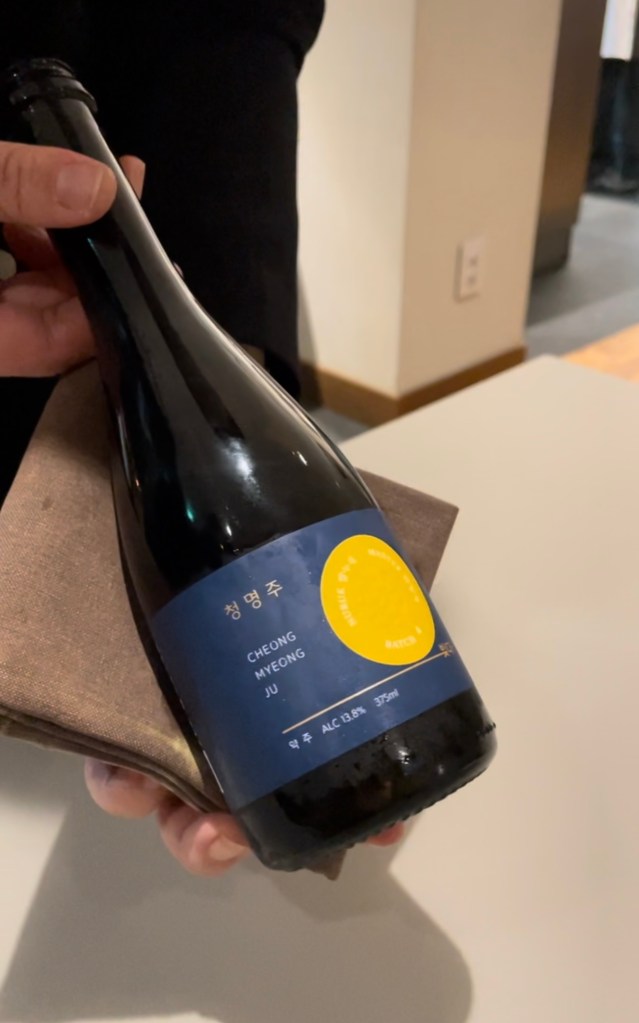
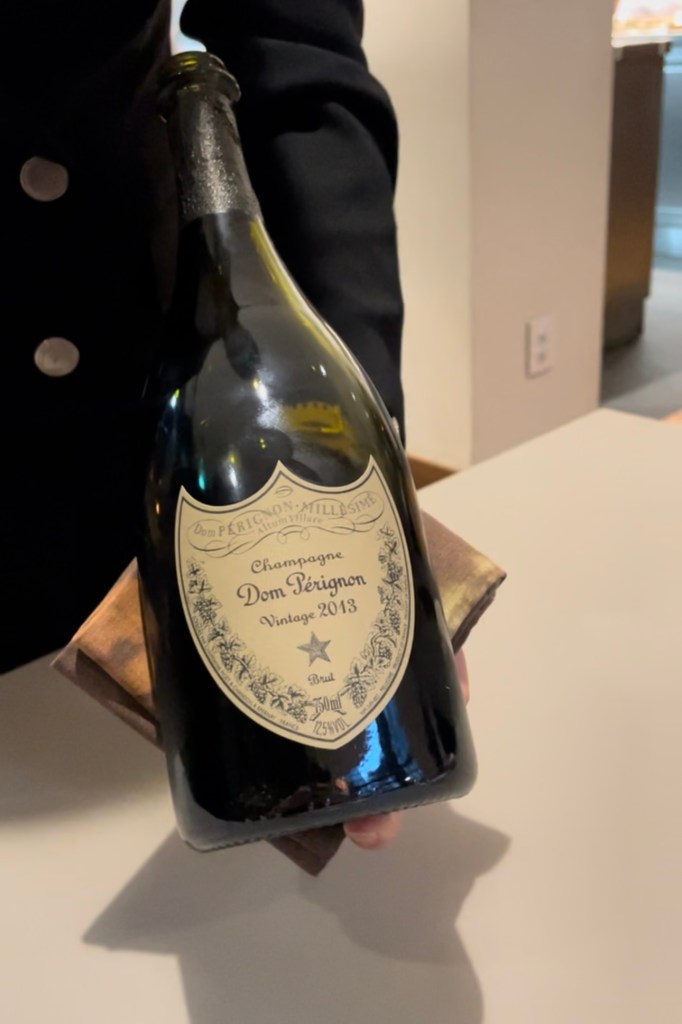
The knowledgeable and friendly staff skillfully presented each dish and drink, showcasing a wealth of information. Honestly, the food was exceptional. Every dish was a work of art, meticulously crafted and presented. The wine pairing further elevated the overall meal, contributing to its excellence. We started with a refreshing kombucha shot, followed by a glass of Dom Perignon. Other fantastic wines, including Korean rice wine, joined the experience. Each sip matched the flavors of the dishes, creating a memorable dining experience.
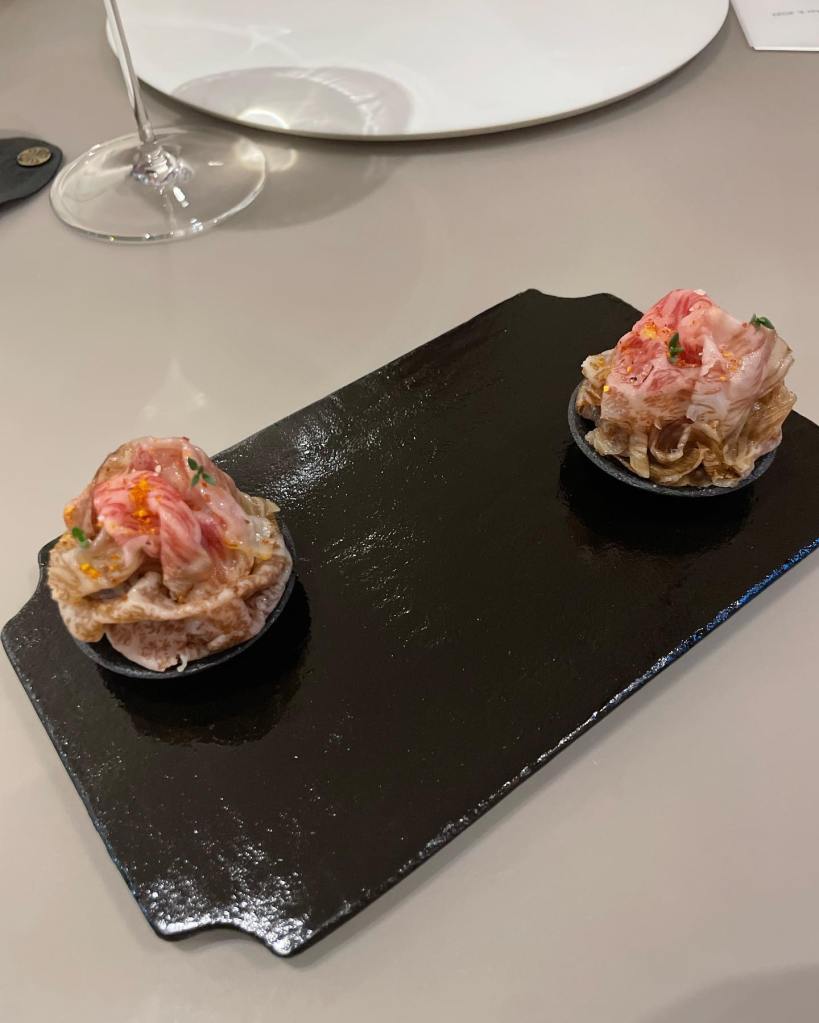
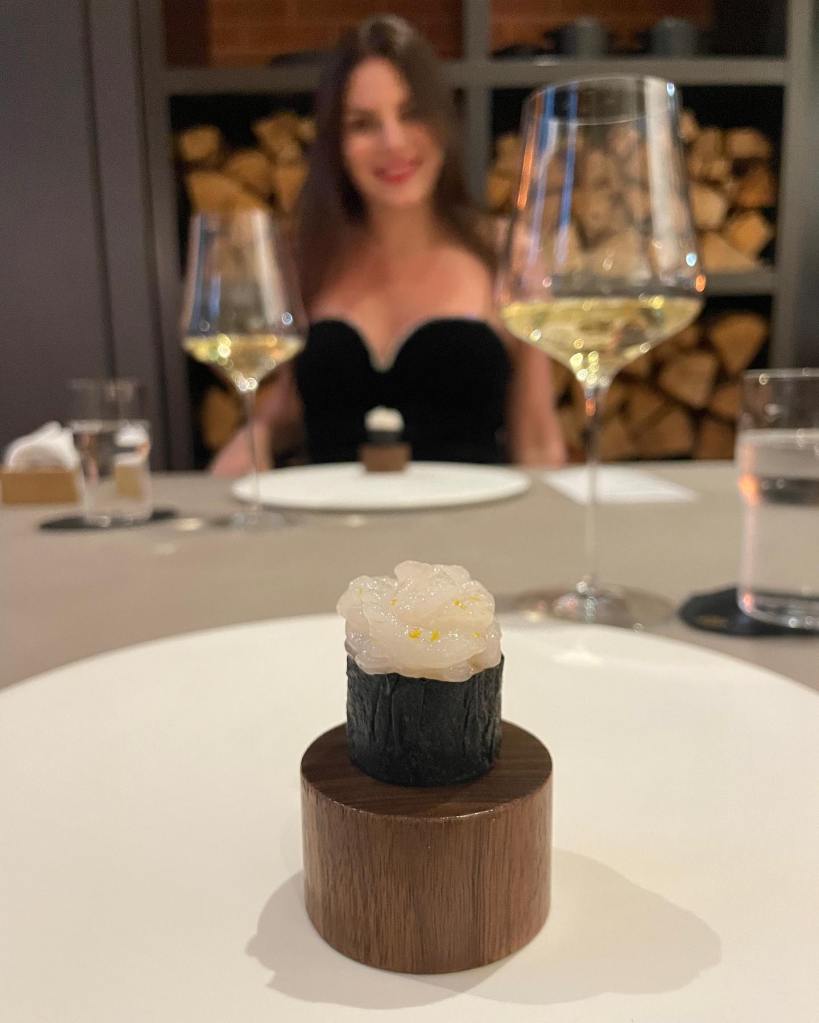
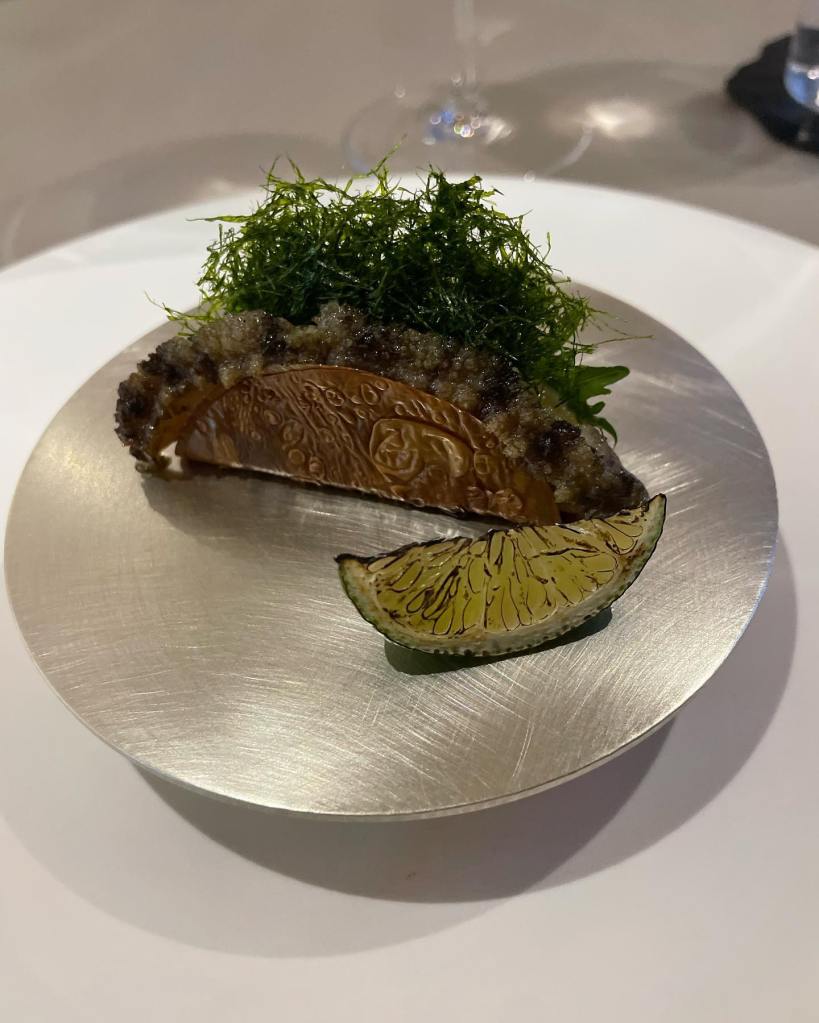
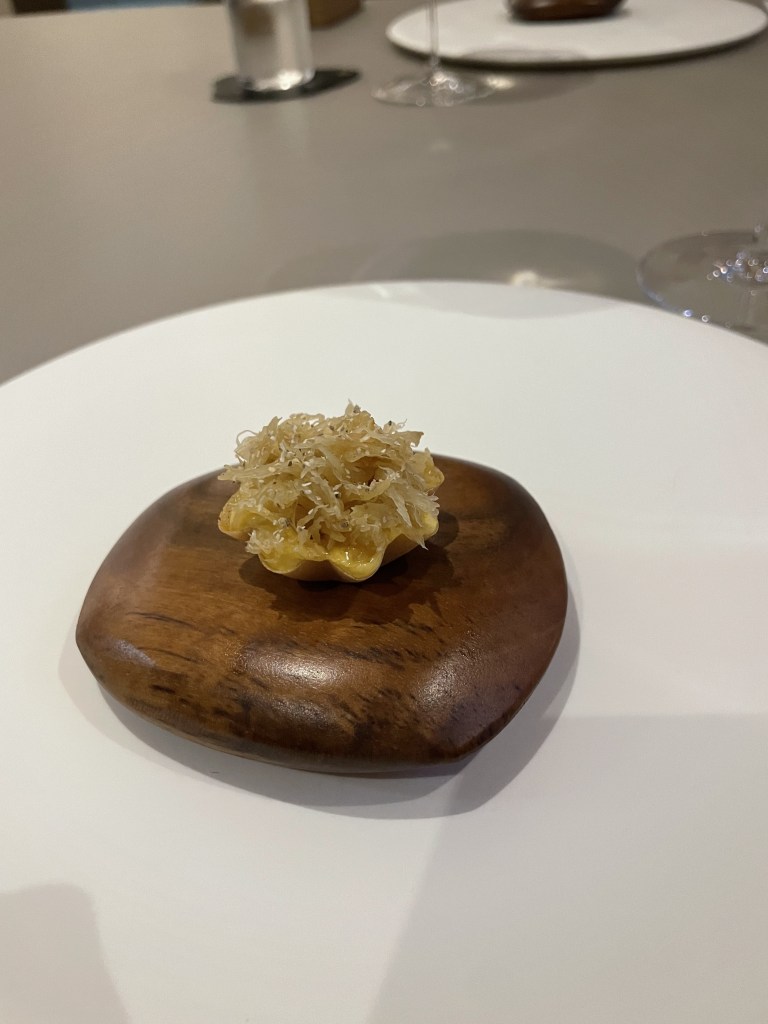
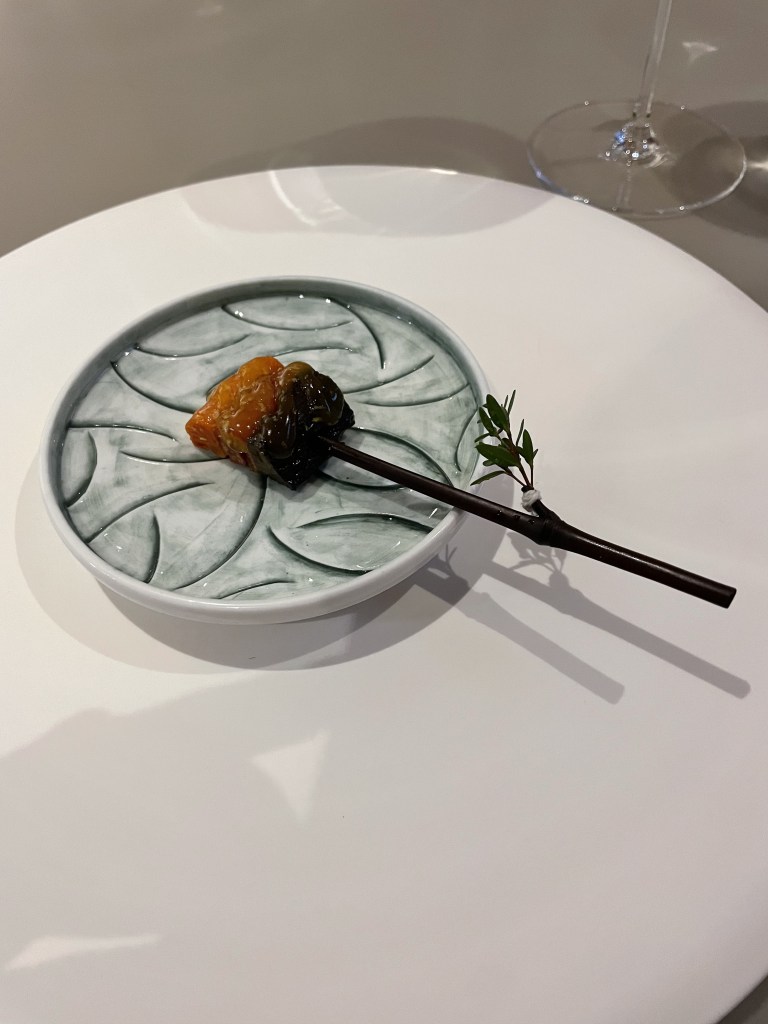
The culinary adventure began with delightful bites—a carpaccio, doraji (bell flower root), a sushi-inspired creation of potato topped with shrimp, and a Yuba taco with abalone and seaweed. The abalone, remarkably tender, provided a seafood experience distinct from the firmer version I had tried at Jeju Lotte Hotel. Adding to the surprises was a fantastic vegetarian bite comprising carrot, tomato, and eggplant, its flavors so delicious that it was hard to believe it was entirely vegetarian.
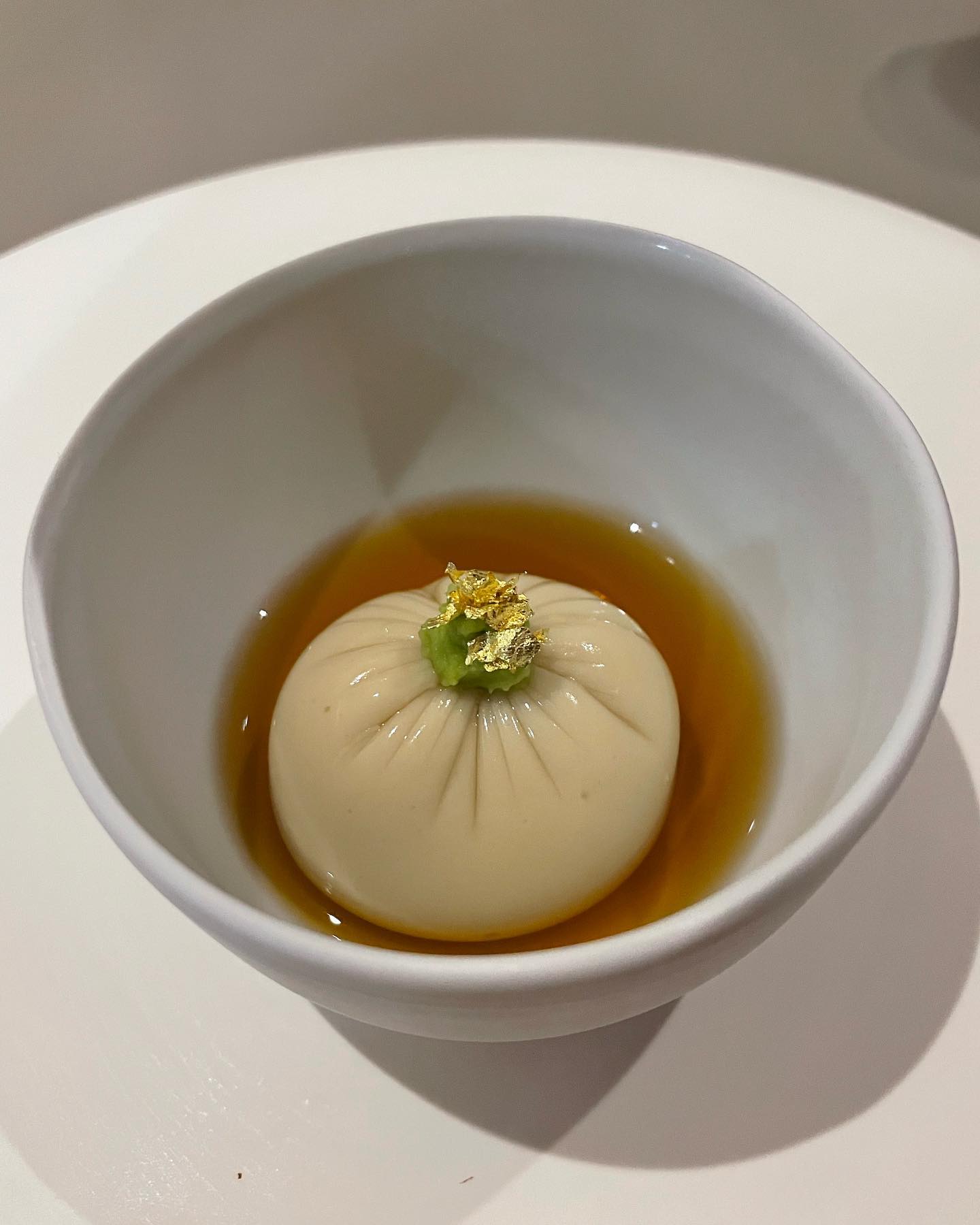
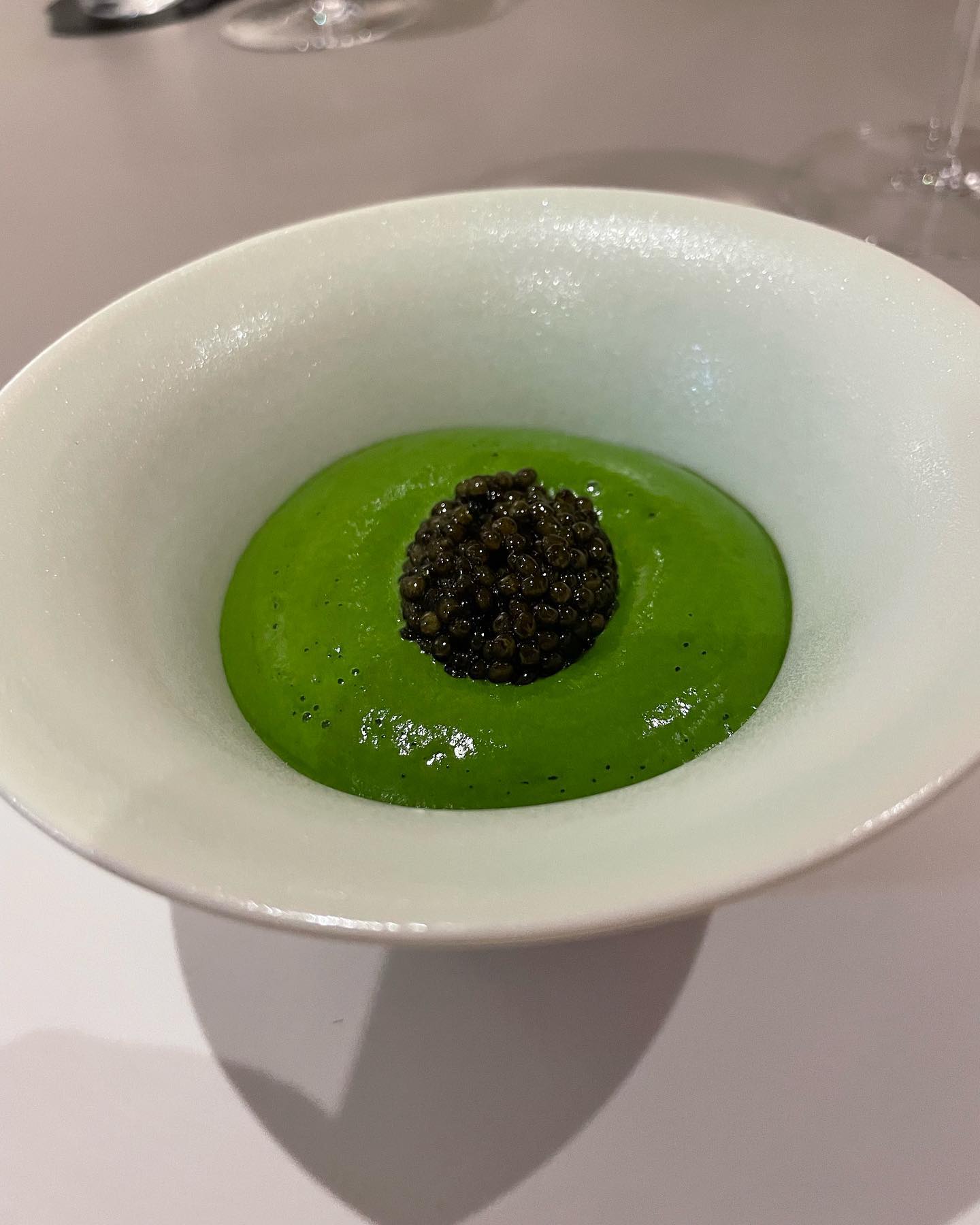
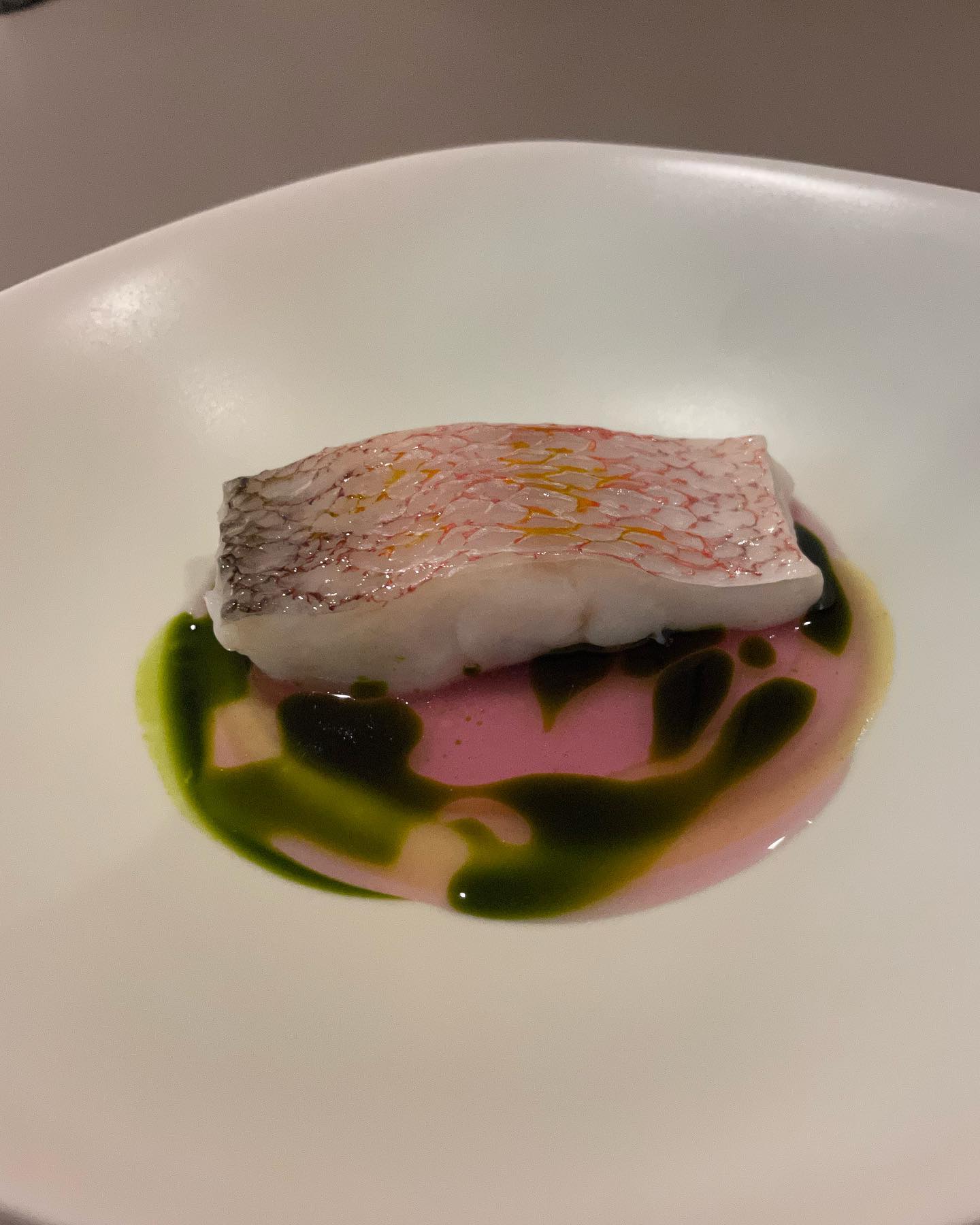
The next course featured a toasted sesame tofu dumpling. The perfectly cooked tilefish in brassica followed. Then came the outstanding snow crab dish, with a green creamy sauce covering it and topped with Osetra caviar. The signature burdock with skin juice, a unique experience that brought a distinct flavor to the table, added to the delight. Burdock is a plant commonly used in Asian cuisine, and in this dish, it’s combined with a flavorful liquid extracted from its outer layer, offering a unique and distinct taste.
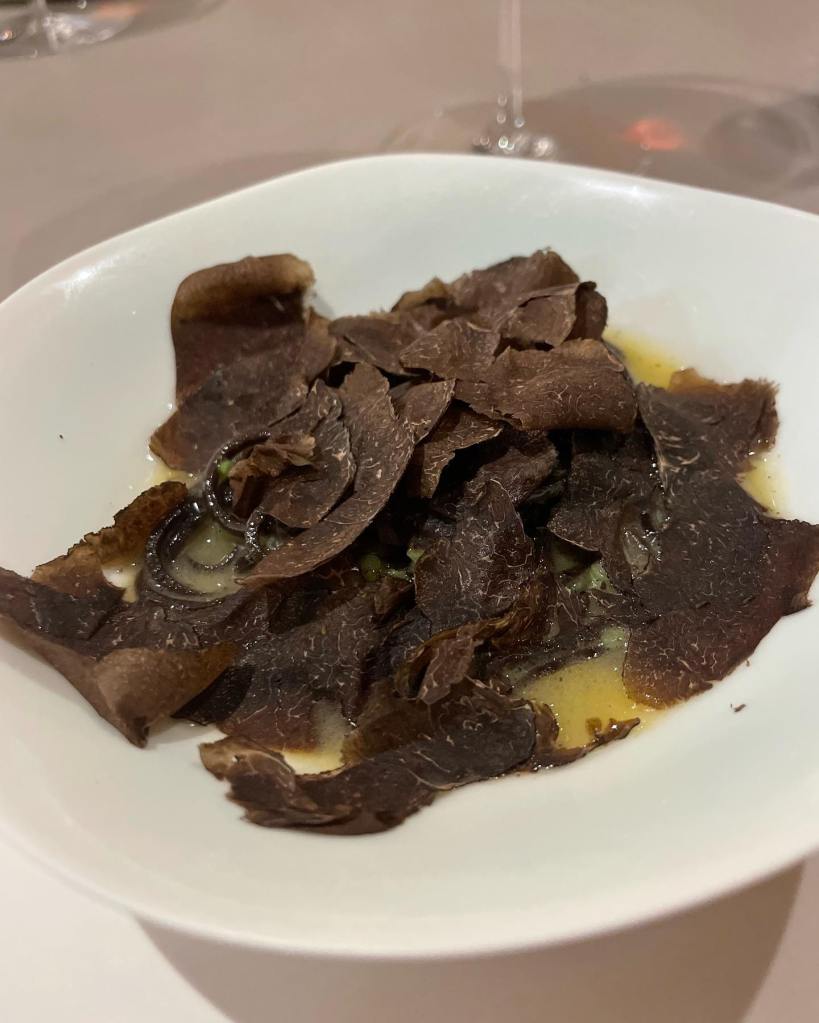
The culinary journey continued with ember-toasted acorn noodles with truffles. Acorn noodles, crafted from acorn flour derived from the nuts of oak trees, represent a traditional Korean ingredient known for their slightly nutty flavor and distinctive texture. In this unique creation, ember-toasted acorn noodles are prepared by toasting them over an open flame, imparting a distinct smoky flavor to the dish. This toasting process enhances the overall taste, creating a delightful culinary experience. The dish was generously adorned with truffles, and despite recent truffle overload experiences, I found myself thoroughly enjoying it, reigniting my appreciation for the distinct flavor of truffles.
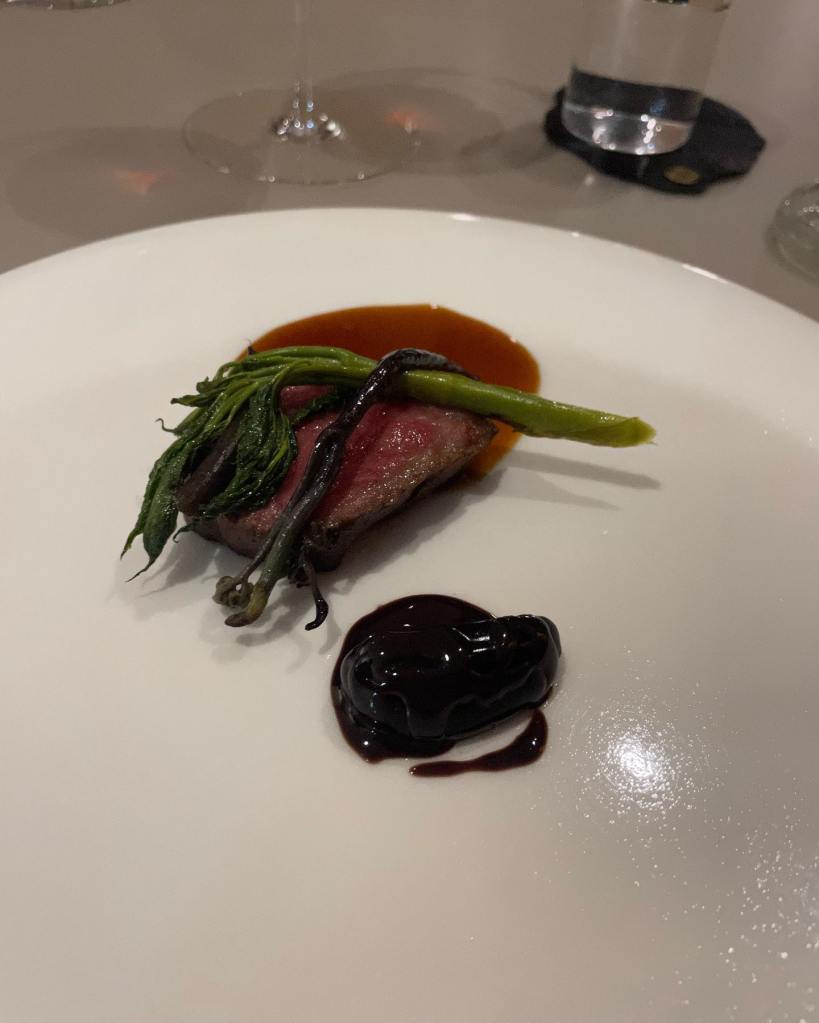
The last main dish was the Hanwoo and Bokbunj, highlighting Korean beef that practically melted on the tongue. Hanwoo refers to a breed of cattle native to Korea, renowned for its high-quality and tender meat, with some considering it the Korean counterpart to Japanese Wagyu. Bokbunj, on the other hand, signifies Korean wild black raspberry, frequently integrated into various dishes to introduce a distinctive and slightly sweet flavor. The fusion of Hanwoo beef and Bokbunj created a harmonious balance of savory and sweet notes, enhancing the overall dining experience and leaving a lasting impression.
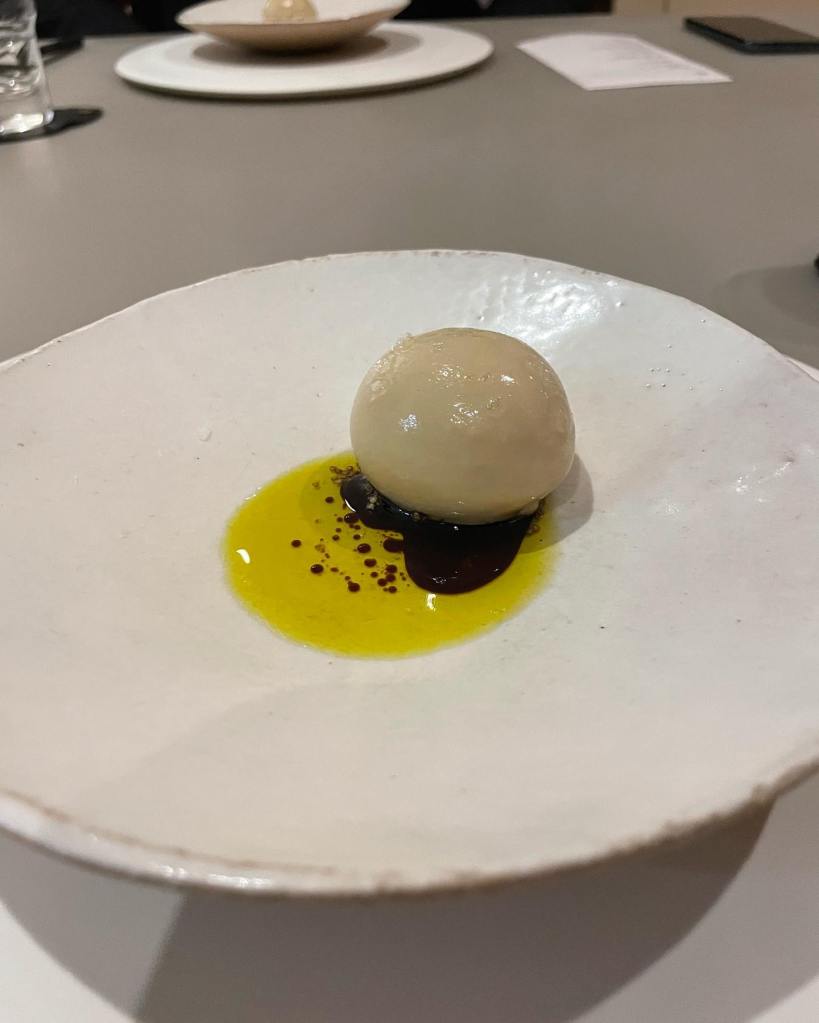
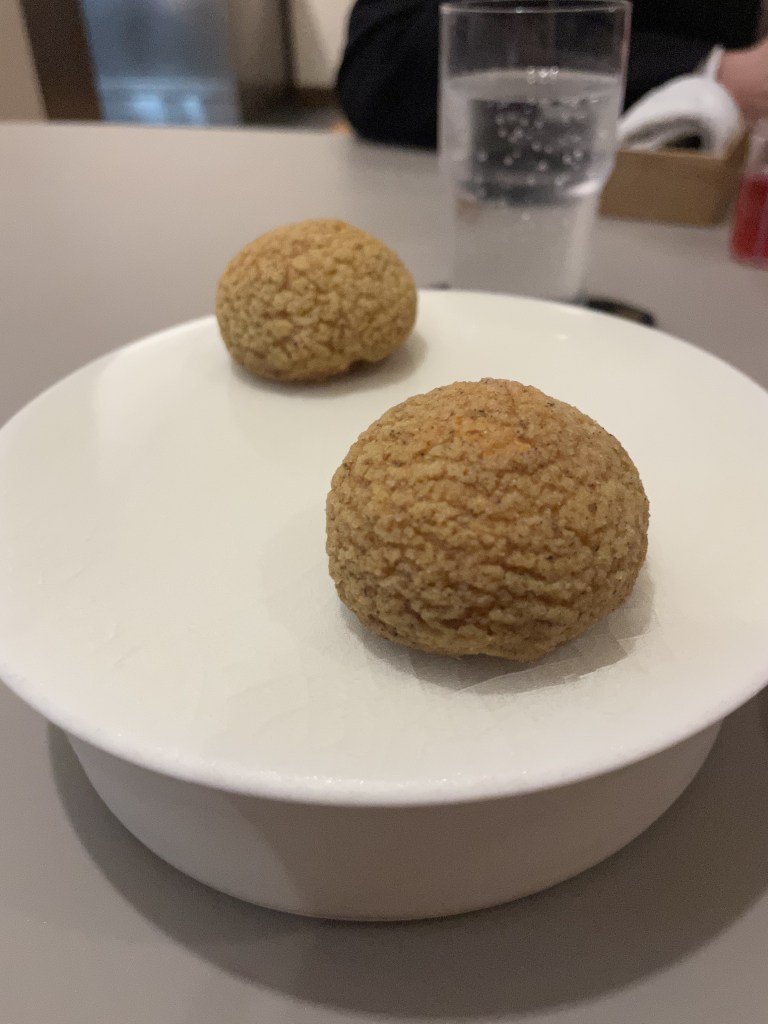
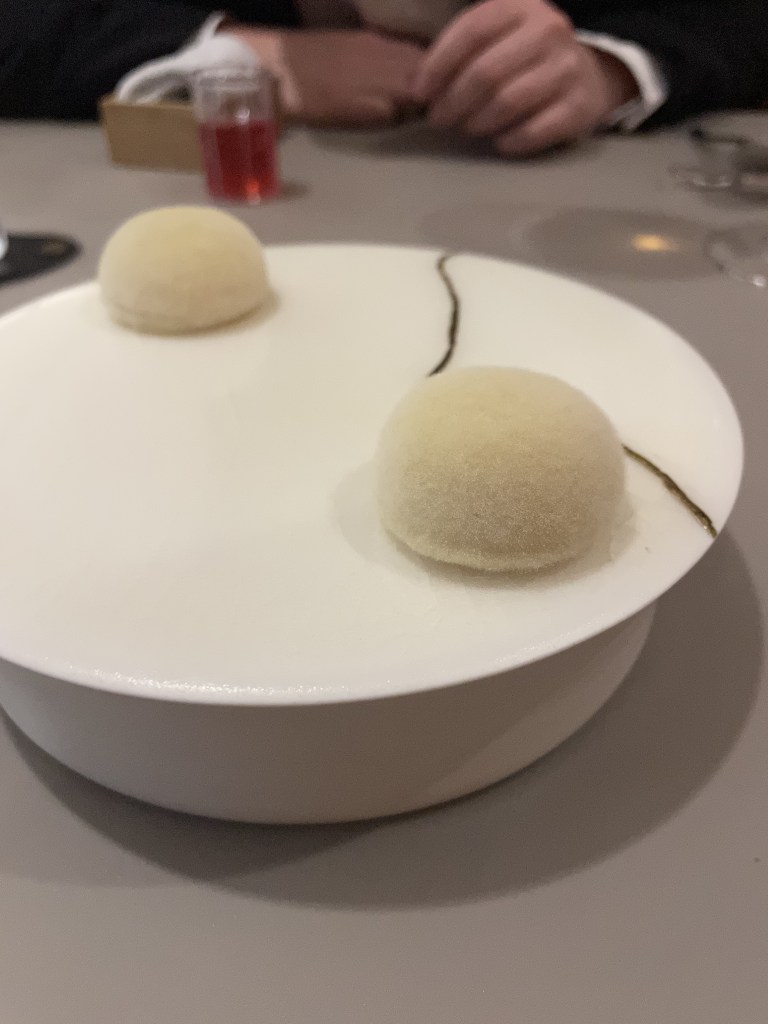
In the midst of this culinary journey, a standout moment was the middle dish—something both my partner and I found intriguing. It was a bread ice cream! The presentation resembled an ice cream, with a yellow and dark component meant to be olive oil and balsamic vinegar. However, the surprising twist was that it tasted exactly like bread with olive oil and balsamic vinegar! It played with my senses as it had the texture of real bread grains! This twist made it an unforgettable part of the dining experience.
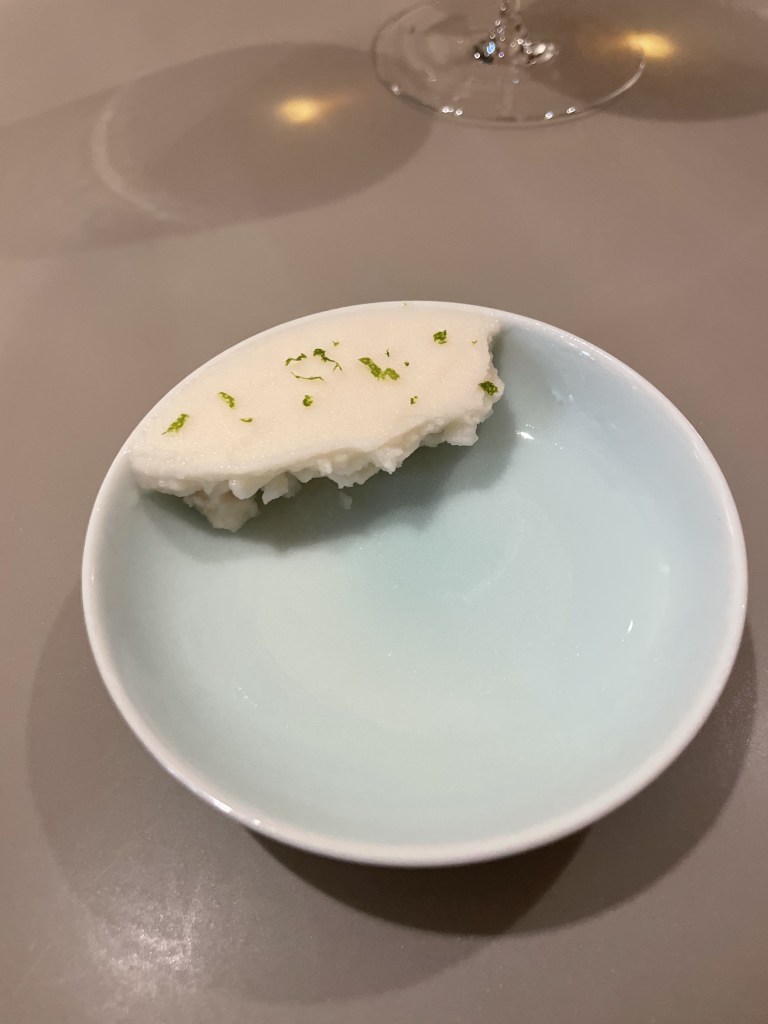
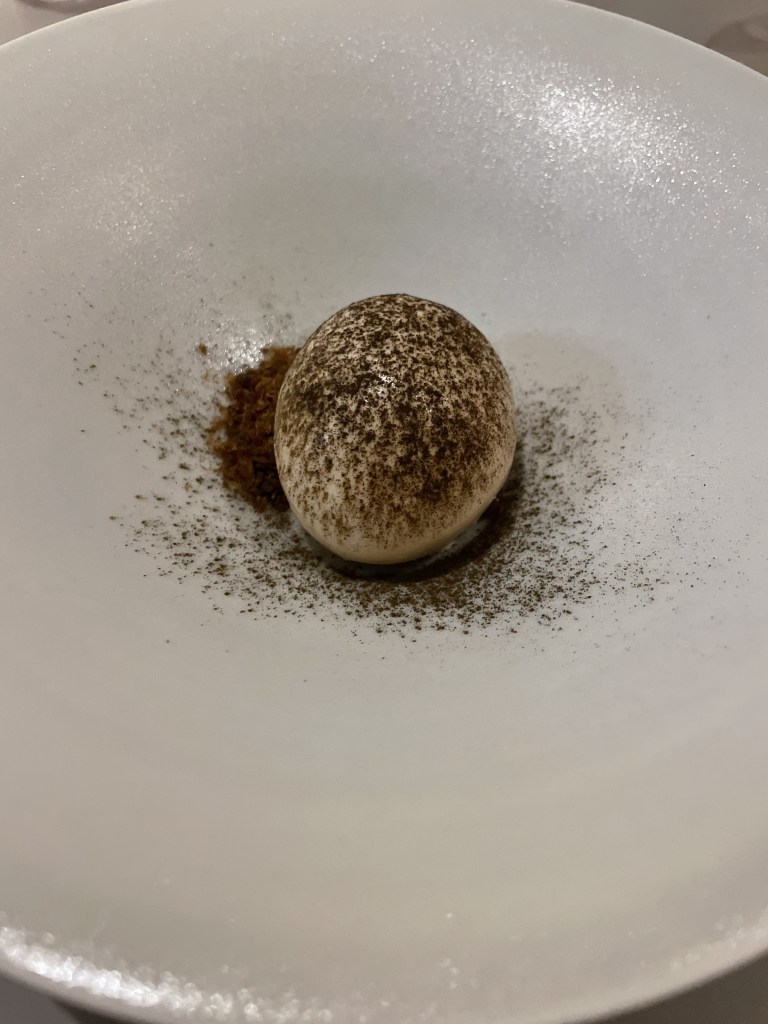
Despite not being big on desserts, I couldn’t resist the amazing sweet treats at the restaurant. One that stood out was a dessert made of mold—unique texture, but surprisingly tasty!
In conclusion, Mosu offers an exceptional Korean fine dining experience, exceeding expectations with its creative menu, attentive staff, and sophisticated ambiance. From unique dishes like the bread ice cream to standout items like the tiny taco with abalone or the Hanwoo, the chef’s skill and innovation shine through. The wine pairing elevates the flavors, making Mosu a must-visit for those seeking impeccable service and exquisite Korean cuisine in Seoul. Highly recommended for a remarkable dining experience.



 Anyah Mroz