
Before the trip to South-Korea, I dedicated a considerable amount of time to researching Michelin-starred restaurants in South-Korea. Through my research, I found many outstanding fine dining options and several restaurants with Michelin stars in Korea. After careful consideration, I settled on Mosu because the description of its cuisine captivated me. It promised a blend of fine dining and Korean flavors, precisely what I was seeking for an exceptional culinary experience in Korea. Mosu is the restaurant of Chef Ahn Sung-Jae, renowned for his innovative approach to Korean cuisine, seamlessly blending traditional flavors with modern culinary techniques.
Securing a reservation at Mosu proved to be a challenge, requiring advance planning approximately two months ahead. I had to communicate via email because the restaurant was consistently fully booked on the online platform Catch Table, commonly used for restaurant reservations. The restaurant facilitated the process by sending a payment link, allowing me to pay a deposit equivalent to half of the price per person. The experience, exclusive of wine pairing, came at a cost of 320,000 KRW.
For those following my previous post, you’re aware of the stress we encountered reaching this culinary haven due to a sudden change in our itinerary—flying directly from Jeju to Seoul and missing a night in Busan as originally planned. Navigating Seoul’s rush hour added to the challenge, extending our journey from the domestic airport to Itaewon to a full hour. Note that Seoul’s rush hour at 5 pm is no joke. Upon our arrival at the hotel around 5:50, without completing the check-in, we promptly requested the hotel staff to call the restaurant. We informed them that we might be up to 15 minutes late for our 6:00 PM reservation. Fortunately, the restaurant was understanding, even though the confirmation explicitly stated that we needed to be on time. We opted for a cab to reach the restaurant. Surprisingly, the taxi driver wasn’t familiar with Mosu’s location, despite its standing as one of the best restaurants in Asia and the world. Fortunately, after a bit of navigation, we successfully located it on a tranquil street, housed within a modern building.
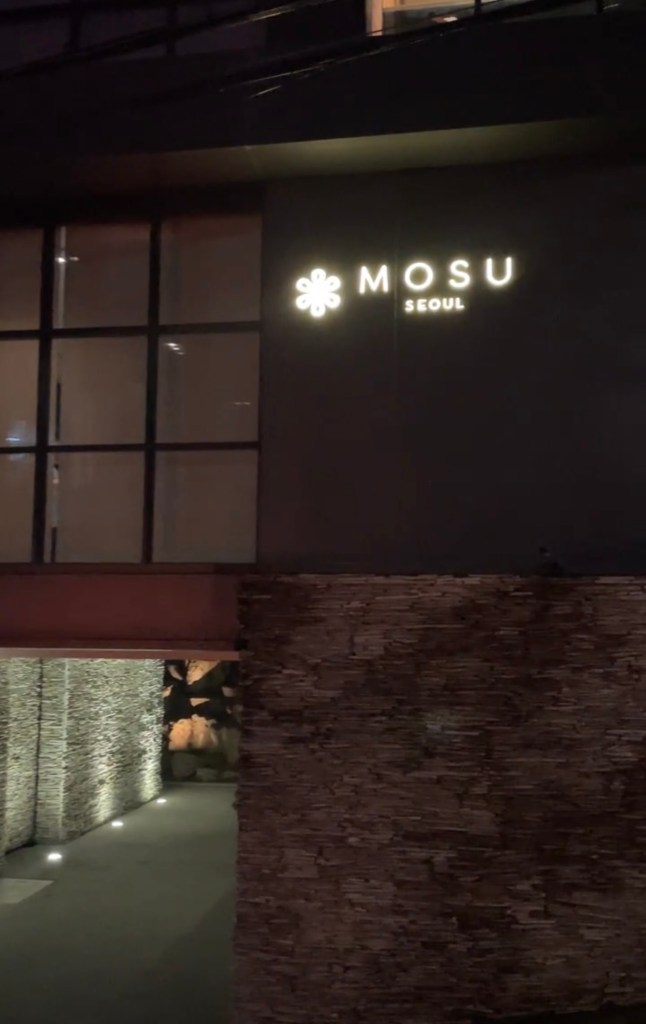
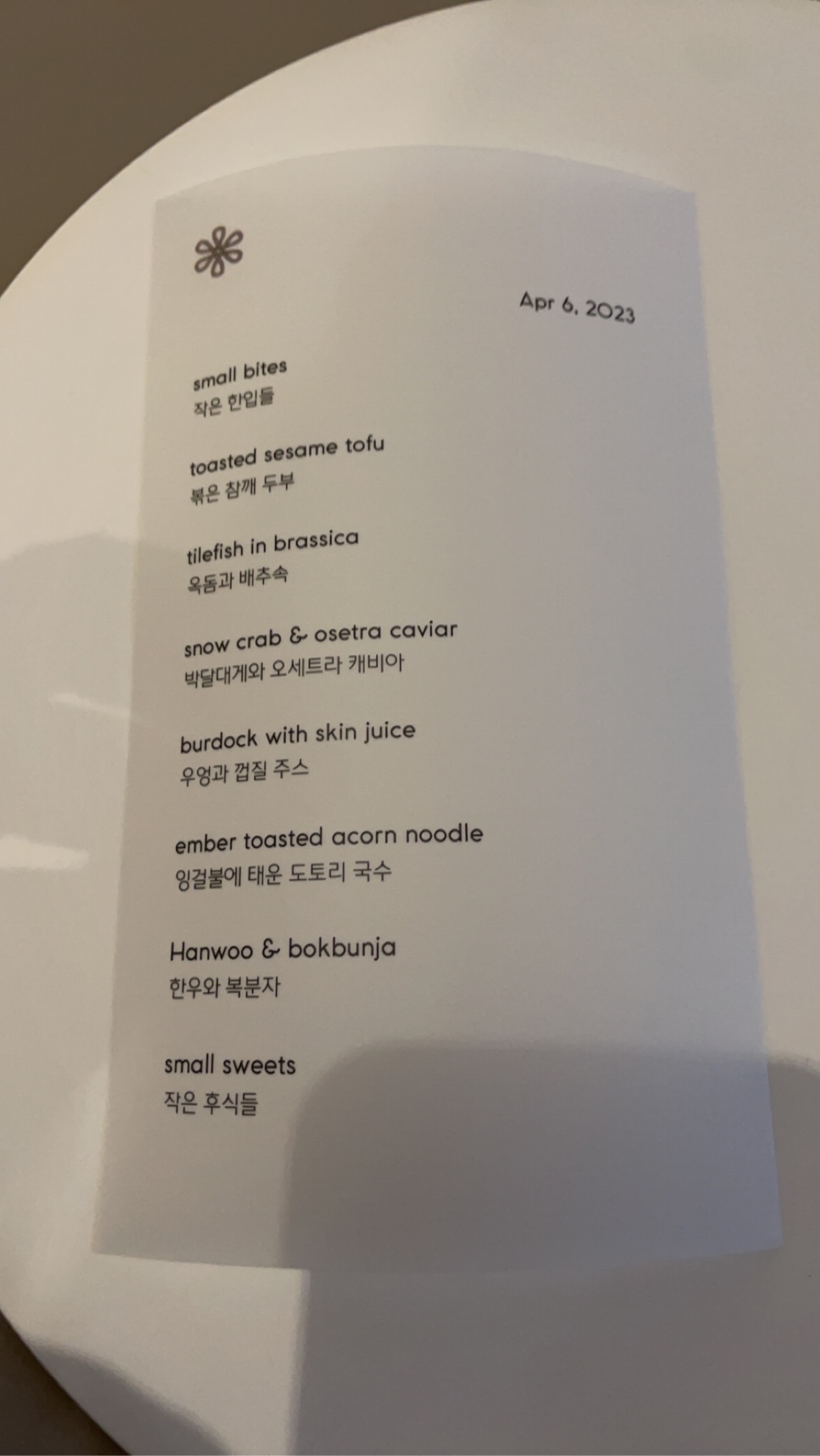
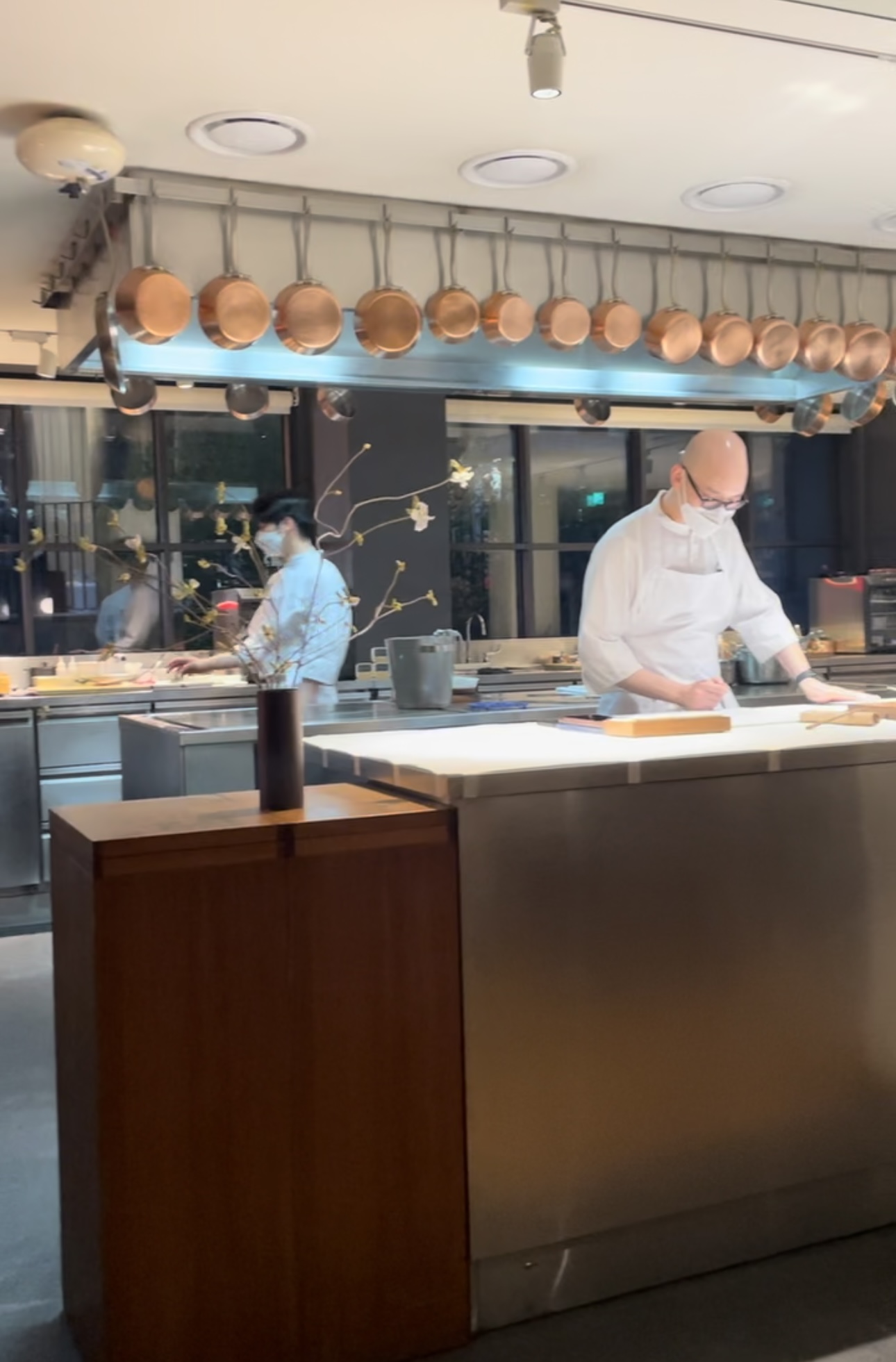
Awaiting us outside, the restaurant staff warmly greeted us and promptly escorted us to our table. Positioned adjacent to the open kitchen, we enjoyed a front-row seat to watch the culinary team in action as they prepared our meal. The interior showcased a modern aesthetic, featuring wooden tables. We were presented with a menu along with a transparent sheet featuring the names of the wines placed on top, facilitating a quick match between each wine and its corresponding food item.
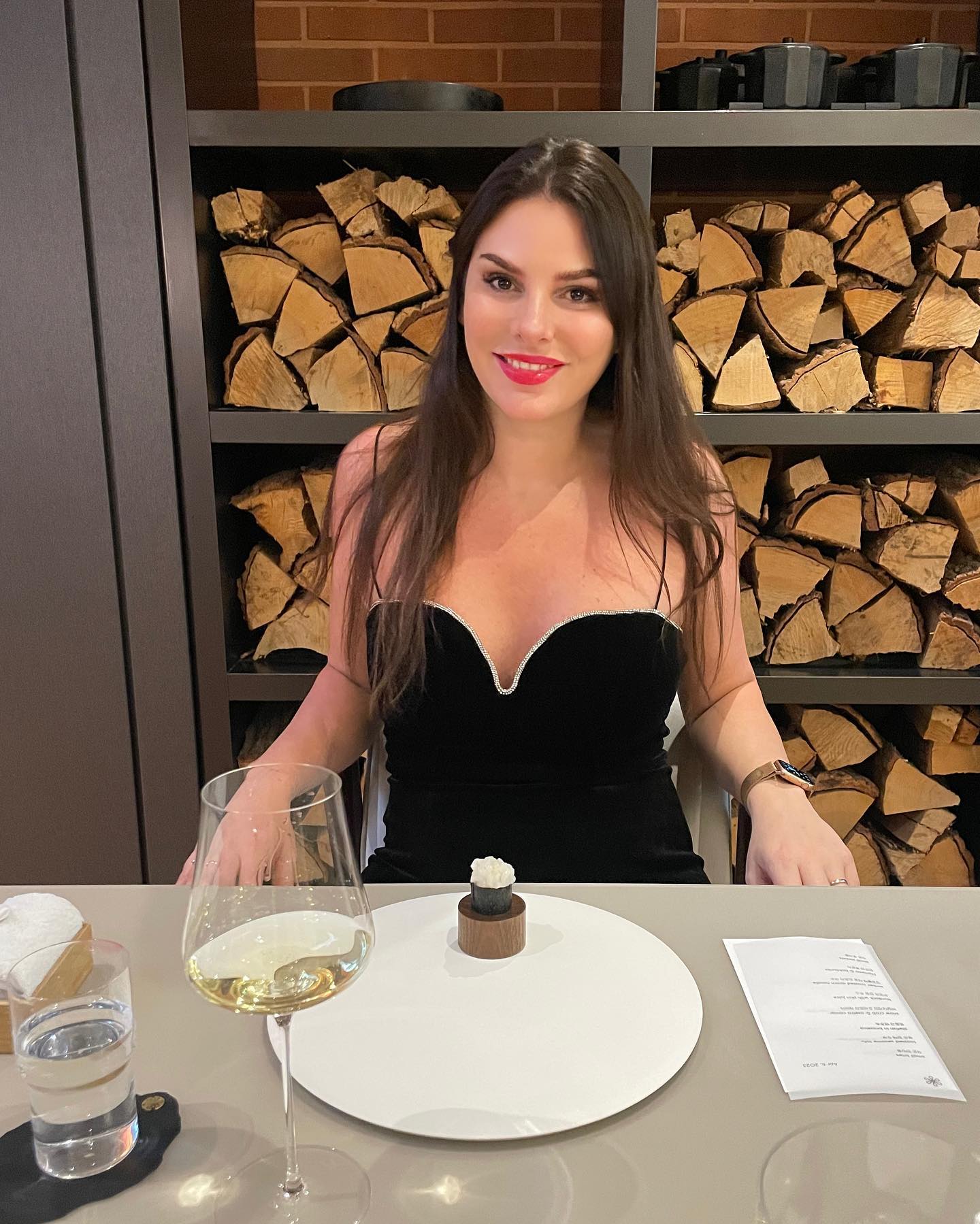

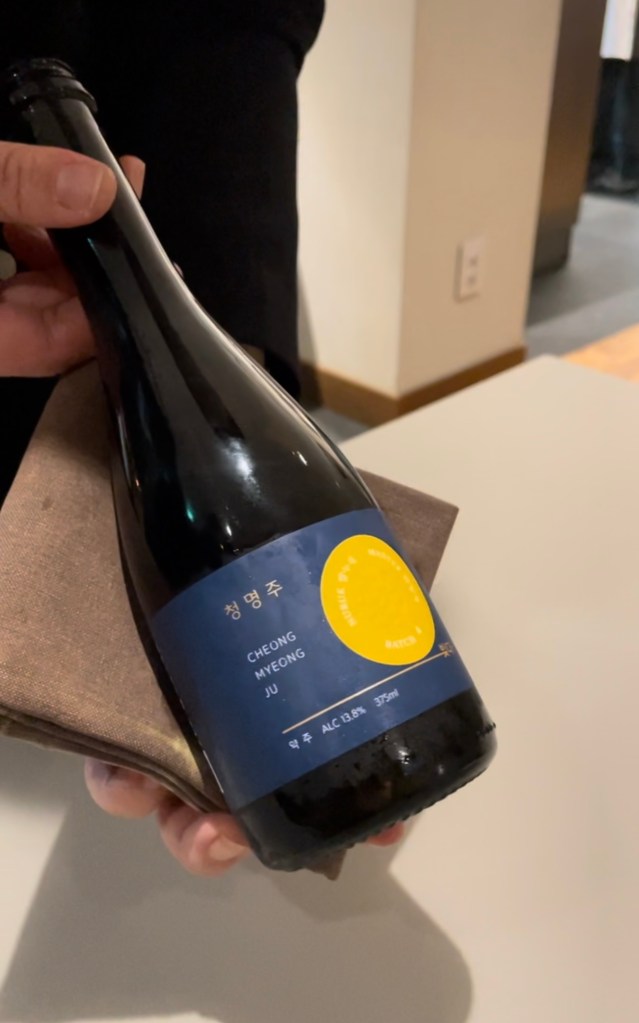
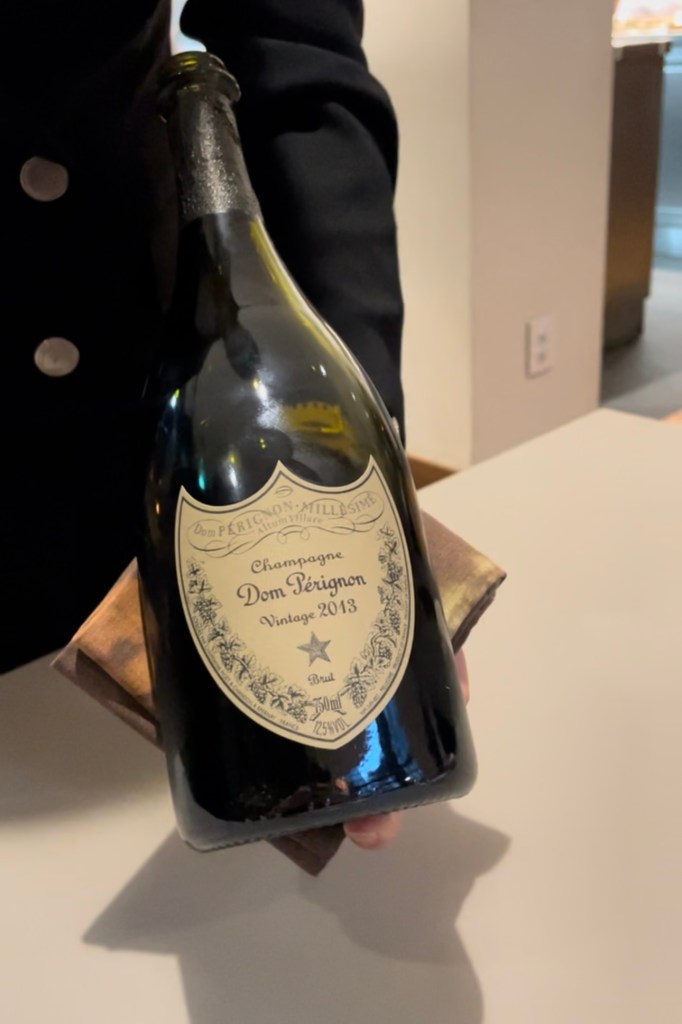
The knowledgeable and friendly staff skillfully presented each dish and drink, showcasing a wealth of information. Honestly, the food was exceptional. Every dish was a work of art, meticulously crafted and presented. The wine pairing further elevated the overall meal, contributing to its excellence. We started with a refreshing kombucha shot, followed by a glass of Dom Perignon. Other fantastic wines, including Korean rice wine, joined the experience. Each sip matched the flavors of the dishes, creating a memorable dining experience.
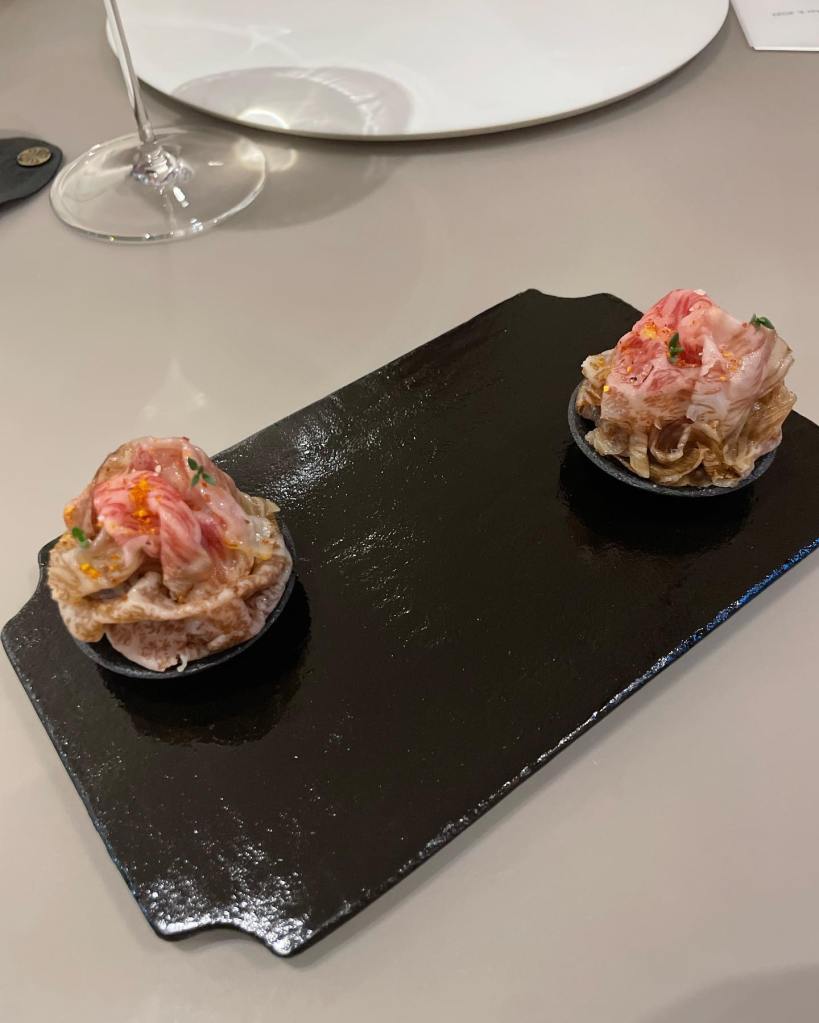
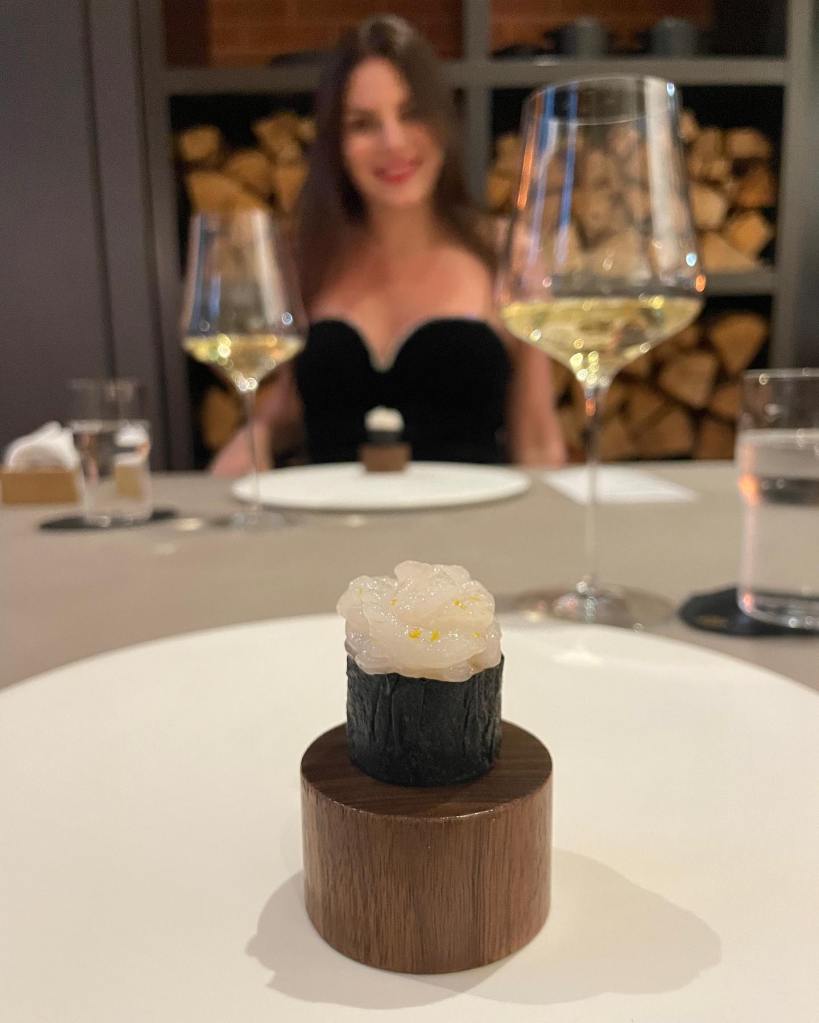
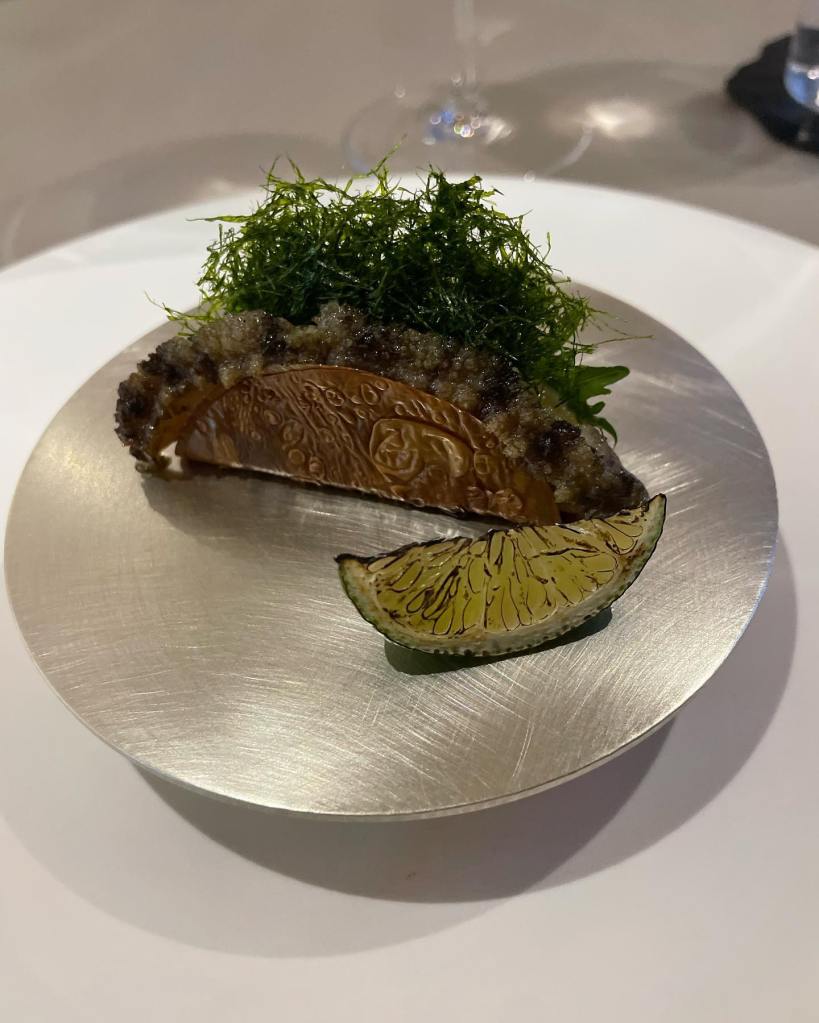
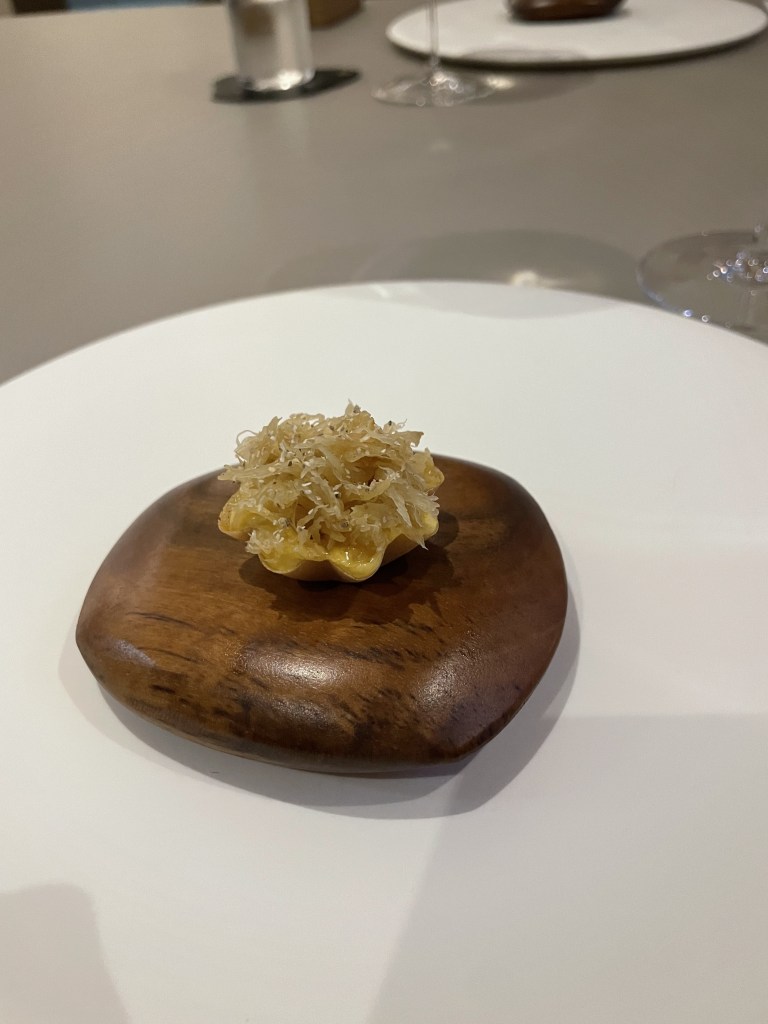
The culinary adventure began with delightful bites—a carpaccio, doraji (bell flower root), a sushi-inspired creation of potato topped with shrimp, and a Yuba taco with abalone and seaweed. The abalone, remarkably tender, provided a seafood experience distinct from the firmer version I had tried at Jeju Lotte Hotel. Adding to the surprises was a fantastic vegetarian bite comprising carrot, tomato, and eggplant, its flavors so delicious that it was hard to believe it was entirely vegetarian.
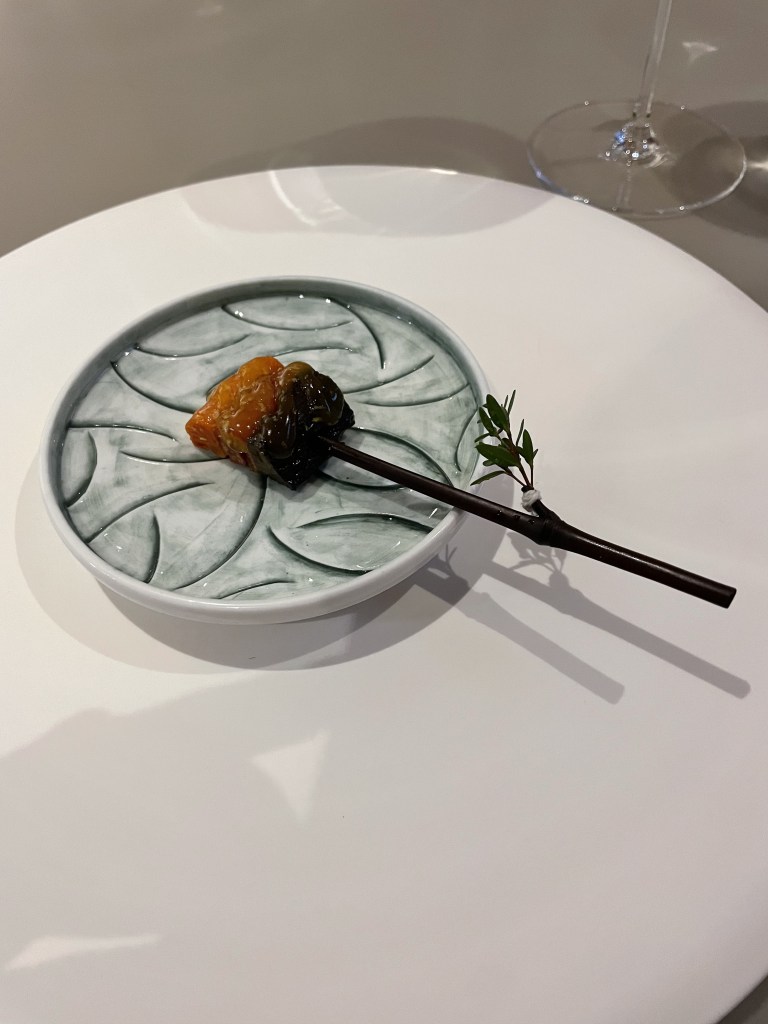
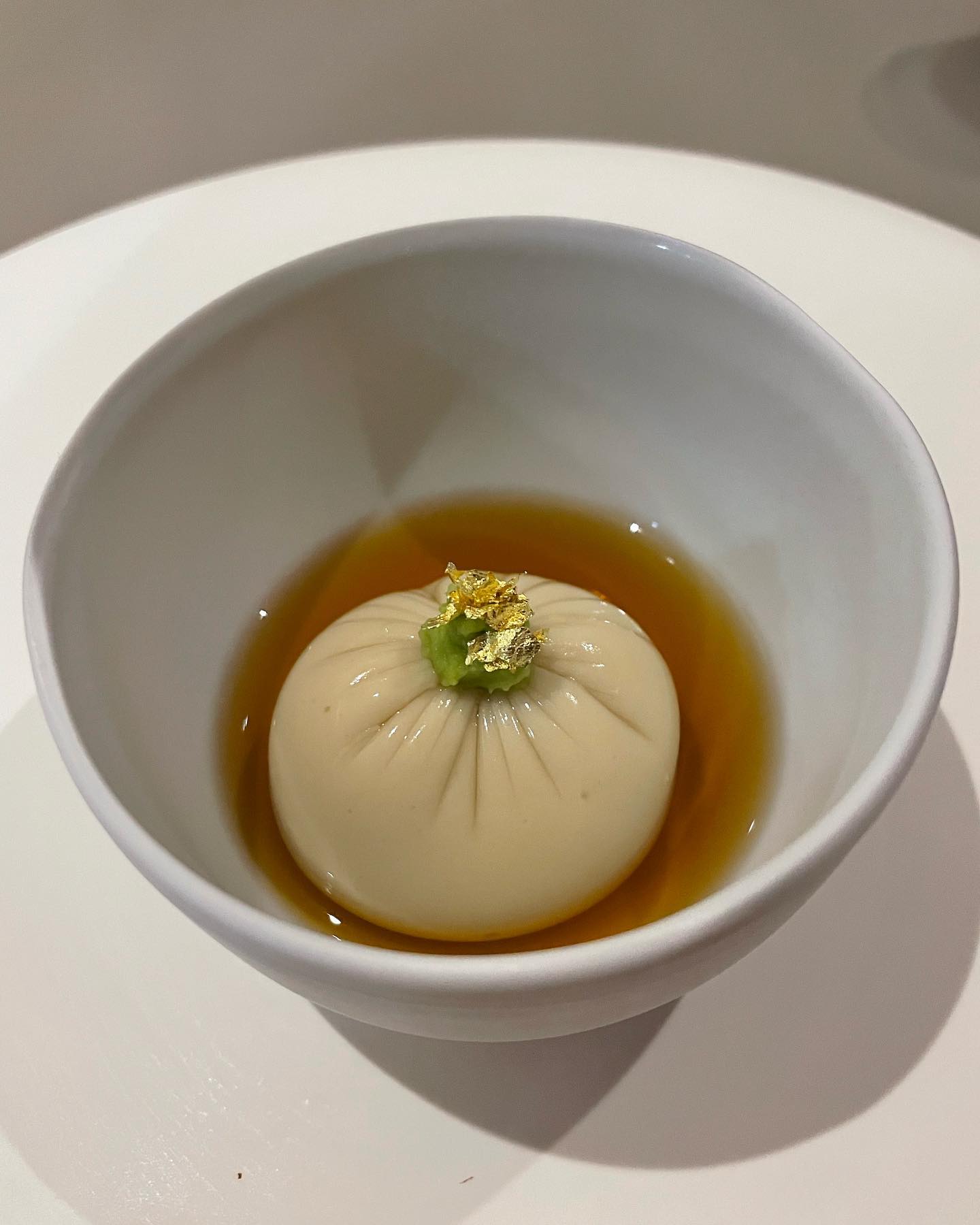
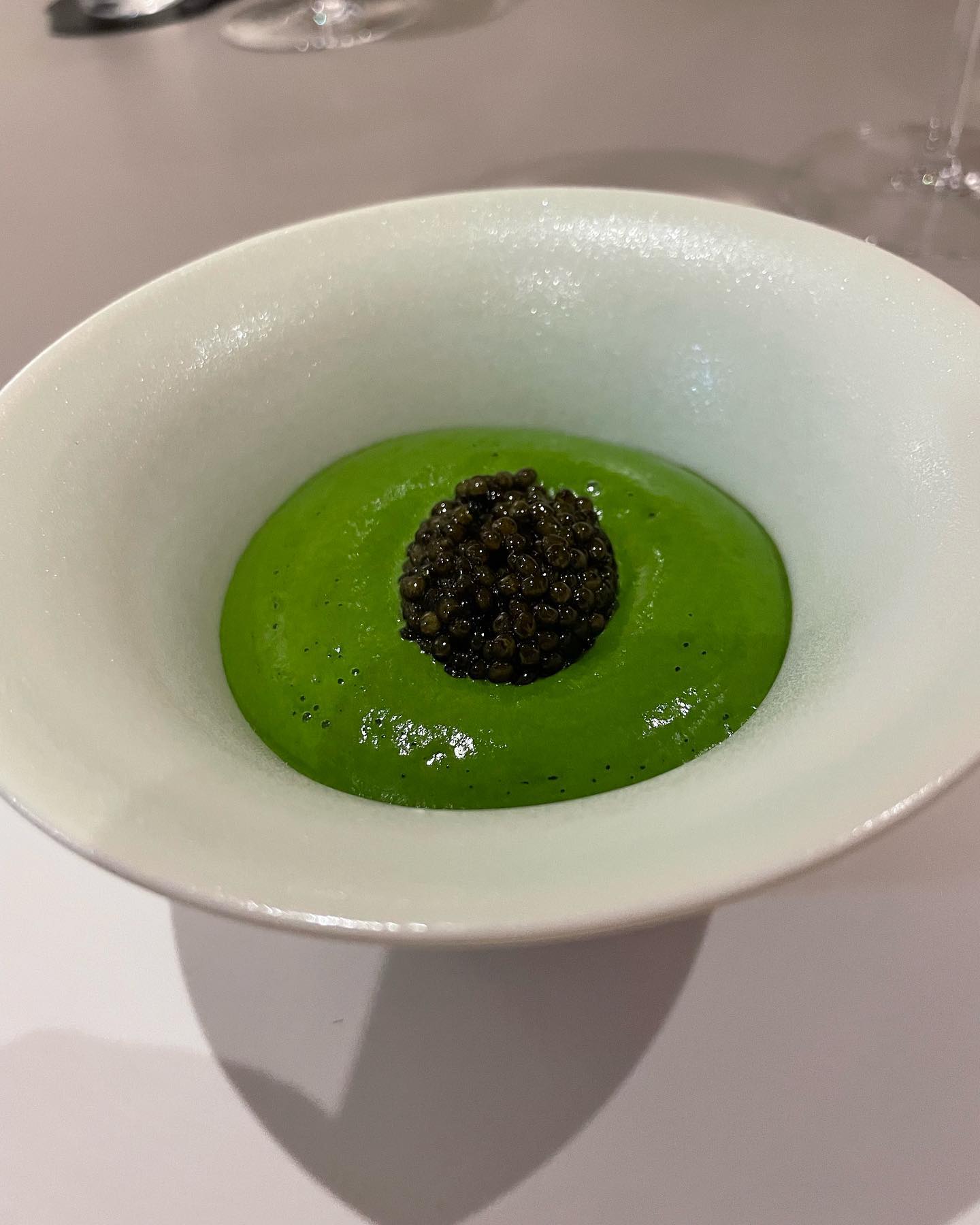
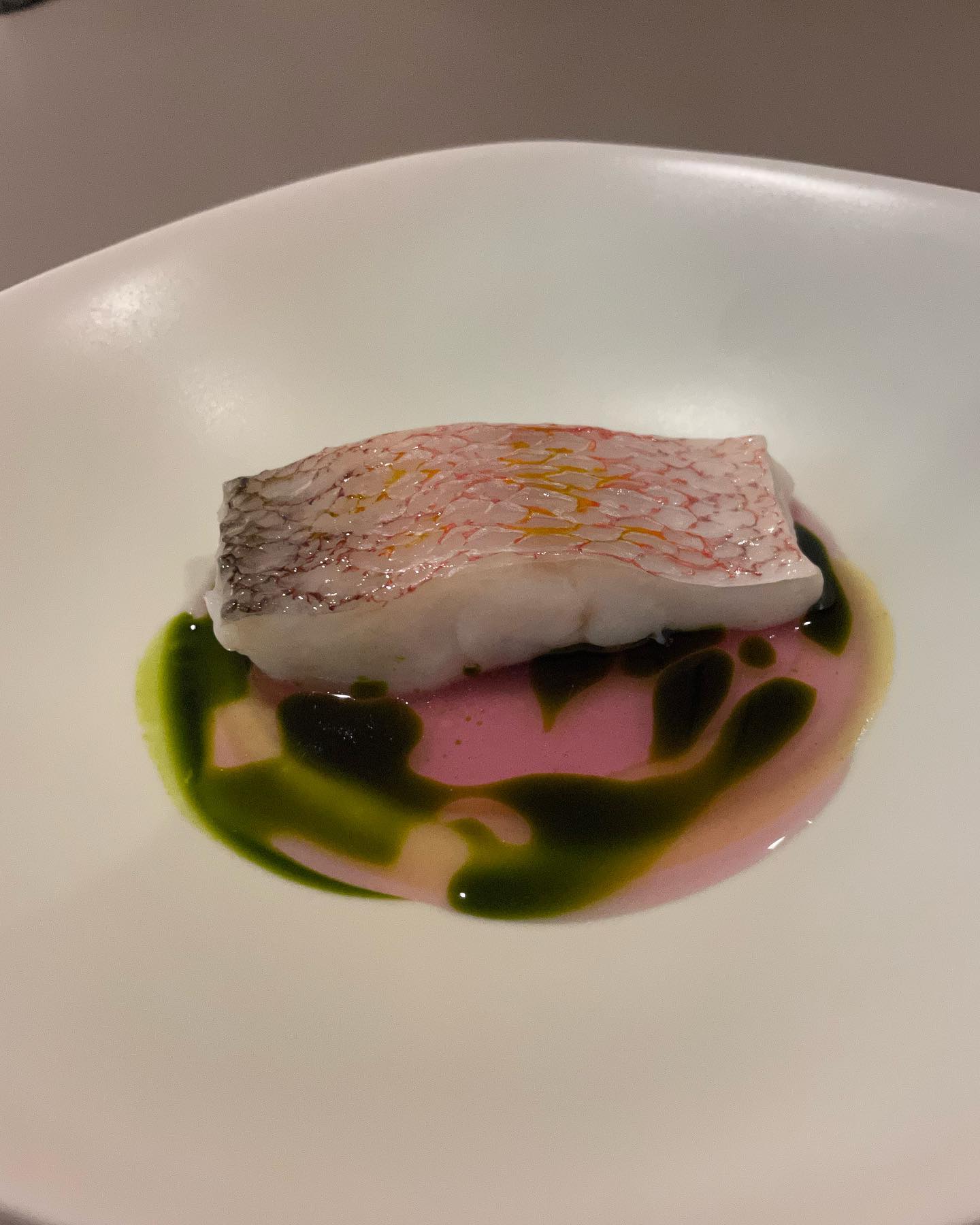
The next course featured a toasted sesame tofu dumpling. The perfectly cooked tilefish in brassica followed. Then came the outstanding snow crab dish, with a green creamy sauce covering it and topped with Osetra caviar. The signature burdock with skin juice, a unique experience that brought a distinct flavor to the table, added to the delight. Burdock is a plant commonly used in Asian cuisine, and in this dish, it’s combined with a flavorful liquid extracted from its outer layer, offering a unique and distinct taste.
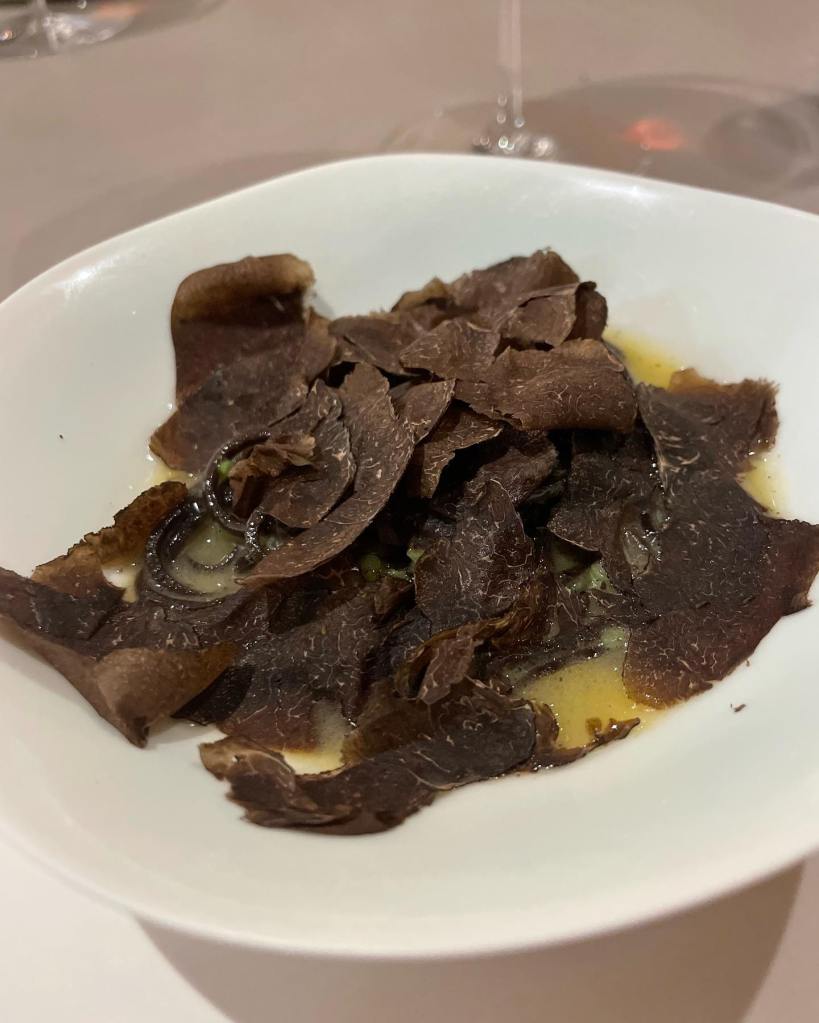
The culinary journey continued with ember-toasted acorn noodles with truffles. Acorn noodles, crafted from acorn flour derived from the nuts of oak trees, represent a traditional Korean ingredient known for their slightly nutty flavor and distinctive texture. In this unique creation, ember-toasted acorn noodles are prepared by toasting them over an open flame, imparting a distinct smoky flavor to the dish. This toasting process enhances the overall taste, creating a delightful culinary experience. The dish was generously adorned with truffles, and despite recent truffle overload experiences, I found myself thoroughly enjoying it, reigniting my appreciation for the distinct flavor of truffles.
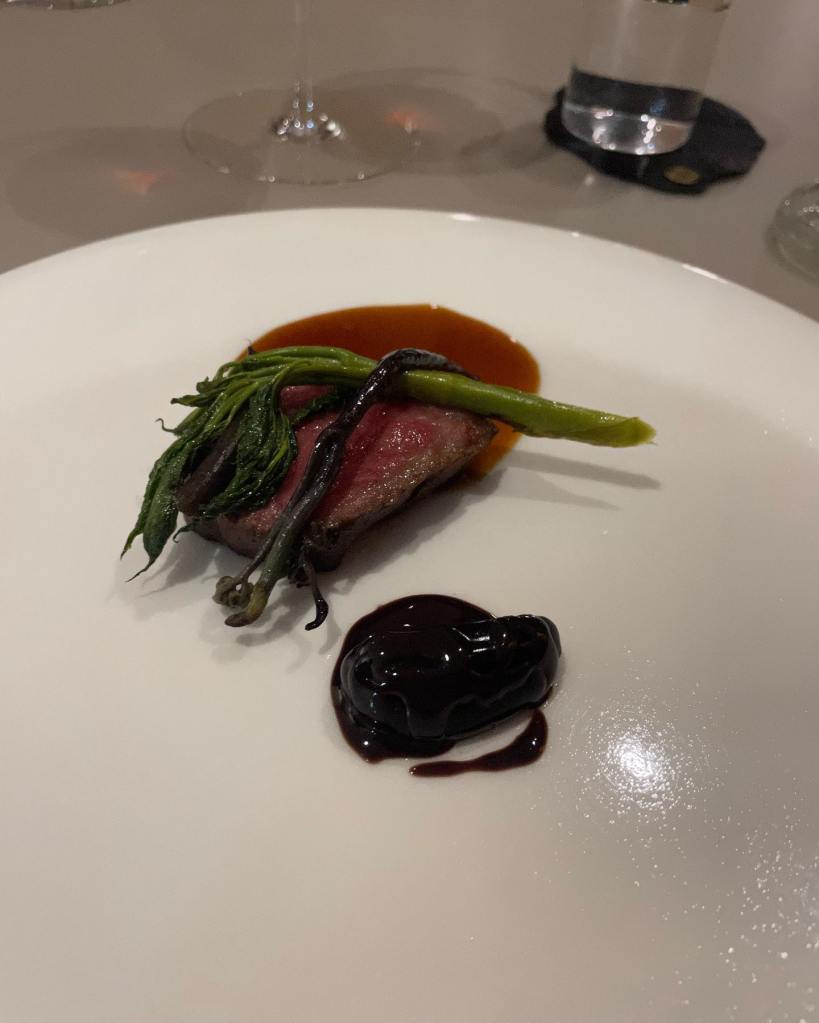
The last main dish was the Hanwoo and Bokbunj, highlighting Korean beef that practically melted on the tongue. Hanwoo refers to a breed of cattle native to Korea, renowned for its high-quality and tender meat, with some considering it the Korean counterpart to Japanese Wagyu. Bokbunj, on the other hand, signifies Korean wild black raspberry, frequently integrated into various dishes to introduce a distinctive and slightly sweet flavor. The fusion of Hanwoo beef and Bokbunj created a harmonious balance of savory and sweet notes, enhancing the overall dining experience and leaving a lasting impression.
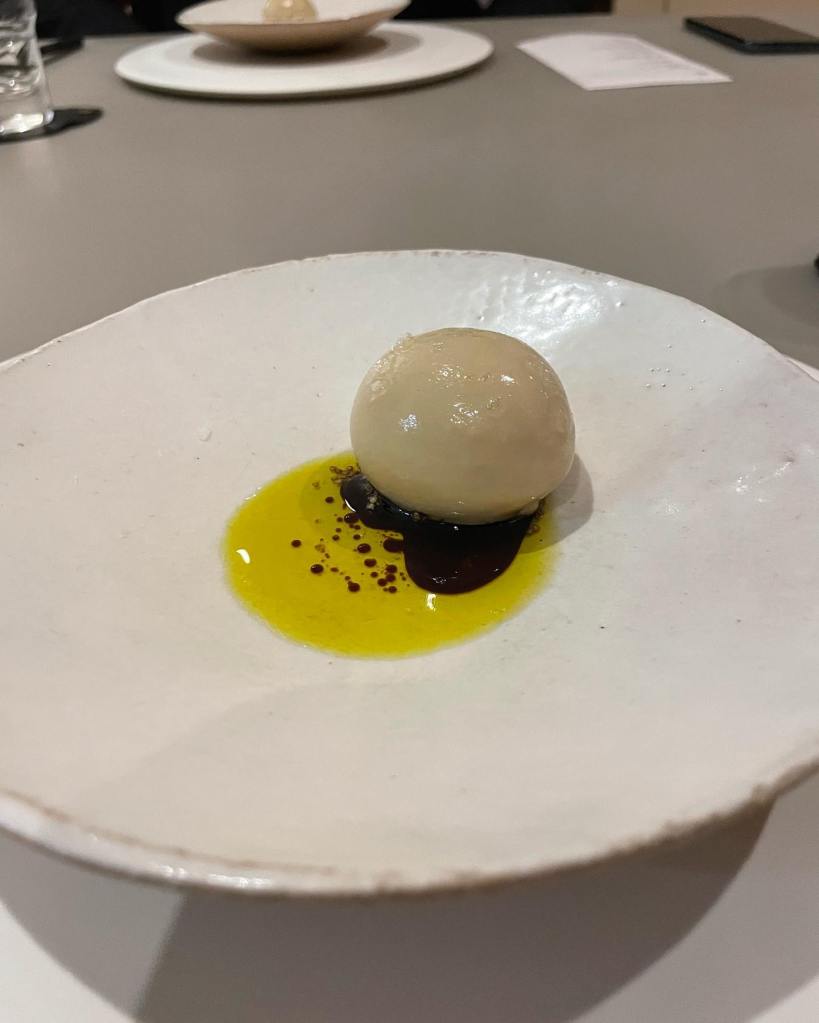
In the midst of this culinary journey, a standout moment was the middle dish—something both my partner and I found intriguing. It was a bread ice cream! The presentation resembled an ice cream, with a yellow and dark component meant to be olive oil and balsamic vinegar. However, the surprising twist was that it tasted exactly like bread with olive oil and balsamic vinegar! It played with my senses as it had the texture of real bread grains! This twist made it an unforgettable part of the dining experience.
Despite not being big on desserts, I couldn’t resist the amazing sweet treats at the restaurant. One that stood out was a dessert made of mold—unique texture, but surprisingly tasty!
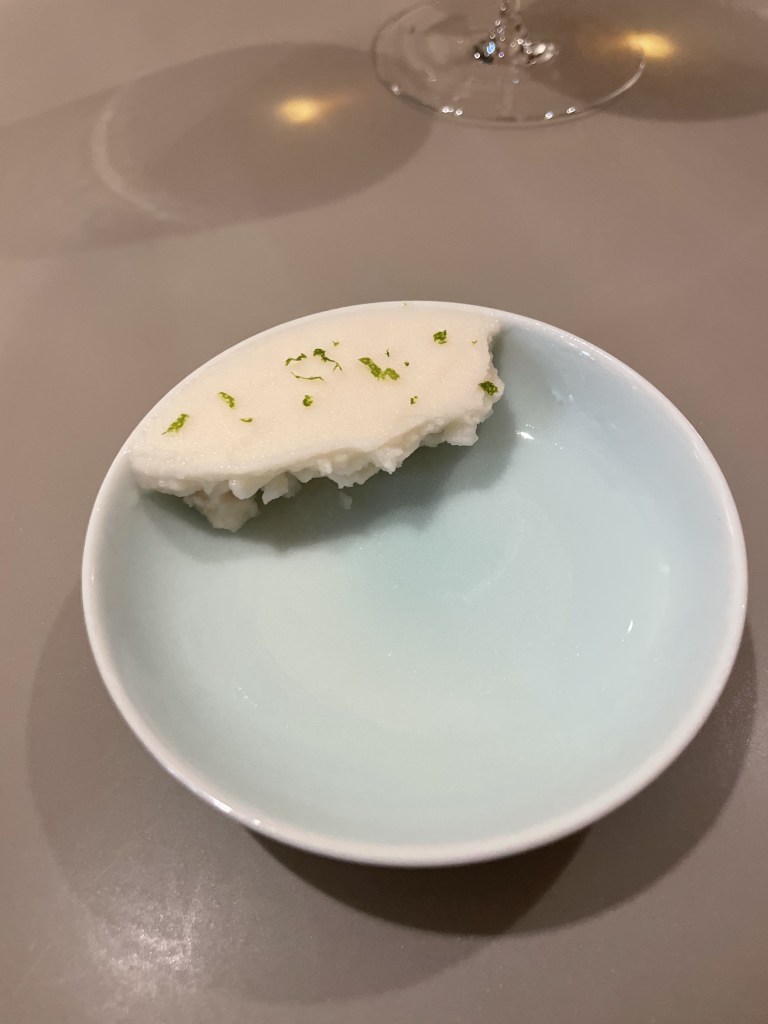
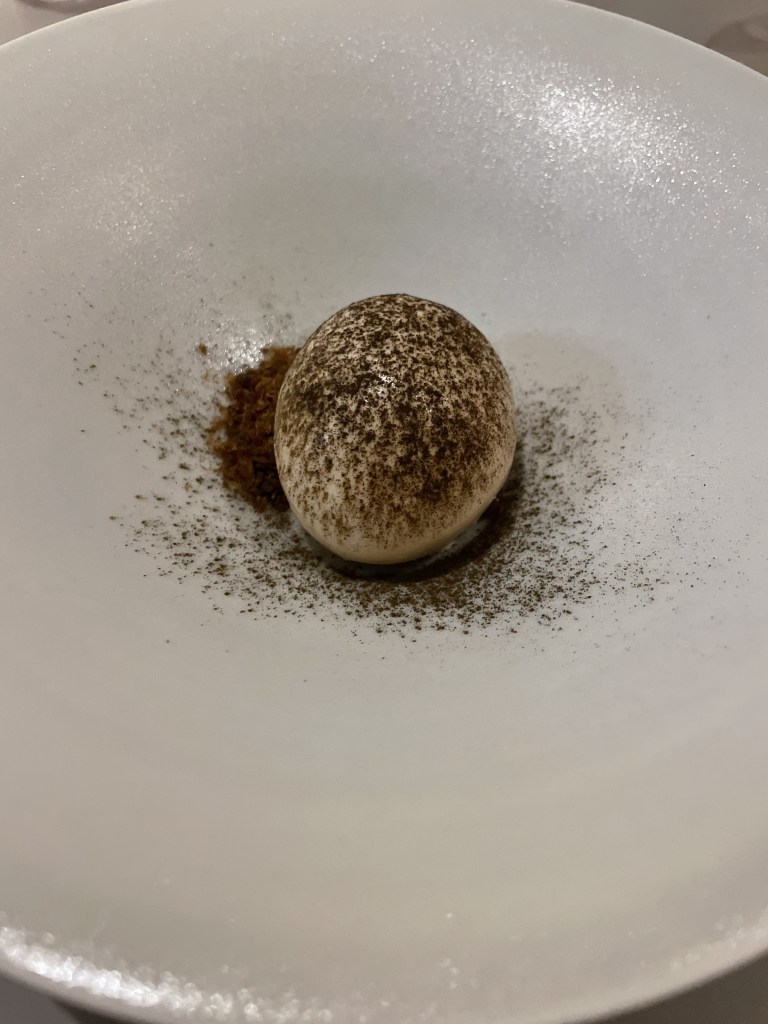
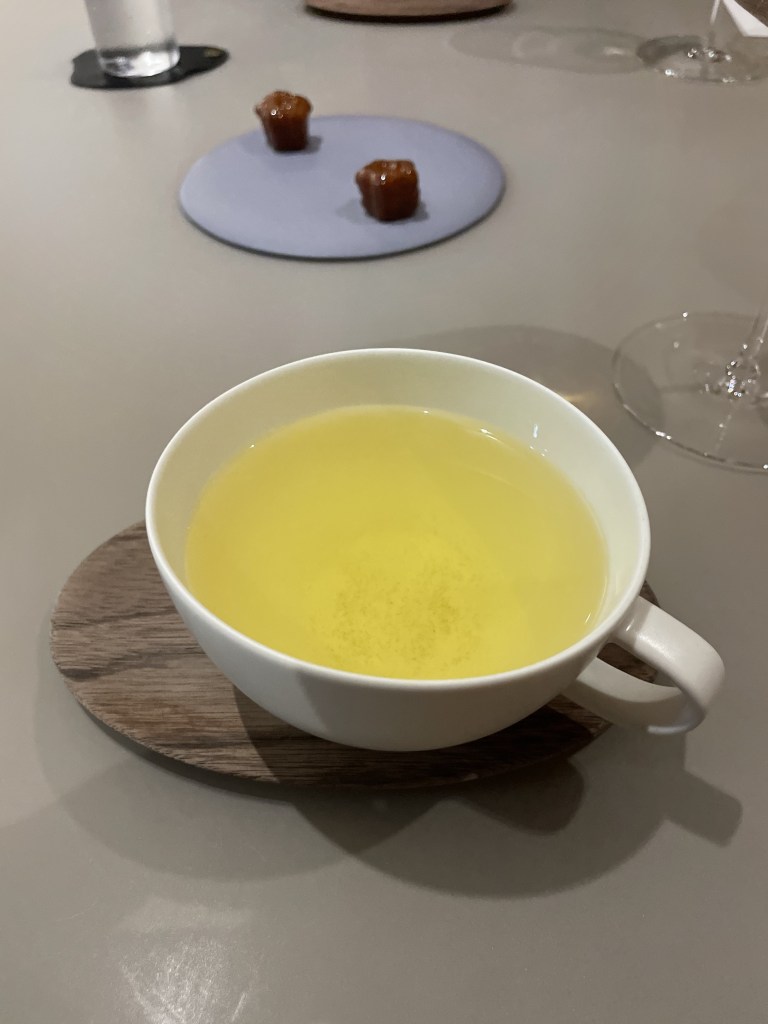
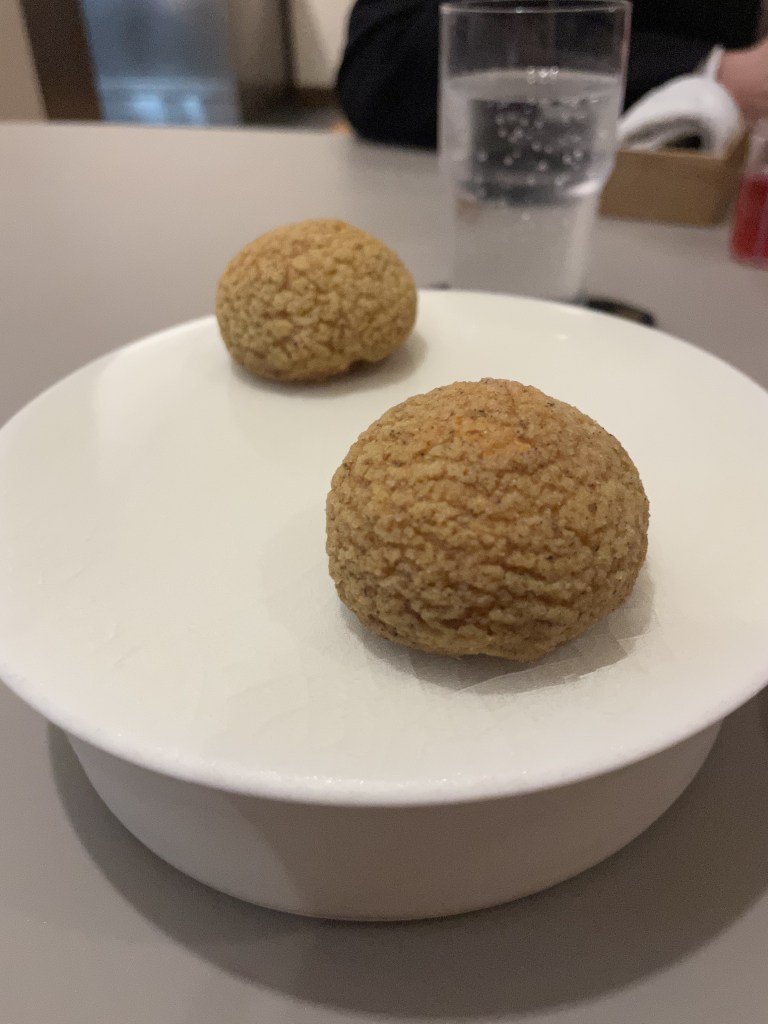
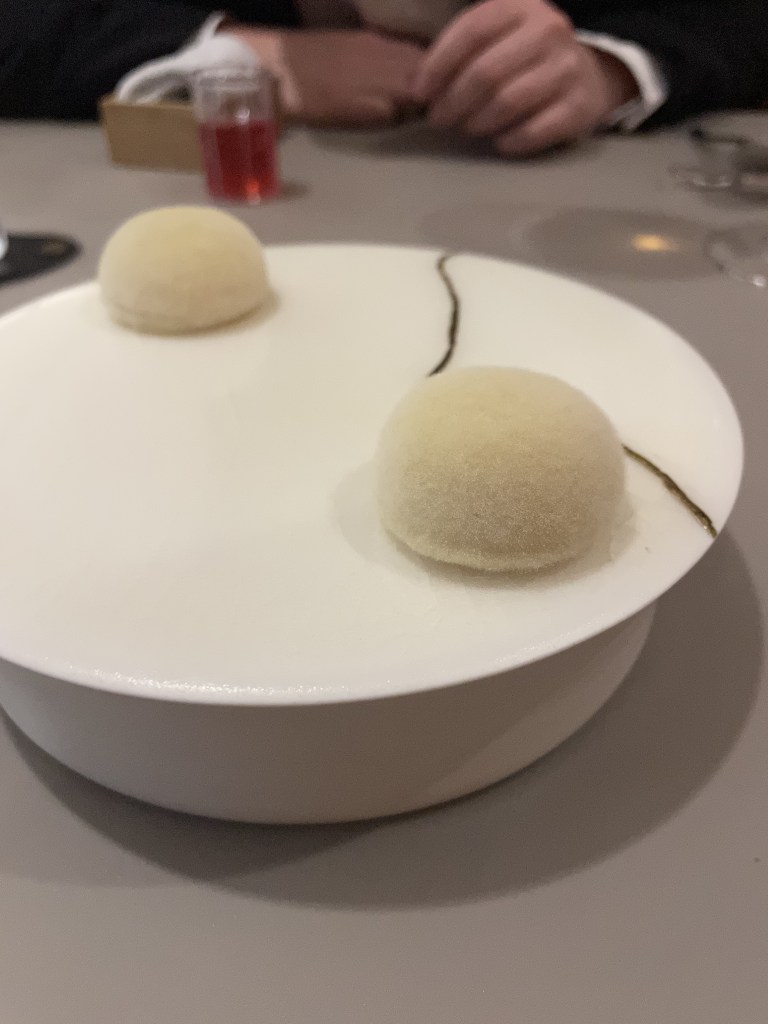
In conclusion, Mosu offers an exceptional Korean fine dining experience, exceeding expectations with its creative menu, attentive staff, and sophisticated ambiance. From unique dishes like the bread ice cream to standout items like the tiny taco with abalone or the Hanwoo, the chef’s skill and innovation shine through. The wine pairing elevates the flavors, making Mosu a must-visit for those seeking impeccable service and exquisite Korean cuisine in Seoul. Highly recommended for a remarkable dining experience.
 Anyah Mroz
Hello
LikeLike